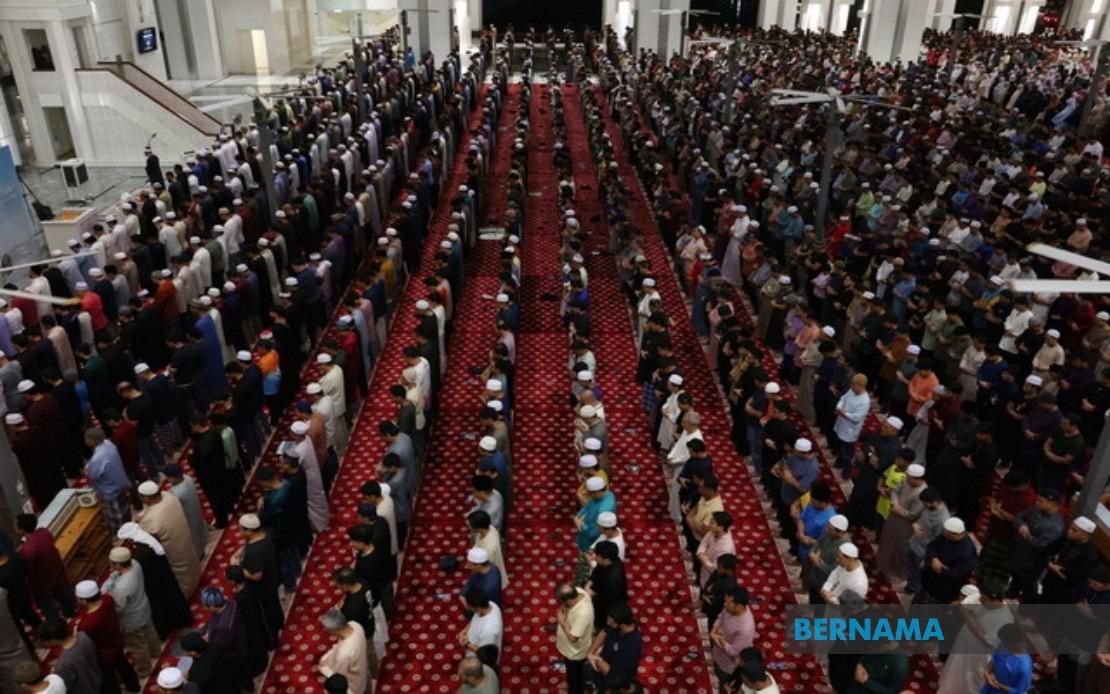
Malaysia's most significant annual Islamic commemoration, the national Ma'al Hijrah celebration for 1448 Hijri (2026 Common Era), officially commenced on June 16 with a special Tausiyyah programme and Quranic recitation at the Putra Mosque in Putrajaya. The opening session began at 4 pm and was attended by Dr Zulkifli Hasan, the Minister in the Prime Minister's Department for Religious Affairs, while Dr Muhamad Zakuwa Rodzali, the grand imam of Putra Mosque, led the prayer recitation.
According to Datuk Dr Sirajuddin Suhaimee, director-general of the Department of Islamic Development Malaysia (JAKIM), the inaugural Tausiyyah @ Ma'al Hijrah programme represents an innovative addition to this year's festivities. Rather than serving as a passive listening experience, the session encourages Muslims to engage deeply with Quranic verses and contemplate their spiritual significance. Participants have the opportunity to listen to leading Quranic reciters while gaining practical insights into applying Islamic teachings to contemporary life, marking a shift towards more introspective religious observance during the celebration.
The centrepiece of the three-day event takes place on June 17, coinciding with 1 Muharam 1448H on the Islamic calendar, when the main ceremony will unfold at Putra Mosque beginning at 7 am. This gathering carries particular prestige, as it will be graced by Sultan Nazrin Shah, the Sultan of Perak, in his ceremonial capacity. The main programme will feature the presentation of the National and International Tokoh Ma'al Hijrah Awards, recognising individuals and organisations who have made outstanding contributions to Islamic civilisation and community development.
The scale of this year's celebration underscores its national importance. Approximately 5,000 guests from across the government and private sectors are expected to attend, including the Deputy Prime Minister, various Cabinet ministers, permanent secretaries, and senior officials from federal agencies. The inclusion of higher education institution representatives and private sector leaders reflects how this religious commemoration has evolved into a platform for national unity and civic participation beyond purely religious circles.
This year's official theme, "MADANI Dihayati, Ummah Diberkati" (MADANI Lived, Ummah Blessed), deliberately connects the Prophet Muhammad's historical migration to Medina with Malaysia's contemporary national aspirations. Dr Sirajuddin explained that the Hijrah represents more than a historical event; it symbolises the genesis of Islamic civilisation through the establishment of an ordered, just, and prosperous society. The values the Prophet Muhammad exemplified—justice, unity, trustworthiness, compassion and collective well-being—are directly aligned with the pillars of Malaysia MADANI, the government's overarching vision emphasising sustainability, innovation, respect and inclusive prosperity.
The conceptual bridge between seventh-century Islamic history and twenty-first-century Malaysian governance highlights how religious occasions serve contemporary policy objectives. By framing the Ma'al Hijrah celebration around the MADANI agenda, government leaders position Islamic values as compatible with modern economic and social policy, potentially strengthening public acceptance of development initiatives and governance frameworks that invoke both religious and secular legitimacy.
A supplementary programme scheduled for June 18 will see award recipients deliver the National and International Tokoh Ma'al Hijrah Premier Lecture at the Auditorium Putrajaya Islamic Complex starting at 9 am. This extended platform allows honourees to address a broader audience, sharing their experiences, knowledge and methodologies for advancing Islamic scholarship and community welfare. Such forums help disseminate best practices and create intellectual discourse around the contributions of Muslim scholars, activists and social leaders across Malaysia and internationally.
Notably, Dr Sirajuddin emphasised that the entire celebration has been structured with budgetary prudence in mind. Organisers have deliberately adopted what officials describe as a modest yet meaningful approach, prioritising meaningful content and spiritual value over lavish expenditure. This framing aligns with government messaging around fiscal consolidation and responsible resource management at a time when Malaysia faces budgetary pressures and public scrutiny over government spending. The approach also reflects broader Islamic principles emphasising substance over ostentation.
For Malaysian Muslims, the Ma'al Hijrah commemoration carries deep religious and cultural resonance. The Hijrah itself marks the moment when the Muslim community transitioned from persecution in Mecca to establishing a functioning Islamic state in Medina, representing a turning point in Islamic history. Annually renewing this commemoration reinforces identity, collective memory and shared values within the Malaysian Muslim community, which comprises approximately 70 percent of the national population.
The celebration's evolution over recent years—now incorporating interactive spiritual programmes like the new Tausiyyah format and leveraging national awards to recognise contributions to Islamic thought—suggests organisers are adapting religious observance to engage younger, more educationally diverse audiences. Rather than traditional recitations alone, incorporating reflective components and contemporary examples demonstrates sensitivity to how modern Muslims, particularly urbanised professionals, engage with their faith.
For non-Muslim Malaysians and international observers, the scale and official prominence of this celebration illustrates Islam's central role in Malaysian national identity and governance. Government participation at the highest levels, including sultanic patronage, underscores how Islam permeates state institutions and official calendars. The celebration's emphasis on values like justice, unity and compassion that transcend religious boundaries creates potential common ground with secular governance principles.
The timing of the 1448H Ma'al Hijrah celebration also occurs against a backdrop of Malaysia positioning itself as a moderate Islamic nation and a bridge between Islamic and Western civilisations. By hosting a major international Islamic observance centred on award recipients from multiple countries, Malaysia reinforces its soft power ambitions and credibility within global Islamic networks. The inclusion of international tokoh (luminaries) in the awards programme specifically cultivates these transnational Islamic connections.