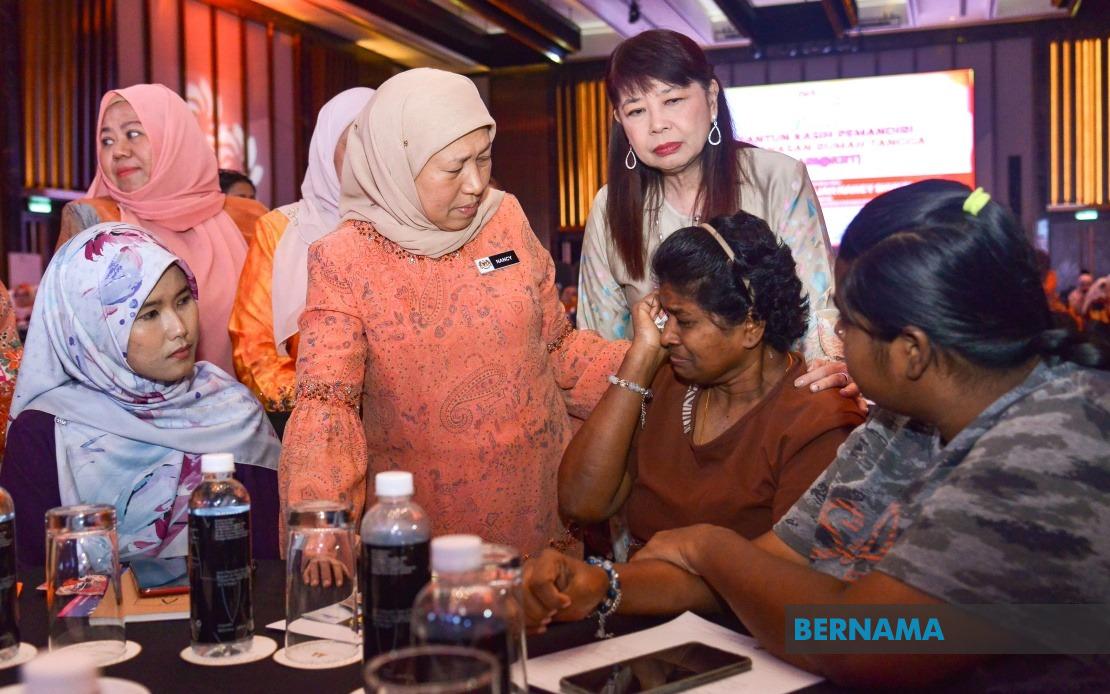
The Ministry of Women, Family and Community Development has unveiled an ambitious nationwide initiative designed to help approximately 1,400 survivors of domestic violence rebuild their lives through comprehensive support mechanisms. Launched in Kuala Lumpur by minister Datuk Seri Nancy Shukri, the SARI@KRT: Road to Eliminate Violence Against Women (EVAW) 2026 programme represents a multifaceted government response to an escalating social crisis that has strained families and communities across the nation.
The initiative will be deployed across all Malaysian states, with each region expected to accommodate at least 100 participants. Rather than adopting a one-size-fits-all approach, the programme integrates three pillars of intervention: psychological and social rehabilitation, access to legal remedies, and pathways toward financial independence. Shukri emphasized during the launch that the government recognizes domestic violence as a complex issue requiring sustained, coordinated intervention beyond merely publicizing the problem.
Recent police statistics underscore the urgency behind this intervention. Between January and June this year, the Royal Malaysia Police documented 4,014 reported domestic violence incidents, representing a concerning 9.1 percent increase from the 3,678 cases recorded during the corresponding period in 2023. Johor emerged as the most affected state with 721 incidents, followed by Selangor with 614 and Perak with 405 cases, suggesting that urbanized and economically dynamic regions are not insulated from domestic discord. The geographic distribution indicates that domestic violence transcends socioeconomic boundaries and demands coordinated responses across diverse communities.
Minister Shukri offered critical insight into the root causes underlying these incidents. Communication breakdowns and misunderstandings dominated the causality picture, accounting for 1,967 cases—nearly half of all reported incidents. Substance abuse emerged as the second major driver with 444 cases, while financial strain contributed to 378 incidents. However, Shukri highlighted a frequently overlooked dimension of domestic abuse: financial control and deprivation, where partners deliberately withhold financial support despite having the means to contribute. She characterized such behaviour as a subtle yet devastating form of abuse that strips victims of autonomy and forces them to shoulder disproportionate household burdens alone.
The minister's remarks on financial abuse reveal deeper structural issues within Malaysian households. When one spouse possesses financial capacity but refuses to participate in supporting family expenses, the arrangement creates dependency and vulnerability. Shukri emphasized that family maintenance and child support constitute reciprocal obligations that both partners must embrace. This framing challenges traditional hierarchies that place sole financial responsibility on breadwinners while excusing spouses from economic participation—an approach that paradoxically renders victims more vulnerable to abuse.
While acknowledging the troubling upward trajectory of reported cases, Shukri offered a more nuanced interpretation than simple alarm. She suggested that rising numbers may partly reflect improved public awareness and growing willingness among victims to seek official intervention rather than suffering silently. This reframing carries important implications: as social stigma diminishes and institutional support mechanisms become known, previously unreported abuse surfaces in police statistics. The increase thus reflects both a real social problem and a positive shift in help-seeking behaviour.
The SARI@KRT programme incorporates practical financial support mechanisms designed to remove barriers preventing survivors from accessing justice. The ministry provides special allowances enabling survivors to attend court proceedings related to child maintenance claims, addressing a concrete obstacle that often discourages victims from pursuing legal remedies. Recognition that financial constraints prevent abuse survivors from engaging the judicial system demonstrates sophisticated policymaking that addresses systemic barriers rather than merely offering counselling or awareness campaigns.
Psychosocial support represents a cornerstone of the intervention strategy. Trauma resulting from domestic violence carries profound psychological consequences that extend far beyond physical injury. Survivors frequently experience anxiety, depression, post-traumatic stress, and diminished self-worth that impedes their ability to rebuild independent lives. By integrating mental health interventions into the programme framework, the government acknowledges that recovering from abuse requires sustained emotional and psychological rehabilitation alongside legal protections and economic opportunities.
The economic empowerment component distinguishes SARI@KRT from traditional victim-support models. Shukri underscored the government's commitment to guiding survivors toward self-reliance and economic security. This approach recognizes that victims remain vulnerable to manipulation and control when lacking independent income and financial resources. By facilitating skill development, employment connections, and economic participation, the programme aims to break cycles of dependency that perpetuate abusive relationships.
The programme's ambitious scope and integrated approach signal a policy shift toward comprehensive domestic violence intervention. Rather than treating abuse as primarily a criminal justice matter or a personal family problem, the government has positioned it as a multidimensional challenge requiring simultaneous attention to psychological trauma, legal rights, and economic security. Implementation across all states with standardized support mechanisms suggests commitment to equity and consistent service delivery.
For Malaysian readers, particularly women and family advocacy organizations, SARI@KRT represents significant progress in institutional recognition of domestic violence severity. However, the rising incident numbers warrant ongoing vigilance regarding prevention strategies, early intervention protocols in schools and community settings, and perpetrator accountability mechanisms. Southeast Asian neighbours facing similar challenges may also observe Malaysia's integrated model as a potential framework for their own policy development.

