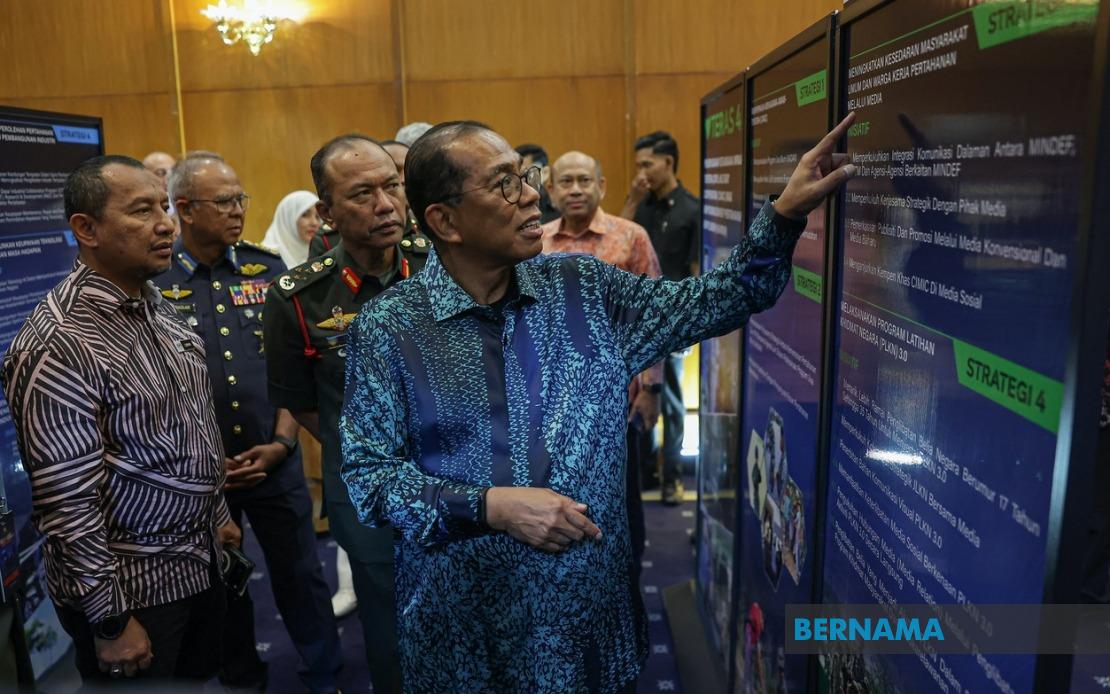
Malaysia's Defence Ministry has launched two complementary strategic frameworks designed to fortify the nation's defence posture in an era marked by mounting regional tensions, technological upheaval, and unconventional security threats. The National Defence Strategic Plan (PSPN) and the Defence Capacity Blueprint (RTKP) for 2026-2030 represent a comprehensive recalibration of Malaysia's military planning, building upon the foundation laid by the Defence White Paper whilst adapting to contemporary security realities that demand greater flexibility and responsiveness.
Defence Minister Datuk Seri Mohamed Khaled Nordin unveiled the twin documents during a ceremony in Kuala Lumpur, emphasising that they were meticulously crafted during the Defence White Paper's Mid-Term Review to identify and rectify strategic gaps. The minister stressed that both instruments work in tandem—the PSPN articulates the nation's defence vision and priorities, whilst the RTKP provides the operational and resource infrastructure necessary to translate those ambitions into concrete capabilities and outcomes across the country's security apparatus.
The global security landscape has undergone profound transformation in recent years, presenting Malaysia with multifaceted challenges that extend beyond traditional military concerns. Minister Mohamed Khaled highlighted the intensification of geopolitical volatility affecting the Indo-Pacific region, where great power competition and maritime disputes create unpredictable flashpoints. Simultaneously, artificial intelligence, automation, and cyber capabilities are reshaping the nature of military engagement, requiring armed forces to rapidly upskill and modernise their technological foundations. Beyond these conventional and technological domains, Malaysia confronts an expanding spectrum of non-traditional threats spanning transnational terrorism, organised crime, environmental degradation, and pandemics—each demanding coordinated whole-of-government responses.
The PSPN architecture rests upon seven strategic pillars that collectively address the full spectrum of defence requirements. The first pillar prioritises operational readiness of the Malaysian Armed Forces, ensuring units maintain combat effectiveness and rapid deployment capability. A second pillar focuses on enhancing defence capabilities through strategic procurement, research partnerships, and platform modernisation—areas where Malaysia has already begun taking concrete steps. Personnel welfare and veteran support constitute a third pillar, recognising that military effectiveness depends on maintaining professional standards, retention of experienced personnel, and honourable post-service provision. The remaining four pillars encompass defence industry development, technology advancement, inter-agency cooperation, and broader societal resilience—reflecting recognition that national defence transcends military institutions.
The RTKP, equally vital, represents an operational roadmap ensuring the PSPN's aspirations become achievable reality rather than rhetorical aspiration. Minister Mohamed Khaled characterised the relationship between the two documents with instructive clarity: if the PSPN determines strategic destination, the RTKP provides the vehicles, fuel, and infrastructure to reach it. This capacity framework encompasses financial resource allocation and budgetary planning, systematic development of human capital through training and recruitment, cultivation of technological expertise within military ranks, and establishment of seamless coordination mechanisms among Defence Ministry agencies, other government bodies, and the broader defence-industrial ecosystem comprising private contractors and research institutions.
Crucially, both documents explicitly embrace a whole-of-government and whole-of-society philosophy that acknowledges defence as a national endeavour transcending narrow institutional boundaries. This approach recognises that civilian agencies, private sector organisations, research institutions, and civil society all contribute to national security outcomes. Such integration proves especially relevant for Malaysia's non-traditional security challenges, where environmental management, economic development, social cohesion, and law enforcement frequently intersect with defence considerations. The framework thus positions Defence Ministry planning within a broader national security architecture rather than treating military planning in isolation.
The strategic documents arrive alongside concrete evidence of Malaysia's defence modernisation efforts. In March, the Malaysian Armed Forces received three ANKA Medium Altitude Long Endurance Unmanned Aircraft Systems from Turkish manufacturer Baykar, marking a significant capability enhancement for surveillance and reconnaissance operations. These platforms are already deployed and operational at Labuan Air Base, providing enhanced situational awareness across Malaysian airspace and supporting military operations across the eastern region. This acquisition exemplifies the types of capability gaps the RTKP aims to systematically address through structured procurement planning aligned with strategic priorities.
Additional procurement initiatives under way demonstrate Malaysia's commitment to translating strategic intent into material capability expansion. The Malaysian Armed Forces are scheduled to receive FA-50M light combat aircraft, maritime patrol aircraft, and additional Littoral Mission Ships according to predetermined timelines. These acquisitions target specific capability gaps in Malaysia's force structure—the FA-50M provides an affordable yet capable combat platform suitable for regional air defence and offensive operations, maritime patrol aircraft enhance maritime domain awareness across Malaysia's extensive exclusive economic zone, and Littoral Mission Ships strengthen coastal patrol and offshore enforcement capabilities essential for protecting Malaysia's strategic maritime interests.
The timing of these strategic documents carries particular significance within Southeast Asian security dynamics. Malaysia's position astride critical sea lanes and its involvement in complex maritime disputes in the South China Sea create compelling imperatives for robust defence planning. The PSPN and RTKP provide structured frameworks for prioritising investments and aligning capabilities to Malaysia's unique geographical position and strategic interests. For Malaysia's defence community, these documents offer clarity regarding institutional priorities, guiding force development and personnel assignments across the military structure.
The whole-of-society dimension gains additional relevance given Malaysia's multiethnic composition and the importance of maintaining social cohesion as a foundation for effective national security. By explicitly embracing broader stakeholder engagement beyond military institutions, the strategic framework acknowledges that Malaysia's resilience depends on harmonious civil society, strong economic performance, effective governance, and educational excellence alongside military preparedness. This integrated approach distinguishes Malaysia's defence strategy from narrower militaristic alternatives emphasising hardware acquisition in isolation.
Implementation success will depend substantially on consistent resource allocation, institutional coordination, and sustained political commitment across multiple administrations. The RTKP's emphasis on capacity development across financial, human, and technological dimensions recognises that advanced equipment acquires full value only when operated by highly trained personnel within well-coordinated institutional structures. This reality places significant emphasis on personnel management, training standards, inter-agency communication, and professional development within the defence establishment.
For regional observers and Malaysia's strategic partners, these documents signal a maturing approach to defence planning that balances immediate capability requirements with long-term institutional development. The explicit acknowledgement of non-traditional threats and adoption of whole-of-government frameworks align Malaysia's defence strategy with international best practices whilst remaining responsive to distinctive Southeast Asian security challenges. As implementation progresses, the effectiveness of these strategic documents will shape Malaysia's defence posture throughout the remainder of this decade.

