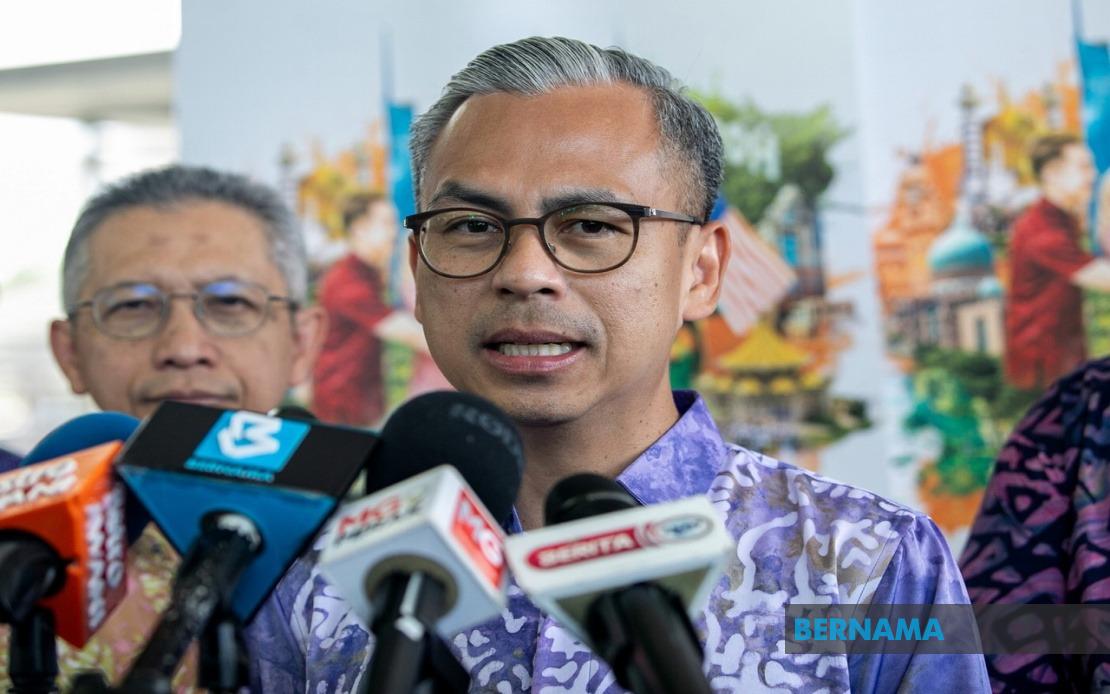
The Malaysian government has selected a theme for next year's National Day and Malaysia Day festivities that places shared prosperity and inclusive growth at the centre of the nation's development narrative. Communications Minister Datuk Seri Fahmi Fadzil unveiled 'Malaysia MADANI: Kesejahteraan Dinikmati' (Malaysia MADANI: Shared Prosperity) as the rallying concept for HKHM2026, positioning it as a statement of intent regarding how the government envisions distributing the fruits of national progress across all segments of society.
The announcement came during the official launch of the 2026 National Month campaign and Fly the Jalur Gemilang initiative in Ipoh, attended by Prime Minister Datuk Seri Anwar Ibrahim, who officiated proceedings at the Sultan Azlan Shah Ministry of Health Training Institute in Tanjung Rambutan. The event brought together National Unity Minister Datuk Aaron Ago Dagang and Perak Menteri Besar Datuk Seri Saarani Mohamad, reflecting the cross-ministerial emphasis on the theme's significance.
Fahmi articulated that the government's conception of shared prosperity transcends conventional economic metrics. Rather than focusing solely on GDP growth or aggregate development figures, the MADANI framework encompasses broader quality-of-life improvements, enhanced access to opportunities, and mechanisms that ensure development dividends reach communities across the socioeconomic spectrum. This represents a deliberate philosophical shift in how Malaysia frames its development objectives, moving beyond growth-centric narratives towards distribution-centric ones.
The minister stressed that the shared prosperity agenda operates independently of demographic boundaries or geographic divisions. The government's position holds that prosperity ought not to be determined by a person's racial or religious identity, their state of residence, or their socioeconomic background. This framing addresses long-standing debates within Malaysian society about equity, inclusion, and fair resource allocation—issues that remain central to political discourse across the archipelago and resonate with concerns in other Southeast Asian nations navigating similar development challenges.
Malaysia's cultural and ethnic composition forms a critical underpinning for the government's articulation of shared prosperity. Fahmi positioned the nation's diversity as both a historical asset and contemporary foundation for societal cohesion. Rather than viewing diversity as a challenge requiring management, the minister presented it as an active ingredient in Malaysia's unity, mutual respect, and social harmony—qualities he suggested distinguish the country within the regional context.
This framing carries practical implications for Malaysia's standing internationally. The government views preservation of internal harmony and unity as inseparable from the nation's reputation and influence abroad. By emphasising that shared prosperity operates alongside sovereignty safeguarding and peaceful coexistence, Malaysian leadership signals to both domestic and international audiences that development and social stability are mutually reinforcing rather than competing priorities.
The government has scheduled multiple programmes and campaigns to operationalise the shared prosperity theme beyond rhetorical commitment. The 'One House, One Jalur Gemilang' campaign aims to deepen patriotic sentiment at the household level, while the Kembara Merdeka Jalur Gemilang convoy programme intends to bring national unity messaging directly to communities across Malaysia. These initiatives suggest an attempt to translate abstract policy concepts into visible, community-level engagement.
Information dissemination for the 2026 celebrations will occur through the Merdeka 360 portal and official government social media channels, indicating a modernised approach to national campaign management. This digital-first strategy reflects contemporary approaches to civic engagement, particularly important for reaching younger demographics who consume political and national messaging through non-traditional media platforms.
The choice of Ipoh and the health ministry training institute as the launch venue carries subtle messaging about equitable development. The location, outside the federal capital, symbolises the government's commitment to distributing developmental attention and investment beyond Kuala Lumpur. Similarly, selecting a health facility underscores that shared prosperity encompasses public welfare infrastructure rather than merely financial metrics.
For Malaysian policymakers and regional observers, the HKHM2026 theme represents an explicit pivot towards addressing inequality concerns that have periodically destabilised other Southeast Asian democracies. By centralising shared prosperity as a governing philosophy, the MADANI administration stakes its legitimacy partly on demonstrable progress toward more equitable outcomes across Malaysia's diverse population. This stands in contrast to earlier development models that prioritised headline growth figures regardless of distribution patterns.
The timing of this theme's announcement—more than eighteen months before the actual celebrations—suggests the government intends to structure policy and budgetary decisions around shared prosperity principles rather than merely adopting a celebratory slogan. If implemented consistently, this approach could reshape resource allocation across sectors and states, potentially influencing how Malaysia's broader development agenda unfolds through 2026 and beyond.
Regionally, Malaysia's emphasis on inclusive prosperity development carries implications for how Southeast Asian governments frame their own development narratives. As nations across ASEAN grapple with growing inequality, the Malaysian model of explicitly linking national identity celebrations to equity commitments offers a template—though success ultimately depends on translating thematic commitments into measurable improvements in citizens' lived experiences across the federation.

