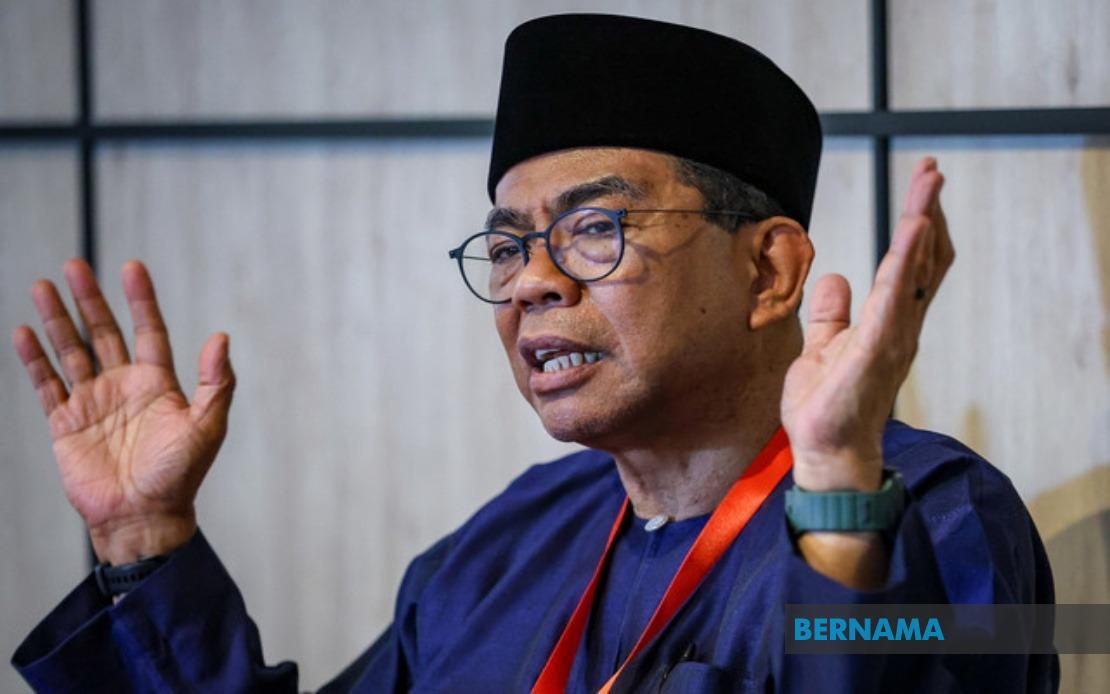
Malaysia's Defence Minister Datuk Seri Mohamed Khaled Nordin has reaffirmed the government's unwavering commitment to its policy of not recognising Israel as a state, characterising recent enforcement actions as a natural extension of this longstanding diplomatic position. Speaking in Johor Bahru on July 25, Mohamed Khaled emphasised that the expulsion of Israeli nationals was entirely consistent with Malaysia's established framework, leaving no room for interpretation or compromise on the matter.
The Defence Minister's remarks came amid growing international attention on Malaysia's handling of what authorities described as unauthorised entry by Israeli nationals connected to educational operations at the Network School in Forest City. Mohamed Khaled clarified that the enforcement measures were specifically designed to prevent any involvement of Israeli citizens in the institution, positioning the government's actions as preventative rather than reactionary. He stressed that Malaysia's immigration and security protocols are designed to uphold this policy rigorously at all entry points and across all sectors of activity within Malaysian territory.
The government's resolute stance has attracted considerable scrutiny from Washington, where eight members of the United States Congress issued a formal letter to Secretary of State Marco Rubio on July 21 expressing serious concerns about Malaysia's treatment of an Israeli national who allegedly used a passport from another country to circumvent immigration restrictions. This congressional intervention signals deepening friction between the two countries over Malaysia's approach to Israeli citizens and represents a notable escalation in diplomatic tension.
The congressional letter explicitly threatened consequences for Malaysia's strategic partnership with the United States, specifically targeting the International Military Education and Training programme, which provides valuable professional development opportunities for Malaysian military personnel. The lawmakers demanded that Malaysia reconsider its position within a 15-day window, implying that continued non-recognition of Israel could result in suspension of this bilateral military cooperation programme. Such pressure reflects a broader American policy framework that increasingly links military aid and training to alignment on Middle East diplomatic issues.
Mohamed Khaled responded to these threats by asserting that Malaysia's principled stance would not be swayed by external pressure or the prospect of reduced military funding. He characterised the congressional demands as an internal American matter, suggesting that Malaysia would not alter its foreign policy based on threats of economic or military consequences. The Defence Minister's language conveyed an underlying message that Malaysia views its non-recognition policy as a matter of national sovereignty that transcends bilateral considerations with any single power, regardless of its economic or military significance.
Significantly, Mohamed Khaled maintained that the IMET programme funding had not actually been affected despite the congressional threats, suggesting that the Defence Ministry believes the situation remains manageable at the diplomatic level. This assertion implies either that formal suspension has not yet occurred or that the Malaysian government is attempting to downplay the seriousness of the American response. The timing of the congressional letter and its explicit deadline format suggests a coordinated effort to apply concrete pressure on Malaysian decision-makers rather than engage in routine diplomatic dialogue.
Prime Minister Datuk Seri Anwar Ibrahim has already articulated an equivalent position at the highest political level, declaring unequivocally that Malaysia would continue expelling any Israeli nationals discovered within its borders. The Prime Minister's statement indicates that this is not merely a Defence Ministry position but reflects comprehensive government consensus spanning both political and security leadership. Anwar Ibrahim's commitment to conducting thorough investigations into allegations of Israeli entry further demonstrates the seriousness with which the government treats this issue across all relevant agencies.
The Network School incident at Forest City appears to have served as a catalyst for renewed enforcement scrutiny, with all Malaysian security agencies apparently mobilised to investigate connections between Israeli nationals and the institution. This comprehensive investigative response indicates concerns that extend beyond simple immigration violations to potentially encompassing broader questions about why Israeli citizens might have been seeking access to Malaysian educational facilities and what activities they may have intended to pursue. The government's expansive approach suggests officials view this as a matter with implications beyond routine border control.
Malaysia's position reflects decades of consistent non-recognition policy rooted in solidarity with Palestinian causes and broader principles of anti-imperialism that have characterised Malaysian foreign policy since independence. The government's refusal to accommodate Israeli representation or presence sits alongside Malaysia's active participation in Organisation of the Islamic Conference diplomatic initiatives and its support for Palestinian-aligned resolutions in international forums. This policy represents continuity across multiple administrations and political coalitions, suggesting deep institutional commitment rather than temporary political posturing.
The tension between Malaysia and the United States over this issue highlights a fundamental divergence in how two allied nations approach Middle East politics and the conditions attached to strategic partnerships. While the United States increasingly expects its allies to accommodate Israeli interests or at minimum maintain diplomatic neutrality, Malaysia has chosen to maintain an explicitly principled position that prioritises Palestinian solidarity above accommodation with American expectations. This represents a significant test of whether Malaysia values its military and strategic partnership with Washington more than it values adherence to its non-recognition doctrine.
For Malaysia's regional standing within Southeast Asia, the government's firm position may resonate with neighbouring Muslim-majority populations while potentially creating complications for countries attempting to balance American alliance requirements with regional sentiment on Middle East questions. The expulsion of Israeli nationals and subsequent defence of this action sends a clear signal to domestic constituencies that the government remains committed to principles transcending commercial or strategic convenience. However, it simultaneously demonstrates Malaysia's willingness to accept potential costs in terms of military cooperation and external pressure for maintaining this principled stance.

