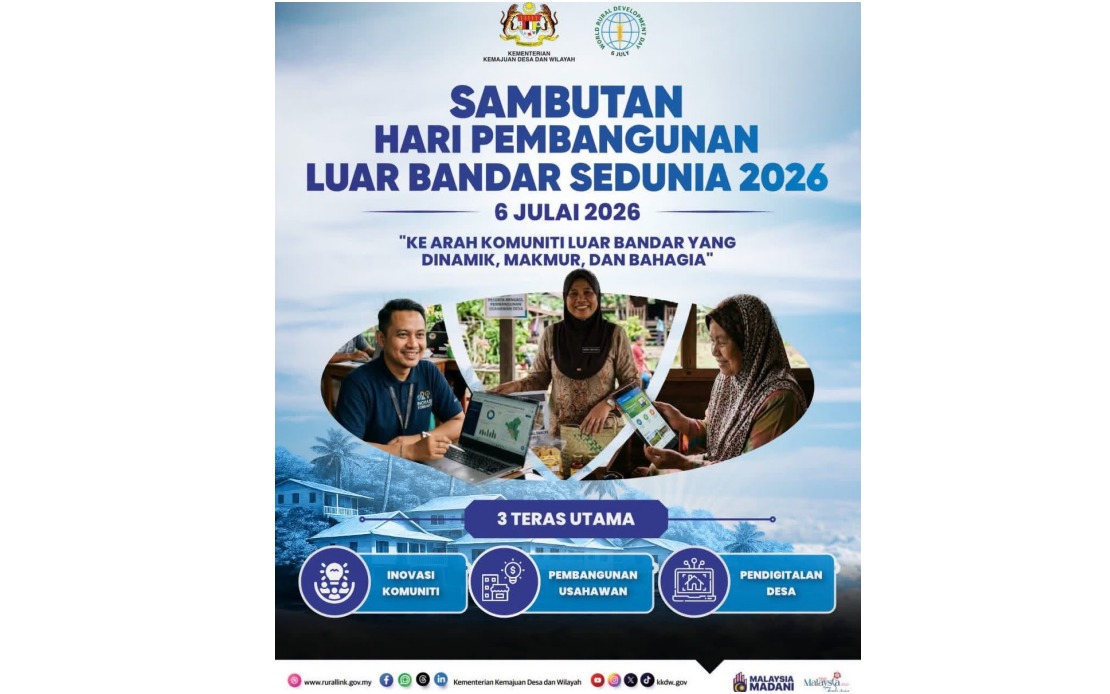
Malaysia will make history on July 6 by hosting its inaugural celebration of World Rural Development Day at Tun Abdul Razak Stadium in Jengka, near Maran in Pahang. This marks a significant milestone for the country as it joins the global community in recognising the vital contributions of rural communities to national progress and sustainable development. Deputy Prime Minister and Minister of Rural and Regional Development Datuk Seri Dr Ahmad Zahid Hamidi will officiate the event, underscoring the government's commitment to rural advancement at the highest political level.
The United Nations General Assembly formally established World Rural Development Day in September 2024, designating July 6 as the annual commemoration date. This declaration coincided with the commemoration of the Centre on Integrated Development for Asia and the Pacific (CIRDAP), an institution focused on fostering balanced development across the region. The first global observance took place on July 6 last year, with Malaysia now joining member nations in implementing official nationwide celebrations. The timing reflects a growing international recognition that rural prosperity is integral to achieving the Sustainable Development Goals and reducing development disparities.
Under the overarching theme "Toward Vibrant, Prosperous and Happy Rural Communities," Malaysia's inaugural celebration will spotlight three interconnected strategic pillars that the government believes are essential for transforming rural Malaysia. Community innovation represents the first pillar, acknowledging the creative potential and entrepreneurial spirit already present in rural areas that require proper support structures and recognition. Rural digitization forms the second pillar, addressing the persistent digital divide that has historically limited rural communities' access to market opportunities, financial services, and information. The third pillar centres on developing rural entrepreneurs, recognising that sustainable economic growth in rural regions depends on cultivating local business leaders and enterprise owners.
These three thrusts are not merely abstract policy objectives but translatable into concrete initiatives designed to expand the economic opportunities available to rural residents. The government emphasises that strengthening digital infrastructure and connectivity in rural areas will enable farmers, small businesses, and service providers to participate more effectively in the digital economy. By empowering communities through innovation and entrepreneurship support, the Ministry of Rural and Regional Development aims to create pathways for rural populations to achieve greater competitiveness without necessarily migrating to urban centres. This approach recognises that retaining talent and investment in rural regions requires demonstrating tangible economic advancement and quality-of-life improvements.
The celebration will feature multiple awards and recognition programmes that highlight success stories and incentivise further rural development efforts. The Rural Aspiration Award MADANI will recognise outstanding contributions to rural advancement, while the Felda Plan Excellence Award will honour achievements within the Federal Land Development Authority framework. Beyond these ceremonial elements, the event will launch the My Rural Insight Journal, a platform intended to document and disseminate knowledge about rural development initiatives and best practices. Notably, the occasion will also see the announcement of Felcra Bhd's Interim Distributable Profit Distribution for 1/2026, directly connecting the celebration to tangible benefits for stakeholders in rural enterprise cooperatives.
The Ministry of Rural and Regional Development has made clear that this celebration reflects sustained government commitment to enhancing rural well-being through structural and programmatic interventions. For Malaysia, a country with significant rural populations across Peninsular Malaysia, Sabah, and Sarawak, the establishment of a dedicated annual commemoration signals policy priority at the national level. The invitation to public participation suggests the government views this as an opportunity to engage rural communities directly, showcase government programmes, and solicit feedback on rural development priorities. The exhibition booths operated by KKDW and partner agencies will provide platforms for direct dialogue between policymakers and rural residents.
The location selected for this inaugural celebration carries symbolic significance. Jengka, situated in Pahang, is an established Federal Land Development Authority scheme area representing decades of structured rural development in Malaysia. By hosting the event in this context, the government emphasises continuity with existing frameworks while signalling a commitment to evolving those frameworks to meet contemporary challenges. The choice underscores that World Rural Development Day is not an abstract international observance but a moment to reflect on Malaysia-specific rural development trajectories and chart courses forward.
For Malaysian policymakers and rural development practitioners, the establishment of this international observance arrives at a critical juncture. Rural Malaysia faces persistent challenges including ageing populations, youth outmigration, underutilised agricultural land, and incomplete digital infrastructure. Simultaneously, global trends toward sustainable agriculture, agri-tech innovation, and digital entrepreneurship present opportunities for rural communities willing to adopt new approaches. The three pillars identified for Malaysia's celebration—innovation, digitization, and entrepreneurship—directly address these contemporary realities and position rural development as compatible with broader economic transformation goals.
The broader regional context also matters for understanding Malaysia's adoption of this observance. Across Southeast Asia, countries grapple with similar rural-urban development imbalances and migration pressures. By formally observing World Rural Development Day, Malaysia joins peers in CIRDAP member countries in placing rural development on national calendars and ensuring periodic high-level political attention to rural issues. This regional alignment may facilitate knowledge exchange and comparative learning about effective rural development strategies, potentially enhancing the impact of individual country programmes.
Looking forward, the success of Malaysia's inaugural World Rural Development Day celebration will likely be measured not merely by event attendance or awards distributed but by whether it catalyses sustained momentum in rural development initiatives. The government's emphasis on community innovation, digital access, and entrepreneurship support suggests an understanding that rural prosperity requires more than infrastructure investment alone. It requires empowering rural residents with knowledge, tools, and market access to become architects of their own development. The coming years will reveal whether this celebration becomes an annual catalyst for accelerating rural transformation or settles into routine commemoration.

