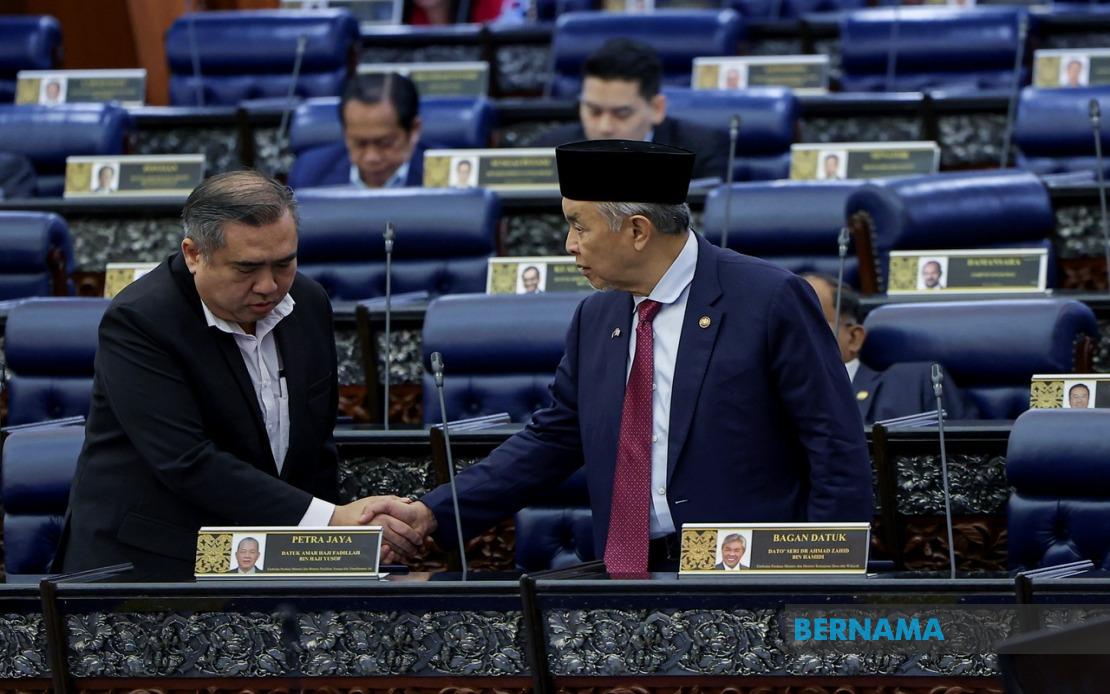
Transport Minister Anthony Loke has initiated parliamentary proceedings on the Road Transport (Amendment) Bill 2026, marking a significant hardening of Malaysia's approach to road safety enforcement. The legislation was formally introduced at its first reading in the Dewan Rakyat on June 22, with Loke confirming that the second reading will proceed during the current parliamentary session. The Bill represents a comprehensive recalibration of the regulatory framework governing vehicle operation and road conduct across the country, reflecting growing concern about traffic violations and their contribution to road fatalities.
At its core, the amendment proposes lifting financial penalties for numerous common driving infractions. The baseline fine for offences such as failing to display registration plates, operating without a valid driving licence, exceeding speed limits, and contravening vehicle construction standards would increase from a minimum of RM300 to RM500. These categories encompass some of the most frequently encountered violations in Malaysia's roads, suggesting that enforcement revenue and deterrent impact will both intensify significantly. The breadth of offences covered indicates that the government views this as a systemic tightening rather than a targeted crackdown on particular behaviours.
More consequential still are the custodial enhancements targeting seriously dangerous conduct. Driving while one's licence is suspended now carries potential imprisonment of up to three years alongside a fine ranging from RM3,000 to RM10,000, substantially eclipsing the previous maximum of one year in jail or RM5,000 fine. This three-fold increase in maximum jail time demonstrates a shift toward incapacitation as a deterrent strategy, suggesting policymakers believe financial penalties alone have failed to curb recidivism among repeat offenders with disciplinary records.
Street racing and organised speed-testing on public roads emerge as a particular focus of legislative concern. The Bill introduces a dedicated offence carrying first-conviction penalties of between RM2,000 and RM10,000 in fines coupled with up to two years imprisonment. Critically, second convictions trigger substantially harsher consequences: fines of RM5,000 to RM20,000 combined with mandatory jail sentences of at least five years. This escalation structure—imposing dramatically heightened penalties for repeat offences—reflects recognition that street racing represents both a direct threat to public safety and a subculture requiring vigorous suppression.
The Bill extends its reach into procedural domains traditionally less visible to the general public. False statements made in transportation-related contexts now face maximum penalties of RM200,000 in fines or ten-year prison sentences. These provisions target fraudulent documentation, falsified claims, and deliberate misrepresentation in licensing and registration matters. By imposing white-collar-calibre penalties on administrative dishonesty, the amendments signal that the integrity of the transport licensing system itself is now treated as critical infrastructure worthy of serious criminal sanction.
Administrative flexibility has been expanded significantly. The proposed transfer of powers under Section 66 of Act 333 would authorise the Transport Minister to establish fees for entry permits governing foreign motor vehicles. This delegation permits administrative adjustment without requiring fresh parliamentary legislation, allowing policy responsiveness to evolving international traffic patterns and reciprocal agreements without legislative bottlenecks. Additionally, the maximum compound amount for violations that can be settled out-of-court increases from RM300 to RM500, providing enforcement officers with greater discretion in offering settlement options that might encourage voluntary compliance.
Enforcement capabilities receive material expansion. Police officers and road transport officers are granted broader authority to manage traffic flow, including powers to control and redirect vehicles during enforcement operations. These enhanced operational powers represent a quiet but significant shift in institutional capacity, enabling more dynamic and interventionist approaches to traffic management during congestion or emergency situations. The granting of such powers reflects confidence in the institutional maturity and training standards of Malaysia's traffic enforcement apparatus.
Micromobility vehicles—categories encompassing electric scooters, e-bikes, and similar devices that have proliferated in urban areas—are now subject to formal detention and disposal procedures. This addresses a governance gap that has emerged as such vehicles have become commonplace in Malaysian cities yet lack clear legal status. The introduction of specific procedures suggests that enforcement agencies have struggled with the ambiguous legal standing of these vehicles and seek clarity through statutory framework.
Obstruction or assault directed at enforcement officers receives elevated treatment, becoming an arrestable offence rather than remaining merely prosecutable. This shift means that individuals impeding road transport or police officers in their duties can be apprehended immediately without the need for warrant applications, substantially lowering the procedural threshold for detention. Such provisions acknowledge mounting incidents where enforcement personnel face verbal abuse or physical interference from motorists, and represent the government's determination to protect officer safety during roadside interactions.
The amendment's timing carries significance within Malaysia's broader road safety context. Annual traffic fatalities remain a persistent public health concern, and legislative responses of this magnitude typically signal that incremental penalties have been deemed insufficient to modify behaviour. The compound effect of these measures—escalating fines, lengthening prison terms, streamlining enforcement authority, and broadening the definition of offences—represents a coherent policy shift toward stricter deterrence rather than rehabilitation or education.
For Malaysian motorists, particularly repeat offenders, the practical implications are substantial. License suspension followed by continued driving now carries realistic prospect of multi-year imprisonment rather than modest fines. Young drivers tempted toward street racing face not merely financial ruin but years removed from society. The calculus of risk versus reward in traffic violations has shifted markedly in the direction of compliance. Implementation will likely reveal whether such heightened penalties successfully reshape road behaviour or whether enforcement remains inconsistent enough to undermine deterrent effect.
Regional observers note that Malaysia's approach parallels tougher stances adopted elsewhere in Southeast Asia, suggesting a convergence toward punishment-heavy models rather than education-focused frameworks. Whether this legislative approach achieves its intended safety outcomes will only become evident following implementation and systematic analysis of accident and violation trends. The Bill now awaits substantive parliamentary debate, where particular provisions may face scrutiny regarding proportionality and enforcement practicality.

