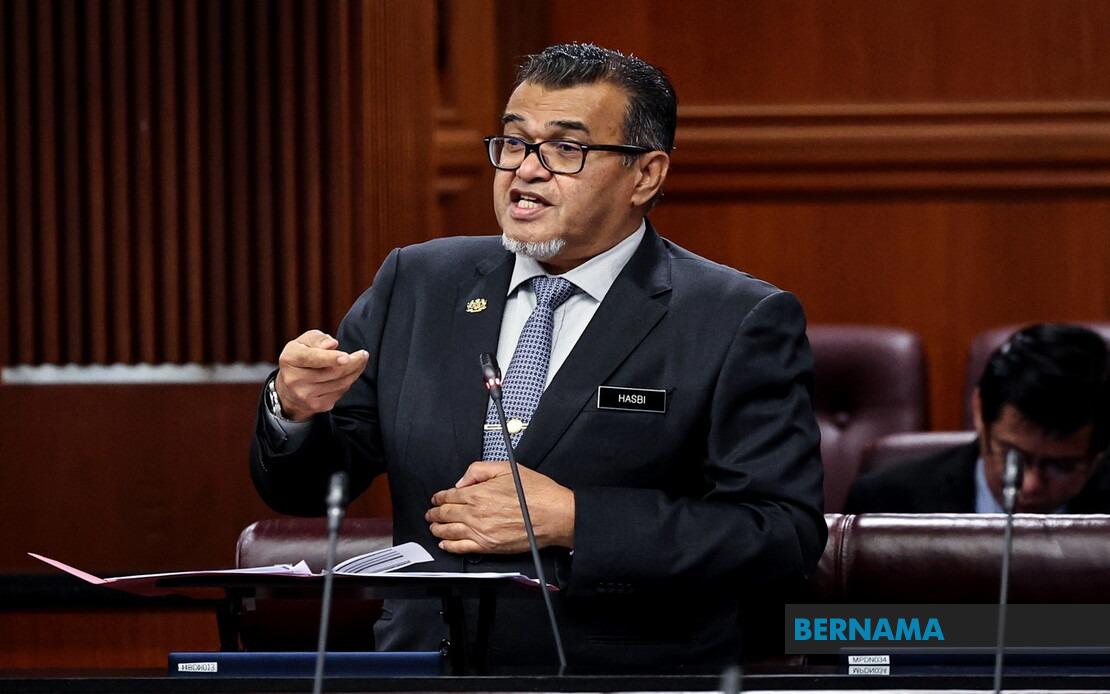
The Malaysian government is moving decisively to close loopholes in existing legislation that currently allow criminals to operate with relative impunity against railway infrastructure. Deputy Transport Minister Datuk Hasbi Habibollah announced in Parliament today that a series of legal amendments targeting trespassing, vandalism and theft on railway assets are being finalised, with parliamentary presentation expected before year-end. The urgency of these changes reflects growing alarm over organised cable theft that has extracted a mounting toll on the nation's transportation backbone.
Current laws governing railway security are plainly inadequate for the challenge at hand. Trespassing onto railway property carries penalties of merely RM500 to RM1,000—a deterrent so modest that it barely registers as a cost to organised criminal networks. The government acknowledges that these penalties are woefully insufficient given the scale of losses involved and the serious safety implications. The forthcoming amendments will fundamentally reshape the legal framework, introducing substantially harsher punishments that target the most damaging offence: cable theft, which carries implications for operational security and public safety that go far beyond simple property loss.
The dimensions of the cable theft problem are staggering. Over the past three years alone, railways recorded 393 separate theft incidents, with thieves stripping approximately 19,756 metres of cable from the network. This translates into a quantified economic loss of RM16.3 million, though the true cost extends far beyond replacement expenses. Disruptions to rail services ripple through supply chains, delay commuters and undermine confidence in public infrastructure. The regularity of these incidents—averaging over 130 thefts annually—suggests organised crime rather than opportunistic theft, indicating that supply-side approaches alone will not suffice.
Recognising that legislative reform must be accompanied by operational responses, the government is implementing a multi-pronged enforcement strategy. Collaboration with the Royal Malaysian Police has been intensified, moving beyond reactive investigation toward proactive supply-chain disruption. Authorities are now engaging directly with scrap metal operators and dealers, leveraging their position within the stolen goods economy. By making it commercially riskier for secondary buyers to acquire materials of dubious provenance, enforcement aims to interrupt the financial incentive structure that drives theft. This market-chain approach addresses a critical vulnerability: without buyers willing to pay for stolen cable, the criminal proposition becomes uneconomical.
Technological investment represents the second pillar of the security response. The Railway Assets Corporation has deployed 1,146 artificial intelligence-enabled closed-circuit television systems across high-risk locations at a cost of RM14 million. These systems go beyond conventional cameras, utilising advanced analytics to detect unusual movement patterns, flag unauthorised access and alert operators in real time. This surveillance infrastructure concentrates resources where theft occurs most frequently, creating both a genuine deterrent and evidence collection capability for prosecution. The scale of this deployment—over one thousand camera units—demonstrates the seriousness with which authorities are approaching the problem.
Aerial surveillance through drone technology adds another dimension to the enforcement toolkit. Railway corridors often pass through terrain difficult to access via conventional foot patrols, creating blind spots where thieves can operate with minimal risk of detection. Drones enable monitoring of these isolated stretches, particularly along routes where cable theft has historically been concentrated. Combined with ground-based patrols, this creates layered coverage that significantly raises the operational risk for criminals. The mobility and flexibility of drone patrols allow rapid redeployment to emerging hotspots, enabling enforcement to remain dynamic rather than static.
Ground-level enforcement capacity is being augmented through acquisition of additional resources. Keretapi Tanah Melayu Berhad has received approval to procure 20 scrambler motorcycles for the Auxiliary Police, enhancing patrol capability along railway corridors. These light, mobile vehicles are superior to foot patrols in reaching remote sections quickly and can traverse terrain unsuitable for conventional vehicles. The motorcycles support faster response times when incidents are detected, increasing the likelihood of apprehending offenders while they remain near the crime scene. This hardware expansion directly addresses a capacity constraint that previously limited enforcement effectiveness.
The comprehensive nature of this response—combining legal reform, market-chain disruption, technological surveillance, aerial monitoring and enhanced ground patrols—indicates sophisticated thinking about why previous measures have proven insufficient. Single-factor approaches tend to fail when organised crime adapts; cable theft gangs have demonstrated resilience against limited enforcement pressure, suggesting they have calculated acceptable loss rates within existing penalty structures and have access to reliable buyer networks. The multi-layered strategy makes this calculation substantially more difficult by increasing both the legal and operational risks simultaneously.
For Malaysian businesses and households, the implications are meaningful. Railway cable theft disrupts freight movements, delays commuter services and ultimately increases operational costs that get passed to consumers. The Klang Valley, the nation's most economically productive region, relies heavily on rail infrastructure for both passenger and cargo movement. Degraded service reliability erodes rail's competitive position against road transport, pushing more traffic onto highways and exacerbating congestion. Conversely, successful implementation of these security measures would enhance reliability and make rail more attractive to both businesses and individual commuters, supporting broader policy objectives around sustainable transport.
The parliamentary timeline is worth noting. By targeting parliamentary presentation later this year, the government is signalling that these amendments are not merely aspirational but operationally scheduled. The explicit mention of bringing legislation forward suggests coordination between the Transport Ministry and the parliamentary agenda-setting process. However, the challenging political environment in Malaysia means that timing can shift; the government's control over the legislative calendar is not absolute, and other priorities may crowd the agenda. Success will depend on whether these amendments maintain momentum through committee processes and parliamentary debate without being displaced by more politically contentious legislation.
International experience with similar theft problems offers useful perspective. Cable theft has bedevilled railway operators globally, from developed nations to emerging markets. Successful interventions typically combine legal deterrence with economic disruption of the supply chain and enhanced detection capability. Malaysia's approach aligns with international best practice, suggesting policymakers have studied overseas examples. The investment in AI-enabled surveillance particularly reflects global trends, as more rail operators recognise that conventional security measures cannot keep pace with organised criminal networks that scout routes methodically and operate with military-like coordination.
Looking forward, the success of these measures will depend significantly on consistent implementation. Laws are only as effective as enforcement, and enforcement only sustainable if police and railway security personnel maintain focus over extended periods. Cable theft crimes often involve relatively small-value individual transactions but aggregate to significant economic harm, making them sometimes deprioritised relative to more sensational offences. Sustained political commitment to implementation, adequate resourcing of enforcement agencies and genuine supply-chain pressure on metal dealers will separate genuine reform from symbolic gestures. The government's multi-faceted approach provides a credible framework; whether it translates into measurable crime reduction will become apparent within two to three years of full implementation.

