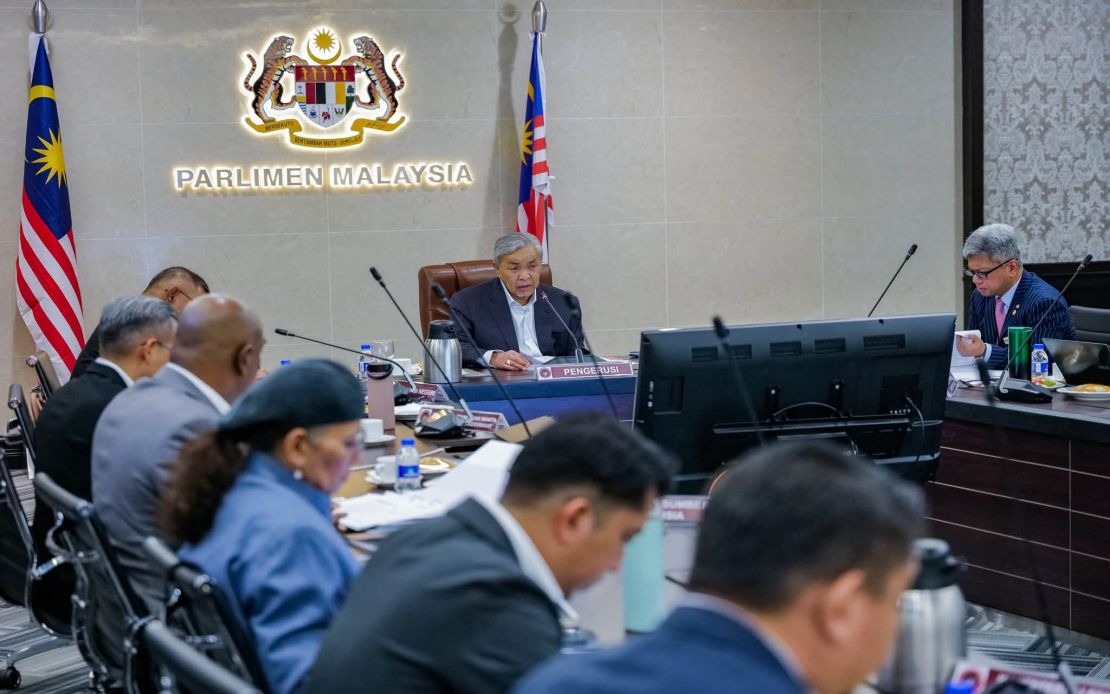
Malaysia's refugee policy must navigate the challenging intersection between upholding humanitarian principles and protecting national interests, according to Deputy Prime Minister Datuk Seri Dr Ahmad Zahid Hamidi. Speaking following a high-level government committee meeting, he underscored the urgency of refining the country's approach to refugee and asylum seeker management in an era marked by unprecedented global displacement and instability. His remarks reflect growing recognition among Malaysian policymakers that the refugee question cannot be treated as a peripheral administrative concern but rather as a central issue touching on security, public welfare, and national sovereignty.
The context for this policy reassessment is sobering. Globally, more than 122 million individuals have been forcibly displaced due to armed conflict and regional instability, according to international figures cited by Ahmad Zahid. This staggering number underscores the magnitude of pressure that developing nations like Malaysia, strategically positioned between major conflict zones, face in managing cross-border population movements. For Malaysian policymakers, the challenge extends beyond mere numerical management; it requires constructing governance mechanisms that can simultaneously honour international humanitarian commitments while safeguarding the interests of citizens and the stability of Malaysian institutions.
Ahmad Zahid, who holds the concurrent portfolio of Rural and Regional Development Minister, chaired the 6th Meeting of the High-Level Committee on the Management of Refugees and Asylum Seekers, where officials reviewed existing frameworks and discussed refinements to policy implementation. The committee's deliberations signal that Malaysia is moving beyond static policies toward a more dynamic governance approach. The emphasis on regular high-level reviews suggests that officials recognise the need for continuous recalibration as circumstances evolve, both within Malaysia and across the broader region. This proactive institutional engagement represents a shift toward treating refugee management as an ongoing strategic priority rather than an occasional crisis response.
Central to the government's current approach is the recognition that refugee management transcends routine paperwork and processing. As Ahmad Zahid articulated, the question touches upon national security architecture, the maintenance of public order, and the preservation of Malaysia's sovereignty—concerns that resonate deeply with both policymakers and the Malaysian public. This framing acknowledges that security considerations are legitimate policy drivers, not obstacles to compassion. By positioning security and humanitarianism as mutually reinforcing rather than contradictory, the Deputy Prime Minister seeks to build consensus around a middle path that neither abandons vulnerable populations nor places unreasonable burdens on Malaysian society.
One tangible manifestation of this refined approach is the Refugee Registration Document (DPP) system, which the committee reviewed during its latest session. The DPP represents Malaysia's attempt to create a structured, documented approach to refugee identification and management. By moving away from informal or ad-hoc systems, the DPP facilitates both better service delivery to refugee populations and stronger security oversight. The review of this mechanism indicates that officials are evaluating whether existing documentation procedures remain fit for purpose or require technological and procedural upgrades to meet contemporary security and administrative standards.
Equally significant are ongoing efforts to streamline access guidelines for education and healthcare services available to refugee populations. These twin sectors are critical because they affect both humanitarian outcomes and broader integration questions. By reviewing and improving coordination among relevant agencies, the government aims to ensure that service delivery is simultaneously more responsive to vulnerable populations and more efficient from an administrative perspective. The emphasis on legal compliance suggests that officials want to anchor these services in clear statutory frameworks, reducing discretionary decision-making and potential inconsistencies across districts and agencies. Such coordination is particularly important in Malaysia's federal system, where responsibility for education and health spans multiple levels of governance.
The timing of this policy review is significant for Southeast Asia more broadly. As conflicts persist in neighbouring regions and economic disparities between nations remain stark, refugee flows across Southeast Asian borders show no signs of diminishing. Malaysia, with its relatively developed economy and established administrative capacity, faces particular pressure as a destination and transit country. The approach articulated by Ahmad Zahid may influence how other ASEAN nations think about their own refugee frameworks. Southeast Asia has historically preferred informal arrangements and burden-sharing mechanisms; Malaysia's move toward more formalised, systematic governance could establish a regional benchmark.
However, the challenge of implementation should not be underestimated. Translating high-level policy commitments into consistent ground-level practice requires sustained institutional coordination, adequate resources, and public acceptance. Malaysia's diverse population and varied economic circumstances across regions mean that refugee policies play out differently depending on local contexts. Rural and urban areas may have different capacities and attitudes toward refugee populations. The Deputy Prime Minister's dual role as Rural and Regional Development Minister suggests sensitivity to these geographical variations, though practical challenges in ensuring uniform implementation across the country remain substantial.
The emphasis on national interests and sovereignty also reflects domestic political realities. Public opinion in Malaysia, like many countries worldwide, shows mixed attitudes toward refugee populations. Some communities welcome humanitarian assistance efforts; others express concerns about resource competition and cultural integration. Policymakers must navigate these sensitivities while maintaining international standing and meeting Malaysia's treaty obligations regarding asylum seekers and refugees. The framing of policy as protecting both humanitarian values and national security allows government to maintain credibility with multiple audiences—international human rights bodies on one hand and security-conscious constituents on the other.
Looking forward, the success of Malaysia's refined refugee framework will depend on several factors. Institutional capacity must be bolstered to manage registration, documentation, and service coordination efficiently. Agencies involved—from immigration authorities to education and health ministries—must develop shared data systems and common protocols. Equally important is maintaining public confidence through transparent communication about how policies operate and what safeguards exist. The government's committee structure suggests commitment to ongoing dialogue and adjustment, which should help ensure that policies remain responsive to both humanitarian imperatives and security concerns as circumstances evolve.

