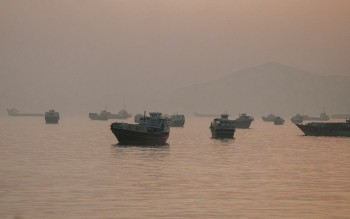
Malaysia's Economy Minister Akmal Nasrullah Mohd Nasir has issued a stark warning that the nation cannot afford complacency in the face of renewed closure of the Strait of Hormuz, cautioning that geopolitical instability in West Asia poses direct and tangible threats to Malaysia's economic stability and consumer welfare. Speaking via a video message on his official TikTok account on July 15, the minister stressed that whilst some commercial vessels continue to navigate the strategic waterway, this modest throughput should not mask the underlying vulnerabilities that Malaysia's economy faces from disruptions originating beyond its borders.
The minister's concerns stem from a series of military strikes launched by the United States against Iran on July 8, which precipitated the Iranian decision to reinstate closure of the Hormuz Strait, one of the world's most critical maritime chokepoints through which approximately one-fifth of global petroleum shipments transit annually. For Malaysia, a nation heavily dependent on imported energy and raw materials, and with significant oil and gas interests of its own, the implications extend far beyond simple price fluctuations at the pump. The Strait of Hormuz represents a vital artery in global commerce, and any obstruction to its free passage reverberates throughout interconnected supply chains that ultimately determine the cost of goods and services available to Malaysian consumers.
Akmal Nasrullah articulated three primary mechanisms through which the Hormuz disruption would exert pressure on Malaysia's economy. The most immediate impact would manifest in crude oil prices, which typically spike sharply when maritime chokepoints face closure or significant uncertainty. Beyond energy costs, he highlighted the cascading effect on transportation expenses, as the closure forces shipping routes to divert around Africa, dramatically extending transit times and inflating logistics costs. These transportation cost increases ripple through import pricing, affecting everything from consumer goods to industrial inputs that Malaysian manufacturers depend upon for competitive production.
A third and particularly damaging consequence, according to the minister, involves the global commodities complex. Raw material input prices—encompassing metals, chemicals, plastics, and agricultural products—tend to rise sharply when geopolitical uncertainty pervades global markets and transportation becomes more costly and uncertain. Food prices represent a particularly sensitive area for Malaysian policymakers, given the nation's substantial reliance on imported foodstuffs and the potential for social unrest if citizens perceive rapid food inflation as the government has failed to manage economic risks.
The minister's emphasis on preparing for prolonged crisis reflects recognition that the current West Asian tensions lack obvious near-term resolution. Rather than treating the Hormuz situation as a temporary disruption, Akmal Nasrullah counselled that Malaysia must adopt a posture of sustained vigilance and adaptive capacity. This framing acknowledges that military conflicts and geopolitical confrontations involving major powers cannot be predicted with certainty, and their duration often exceeds initial expectations. For businesses operating in Malaysia, this translates into the necessity of stress-testing operational assumptions and developing contingency strategies against scenarios that were previously considered low-probability events.
He offered a sophisticated analysis of how supply chain disruptions propagate through interconnected industrial ecosystems, using the example of plastic manufacturers to illustrate the cascading nature of supply shocks. When plastic producers face global supply pressures or price increases, the effects immediately transmit downstream to food packaging manufacturers, who then face elevated input costs that they must either absorb or pass to customers. This same dynamic affects the electrical and electronics sector, automotive manufacturers, medical device producers, construction materials suppliers, and the agricultural input industry. The minister's point underscores that supply chains are not discrete, siloed networks but rather deeply interwoven systems where shocks in one segment rapidly metastasize throughout the broader economy.
This supply chain complexity carries particular relevance for Malaysia, which positions itself as a regional manufacturing hub and has developed sophisticated downstream industries built upon imported intermediate goods. Electronics manufacturing, automotive component production, and food processing—all significant employment generators in Malaysia—depend on reliable access to affordable global inputs. A prolonged Hormuz closure could force manufacturers to absorb higher costs, reduce production, or migrate operations elsewhere, with corresponding employment consequences.
The minister's call for examination of the broader supply chain ecosystem reflects emerging recognition among Malaysian policymakers that traditional approaches to economic management—focusing on macroeconomic aggregates and direct government intervention—prove insufficient when facing structurally complex disruptions originating from geopolitical sources beyond national control. Instead, the government appears to be signalling that businesses must undertake detailed mapping of their supply chain vulnerabilities, identify critical dependencies on specific regions or inputs, and develop diversification strategies that reduce reliance on single sources or routes.
Akmal Nasrullah's warnings also implicitly address the challenge of reducing Malaysia's structural dependence on external conditions. For an economy that imports substantial quantities of energy, food, and raw materials, achieving resilience requires either developing domestic alternatives where economically feasible, or cultivating supply chain relationships with geographically diverse partners such that disruption in one region does not paralyse the entire system. This represents a longer-term structural challenge requiring coordinated private and public sector effort.
The timing of these warnings reflects Malaysia's experience navigating previous supply chain crises, from the COVID-19 pandemic disruptions to semiconductor shortages that exposed vulnerabilities in global manufacturing networks. Each crisis has underscored that Malaysia cannot insulate itself from external shocks but can mitigate their severity through forward planning, supply chain diversification, and maintaining adequate strategic reserves of critical commodities. The Hormuz situation, whilst seemingly a distant geopolitical concern, thus serves as a reminder that Malaysian economic stability depends significantly on vigilance regarding international developments that threaten vital chokepoints in global commerce.

