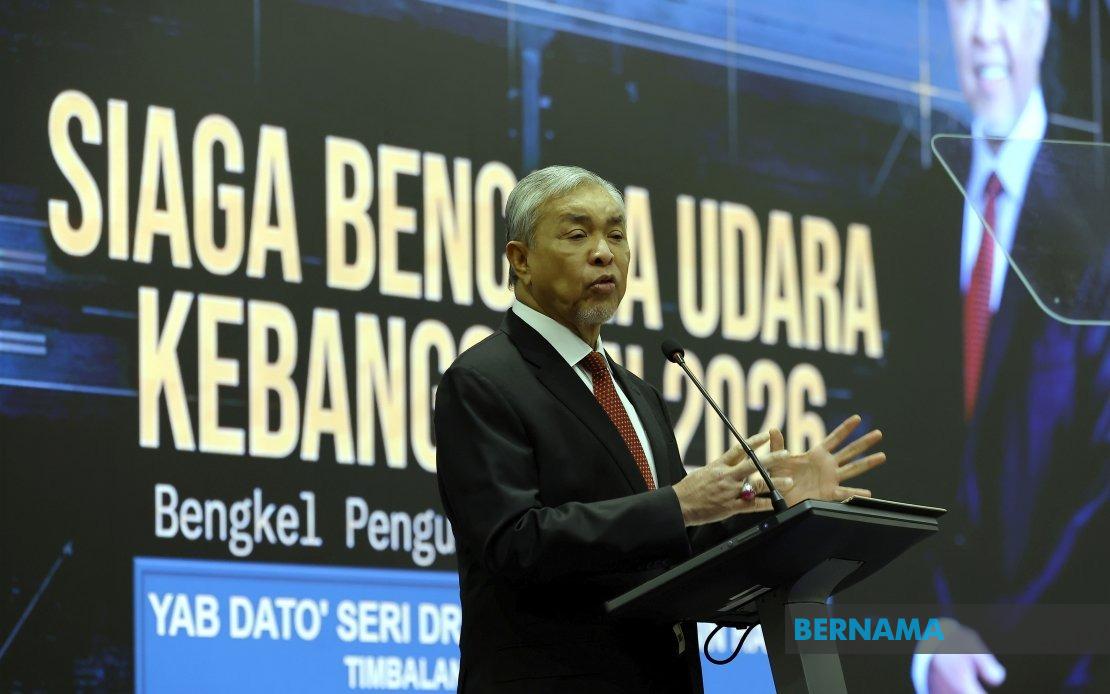
Malaysia's approach to managing aviation emergencies requires a fundamental shift towards a fully integrated system where government agencies, rescue services, airlines and airport operators function as a single coordinated unit rather than separate departments, Deputy Prime Minister Datuk Seri Dr Ahmad Zahid Hamidi has stressed. Speaking at the launch of the National Air Disaster Preparedness 2026 workshop in Sepang, Ahmad Zahid articulated the need for what he termed "one system, one command, and one action"—a framework that consolidates the capabilities, knowledge and decision-making authority of multiple organisations towards the singular goal of preserving lives and regaining control during emergencies.
The workshop, attended by representatives from over 100 government agencies, airlines, airport operators and industry stakeholders, represents a critical opportunity to test existing response procedures and identify gaps in the nation's preparedness architecture. Ahmad Zahid emphasised that merely assembling comprehensive systems on paper provides insufficient assurance; genuine effectiveness emerges only when those systems perform under extreme pressure with rapidly changing information and compressed decision windows. This distinction underscores a maturity in crisis management thinking that moves beyond theoretical preparedness towards practical operational resilience.
Central to Ahmad Zahid's vision is the establishment of clear communication channels and shared situational awareness across all participating organisations. When air disasters occur, response teams must interpret the same information through identical frameworks, understand identical directives, and execute coordinated actions simultaneously. The current structure, where agencies may operate with differing priorities, communication protocols or command structures, introduces delays and potential coordination failures precisely when speed and precision matter most. The absence of pre-established common operational pictures means responders waste critical minutes establishing shared understanding rather than deploying resources.
The Deputy Prime Minister identified four strategic priorities that should drive the workshop's deliberations and the broader reform agenda. Strengthening the command and decision-making hierarchy requires thorough examination and potential revision of existing operational procedures to eliminate ambiguities about authority and responsibility. Enhancing information sharing demands investment in compatible communication systems that enable real-time data flow between organisations with different technical infrastructures. Expanding scenario-based training across diverse locations—including areas beyond airport boundaries and geographically challenging terrain—ensures responders can maintain coordination effectiveness regardless of where incidents occur. Accelerating digitalisation of disaster management systems promises to reduce manual processing delays and improve information accuracy.
For Malaysian readers, these reforms carry particular significance given the nation's position as a major aviation hub and tourism destination. The country welcomed 42.2 million international tourists during the previous year, generating RM110.6 billion in tourism revenue, while domestic tourism spending reached RM121.3 billion. The aviation sector's critical importance extends beyond tourism; it facilitates international commerce, attracts foreign investment and connects Malaysia to global markets. Any aviation incident, particularly one involving significant loss of life, would reverberate across multiple economic sectors and potentially undermine international confidence in the nation's safety standards.
Ahmad Zahid framed aviation safety as a matter of strategic national importance rather than merely a technical or operational concern for regulatory authorities. This reframing elevates disaster preparedness from the domain of specialists to the realm of whole-of-government responsibility. Investment in strengthening response capabilities represents investment in national reputation, economic resilience and the protection of citizens. The framing also implicitly acknowledges that aviation incidents do not merely affect immediate victims; they have ripple effects across economies, reputations and public confidence in government competence.
The integrated approach Ahmad Zahid advocates directly addresses vulnerabilities evident in many previous aviation emergencies globally. Coordination failures, unclear chains of command, incompatible communication systems and inadequate pre-established roles have consistently emerged as contributing factors in post-incident investigations. By establishing unified systems before crises emerge, Malaysia positions itself to respond more rapidly and effectively than many comparable nations. This proactive stance could distinguish Malaysian civil aviation as a model of preparedness for Southeast Asian peers.
The presence of Deputy Transport Minister Datuk Hasbi Habibollah, National Disaster Management Agency director-general Datuk Meor Ismail Meor Akim, Malaysia Airports Holdings Bhd chairman Tan Sri Dr Azmil Khalid and managing director Datuk Mohd Izani Ghani at the workshop announcement signals executive commitment to implementation. These senior officials represent the key organisations whose cooperation and resource commitment are essential for translating Ahmad Zahid's vision into operational reality. Without sustained leadership engagement, systemic reform typically falters as individual organisations revert to established procedures.
The two-day workshop format allows participating agencies and stakeholders to move beyond abstract discussions towards practical testing of procedures and communication protocols. Such exercises typically reveal misunderstandings about operational roles, incompatibilities between communication systems, and gaps in training or resource availability that remain invisible during routine operations. More importantly, these exercises build relationships and mutual understanding among personnel from different agencies who may rarely interact under normal circumstances. When actual emergencies occur, this pre-existing familiarity facilitates faster coordination and mutual trust.
Digitalisation emerges as an enabling technology throughout Ahmad Zahid's framework. Digital systems can automatically route information to relevant stakeholders, maintain consistent records of decisions and actions, and provide real-time tracking of resource deployment. Modern technology also enables remote coordination for situations where geographic dispersion would previously have necessitated physical colocation. However, technology serves as enabler rather than solution; effective systems require clear procedures, trained personnel and genuine commitment from organisations to subordinate individual interests to collective objectives.
The workshop's focus on enhancing coordination resonates throughout Southeast Asia, where several nations operate major aviation hubs and face similar coordination challenges across multiple agencies and jurisdictions. Malaysia's experience developing and implementing these integrated systems could inform regional best practices. The Association of Southeast Asian Nations and bilateral partnerships offer forums for sharing lessons learned. Nations like Singapore, Thailand and Indonesia manage comparable traffic volumes and face similar multi-agency coordination challenges; successful Malaysian innovation in this domain carries value beyond national borders.
Implementing Ahmad Zahid's vision requires sustained commitment beyond the workshop period. Procedures developed during the exercise must be formally adopted, regularly refreshed through updated training, and periodically tested through additional scenarios. Organisations must allocate resources specifically for maintaining integrated capabilities rather than treating them as secondary to primary operational missions. This sustained investment mindset differs from episodic crisis response; it reflects recognition that preparedness is an ongoing institutional responsibility rather than an optional enhancement.
The Deputy Prime Minister's emphasis on measuring system effectiveness by actual performance under pressure rather than asset availability represents sophisticated understanding of organisational resilience. Many governments stockpile equipment and personnel believing this constitutes adequate preparedness; Ahmad Zahid recognises that resources alone are insufficient without the coordination frameworks, training, relationships and procedures that transform disparate assets into coherent response capabilities. This insight should guide Malaysia's continued development of not only aviation disaster management but broader civil protection and emergency response systems.

