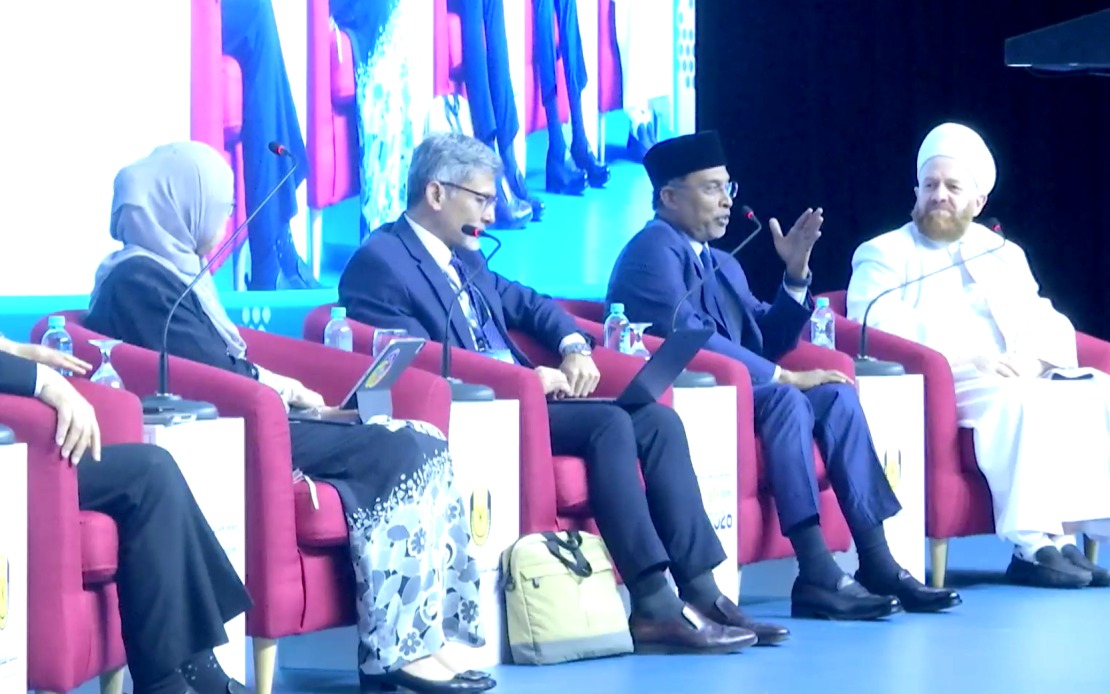
The integration of artificial intelligence and cutting-edge technologies into Malaysia's higher education system has become essential for developing the skilled workforce and critical thinkers the country needs to thrive amidst global economic turbulence, according to Higher Education Minister Datuk Seri Dr Zambry Abd Kadir. Speaking at the 8th World Conference on Islamic Thought and Civilisation in Ipoh on July 21, the minister outlined how rapid technological advancement must be balanced with robust moral and intellectual development to create graduates who can navigate an increasingly complex world.
The Ministry of Higher Education has charted an ambitious roadmap spanning a decade from 2026 to 2035 designed to harmonise three critical pillars: technological innovation, human capital strengthening, and the reinforcement of ethical and moral foundations. This comprehensive approach reflects growing recognition that technical proficiency alone cannot adequately prepare students for the multifaceted challenges they will encounter in their careers and civic lives. As emerging fields such as quantum computing, planetary health sciences, and algorithmic systems continue to reshape industries and society, universities face mounting pressure to update curricula while maintaining focus on developing well-rounded individuals.
Zambry emphasized that contemporary higher education cannot afford to remain confined within traditional frameworks. The evolution from STEM to STEAM—adding the arts and liberal studies—represents a crucial shift in pedagogical philosophy that acknowledges the interconnectedness of technical and humanistic knowledge. This broader approach reflects international best practices observed at leading institutions like Universiti Teknologi Petronas, where engineering students are required to complete coursework extending beyond their discipline to cultivate interpersonal skills, cultural awareness, and ethical reasoning. The minister stressed that such integrated pathways prove essential for shaping not merely competent technicians but thoughtful professionals capable of exercising judgment and conscience in their work.
The particular challenge posed by artificial intelligence demands special attention within this framework. While AI systems excel at processing vast datasets and generating rapid solutions, they fundamentally cannot instil the moral reasoning and character development that humans require to deploy such technologies responsibly. Zambry highlighted this critical limitation, arguing that educational institutions must deliberately cultivate the ethical and critical thinking capacities that will allow graduates to question algorithmic outputs, recognize potential biases, and consider societal implications of technological deployment. Without this ethical grounding, he suggested, Malaysia risks producing technically skilled but morally untethered professionals who lack the wisdom to use powerful tools constructively.
The minister's call for embedding humanities alongside technology addresses mounting concerns across Southeast Asia about skills gaps in emerging sectors. Malaysian universities have historically emphasised STEM disciplines in response to employer demands, yet this singular focus has sometimes produced graduates proficient in technical tasks but ill-equipped for leadership, cross-disciplinary collaboration, or ethical decision-making. By intentionally rebalancing curricula to include philosophy, ethics, history, and social sciences, institutions can help students develop the conceptual flexibility and moral sophistication necessary for complex professional environments where technical accuracy alone proves insufficient.
The 10-year blueprint represents an ambitious institutional commitment, placing human development at the centre rather than treating it as secondary to technological advancement. This philosophy acknowledges that education's ultimate purpose extends beyond workforce preparation to encompass the formation of engaged citizens capable of contributing meaningfully to democratic discourse and societal progress. The emphasis on cultivating integrity and conscience signals recognition that Malaysia's future competitiveness depends not only on technological capability but on the trustworthiness and ethical judgment of its educated citizens and leaders.
For Malaysian universities implementing these principles, the transition will require substantial curriculum review and faculty development. Institutions must identify how liberal arts and ethics instruction can be woven throughout degree programmes rather than relegated to isolated electives. Engineering schools must design courses where technical problems are examined through ethical lenses; business programmes must incorporate philosophy and moral reasoning; science faculties must explore the societal implications of their research. This curricular integration demands careful planning and significant investment in faculty training to ensure humanities scholars and technical experts collaborate effectively.
The regional context adds urgency to this agenda. Southeast Asian nations increasingly compete for talent and investment in technology sectors, yet the region simultaneously grapples with questions about rapid technological adoption and its social consequences. Malaysia's commitment to balancing AI education with ethical frameworks positions the country as potentially leading a more thoughtful approach to technological development in the region, one that explicitly rejects the notion that progress means abandoning humanistic values. This positioning could enhance Malaysia's appeal to multinational corporations seeking not just technical talent but employees grounded in ethical reasoning.
Zambry's remarks also reflect broader global trends recognising that the AI era demands educational approaches that develop uniquely human capacities—creativity, ethical reasoning, emotional intelligence, and moral courage—that remain difficult or impossible for machines to replicate. As AI handles increasingly routine cognitive tasks, employers and societies will place higher premiums on graduates who can think imaginatively, work collaboratively across disciplines, and navigate moral complexity. Malaysian universities that successfully implement this integrated vision will graduate professionals better equipped for leadership roles and more capable of contributing to solving humanity's most pressing challenges.

