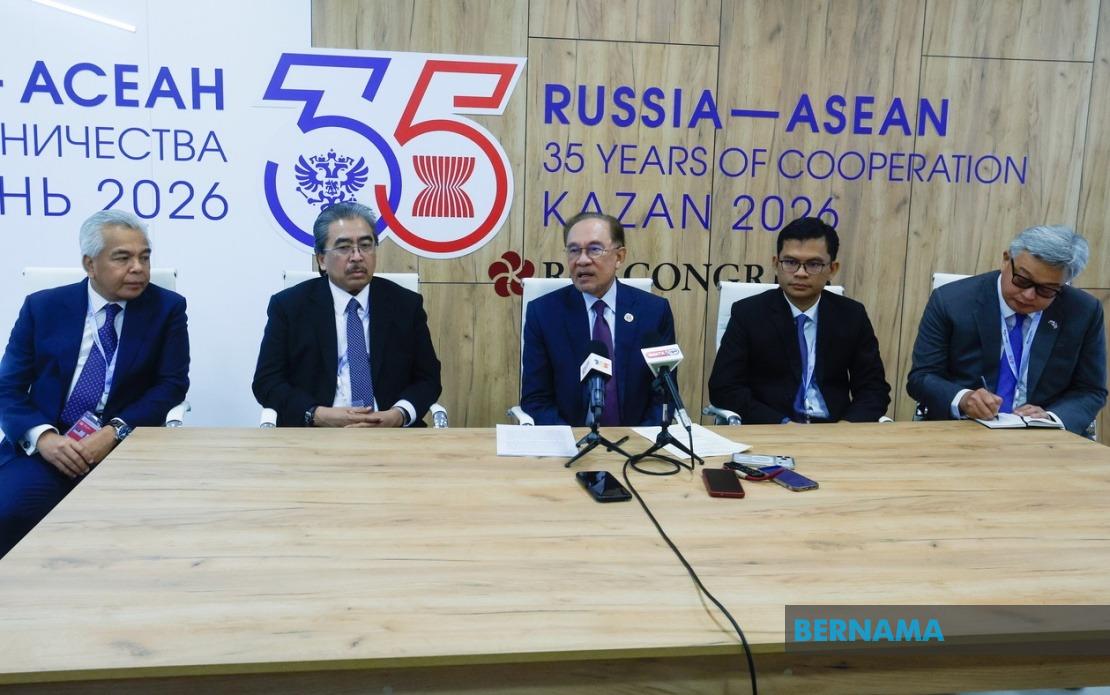
Prime Minister Datuk Seri Anwar Ibrahim has called for urgent measures to establish visa-free travel arrangements and direct flight connections between Malaysia and Russia, arguing that current barriers are severely limiting the country's ability to attract visitors from one of the world's largest tourism markets. Speaking after attending the ASEAN-Russia Commemorative Summit in Kazan on June 18, Anwar highlighted what he described as a troubling disparity in Russian visitor numbers compared with Malaysia's regional competitors.
The Prime Minister drew attention to a striking contrast in tourism flows across the region. Turkey receives approximately five million Russian tourists annually, whilst Thailand welcomes around two million visitors from Russia. By comparison, Malaysia records only 100,000 Russian arrivals per year—a figure that Anwar suggested falls far short of what the bilateral relationship should support. This gap represents a significant missed opportunity for Malaysia's tourism and hospitality sectors, which depend heavily on international visitor spending and the economic multiplier effects that follow.
Anwar attributed the disparity to multiple operational constraints that he characterised as unnecessarily restrictive. He identified two primary obstacles: the absence of direct air connectivity between the two nations, which forces Russian travellers to undertake lengthy journeys via intermediate hubs, and the complexity of payment mechanisms that complicate transactions and discourage bookings. These logistical challenges accumulate to create friction at every stage of the tourist journey, from initial planning through to arrival and spending in Malaysia.
The Prime Minister's frustration extended beyond mere procedural inconvenience, touching on what he saw as institutional inflexibility and outdated systems within Malaysia's regulatory framework. He suggested that government agencies have become overly rigid in their approach, clinging to established protocols that no longer serve contemporary travel patterns. More pointedly, he indicated that some decision-makers remain unduly influenced by concerns about how other nations might perceive Malaysia's engagement with Russia, effectively allowing external political considerations to dictate bilateral tourism policy.
This observation carries particular significance given Malaysia's stated commitment to an independent foreign policy and its role as chair of ASEAN. By suggesting that archaic procedures and geopolitical nervousness have constrained the Malaysia-Russia relationship, Anwar appears to be advocating for a more pragmatic approach that prioritises economic opportunity over diplomatic caution. The distinction between prudent risk management and excessive constraint is becoming an increasingly salient issue in regional affairs.
Anwar's remarks also extended to other countries similarly affected by operational barriers, specifically mentioning Iran as another nation where Malaysia faces comparable tourism development challenges. This broader reference suggests that the Prime Minister views the Malaysia-Russia situation as part of a wider pattern where Malaysia's own regulatory environment and external pressures prevent the realisation of tourism potential. It reflects a strategic recognition that emerging markets and non-traditional tourism sources represent significant growth opportunities.
The timing of these comments is significant, as they emerge from a high-level summit designed to strengthen ASEAN-Russia ties. Malaysia's tourism sector has been gradually recovering from pandemic impacts but remains vulnerable to competition from other destinations. Russia represents a largely untapped market of approximately 144 million people with substantial disposable income, particularly among the middle and upper-middle classes. Direct air routes would dramatically reduce travel time and friction, whilst visa-free arrangements would remove administrative barriers that deter spontaneous travel decisions.
From a regional perspective, Malaysia's pursuit of enhanced connectivity with Russia carries implications for ASEAN's broader engagement strategy with Moscow. As ASEAN navigates complex geopolitical dynamics involving major powers with competing interests, the bloc's internal coherence depends partly on members pursuing consistent approaches to traditional and non-aligned partners. Malaysia's advocacy for deepened Russia ties, framed through the pragmatic lens of economic opportunity rather than ideological alignment, exemplifies how the region can maintain strategic autonomy whilst fostering mutually beneficial relationships.
The logistics of establishing direct flights between Kuala Lumpur and Russian cities would require coordination between Malaysian and Russian airlines, aviation authorities, and potentially government incentives to make such routes commercially viable. Visa-free travel arrangements demand legislative changes and immigration infrastructure adjustments. Both measures require sustained political will and bureaucratic cooperation across multiple agencies, making Anwar's urgent framing essential for overcoming institutional inertia.
Financial and payment system integration presents another layer of complexity. International sanctions and banking restrictions affecting Russia mean that establishing seamless payment mechanisms for tourism transactions involves navigating a complex regulatory landscape. Anwar's acknowledgment of these payment difficulties suggests that Malaysia is aware of external constraints whilst seeking creative solutions that comply with international obligations whilst facilitating legitimate commercial activity.
The Prime Minister's comments reflect a broader strategic calculation that Malaysia must diversify its tourism sources and tap emerging market segments to maintain growth in the post-pandemic era. With traditional markets becoming increasingly competitive and saturated, less-explored source markets like Russia offer significant potential. By explicitly calling for expedited action, Anwar has signalled that this is not merely a routine diplomatic initiative but a priority requiring immediate attention and removal of bureaucratic obstacles.
Successfully establishing these mechanisms would position Malaysia as a gateway for Russian tourism into Southeast Asia, potentially generating significant economic benefits across accommodation, food service, retail, and cultural sectors. It would also strengthen bilateral relationships at a time when Russia is actively expanding its engagement with ASEAN members. For Malaysian policymakers, the challenge now lies in translating the Prime Minister's clear policy direction into concrete operational changes that address both the visa and flight connectivity barriers within reasonable timeframes.

