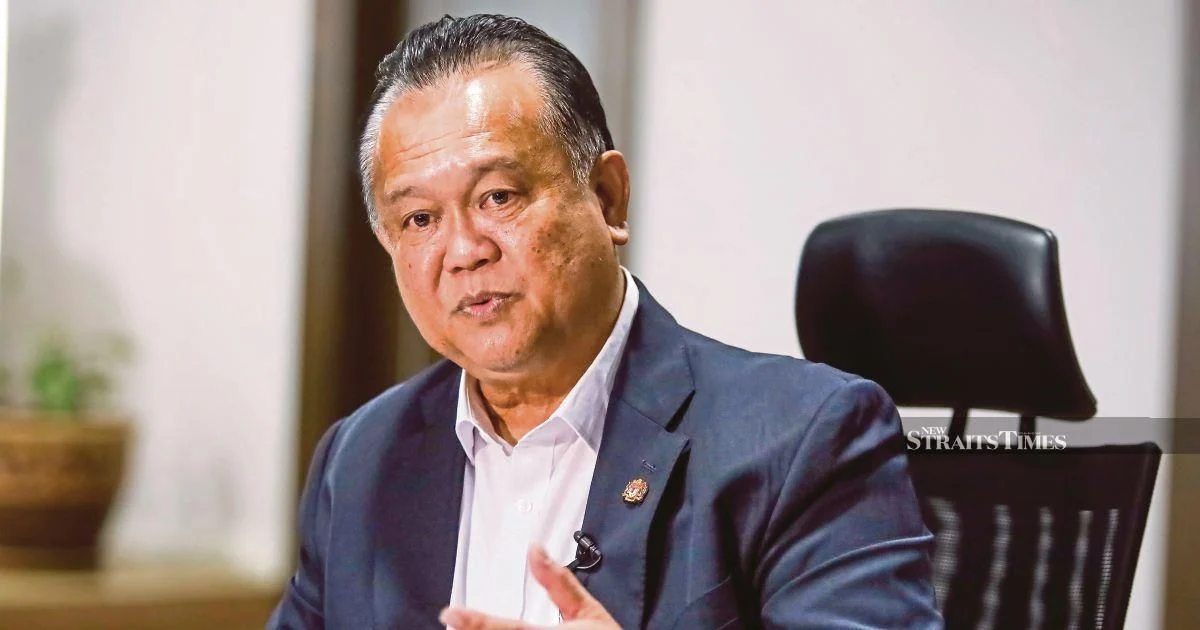
Malaysia's approach to transportation infrastructure must fundamentally shift away from the highway-first model that has dominated the nation's development agenda for decades, according to Works Minister Datuk Seri Alexander Nanta Linggi. While acknowledging that road networks remain a critical component of the country's mobility landscape, the minister emphasised that the era of extensive highway expansion is drawing to a close, replaced by a more nuanced and sophisticated approach to moving people and goods efficiently across urban and suburban corridors.
The minister's comments reflect a growing recognition among Malaysian policymakers that throwing infrastructure capacity at congestion problems without considering broader transport ecosystems has yielded diminishing returns. The traditional strategy of building more roads to accommodate increasing vehicle numbers has long been criticised by urban planners as perpetuating a self-defeating cycle—new roads attract drivers, encouraging urban sprawl and generating fresh congestion that eventually demands further expansion. This approach, which has characterised Malaysian transport planning for generations, is increasingly viewed as unsustainable both financially and environmentally.
Datuk Seri Alexander Nanta Linggi's emphasis on building smarter highway systems represents a pivot toward what transportation experts term "demand management" rather than supply expansion. Rather than continuously expanding road capacity, the focus shifts to optimising existing networks through intelligent traffic management systems, real-time congestion monitoring, and adaptive signal control technologies. These systems can significantly improve traffic flow and reduce bottlenecks without the massive capital expenditure associated with building new expressways, which often take years to plan and construct before delivering benefits.
Integration with public transport stands as the cornerstone of this new vision. Currently, many Malaysian highways operate in virtual isolation from the public transport network, creating a fragmented system where motorists have little incentive to shift away from private vehicles. By contrast, cities that have successfully reduced traffic congestion and improved mobility have done so by creating seamless connections between different modes of transport—ensuring that highways, buses, trains, and even cycling infrastructure function as complementary parts of a unified system rather than competing alternatives. This integration allows commuters to easily transfer between modes depending on their journey requirements, time constraints, and preferences.
The implications for Malaysia's urban development are substantial. As the country continues to urbanise and metropolitan areas like Klang Valley, Johor Bahru, and Penang grapple with traffic congestion, a transport-oriented development approach becomes increasingly vital. Rather than designing suburbs around car accessibility, planners can prioritise higher-density development around transit nodes, reducing overall travel distances and making public transport genuinely competitive with driving. This model has proven successful in cities across East Asia, from Singapore to Seoul, where comprehensive rail networks serve as the backbone for urban expansion.
Public transport expansion carries particular significance for Malaysia's lower and middle-income residents, who spend a disproportionate share of their earnings on transport costs. While highways primarily benefit private vehicle owners, investment in buses, light rail transit, and commuter rail serves a broader population segment. The affordability and accessibility of public transport directly impact social mobility and economic opportunity, particularly for workers commuting from suburban areas to employment centres. By contrast, highway-centric development often exacerbates inequality by subsidising private vehicle use through public infrastructure spending.
The minister's statement also signals awareness of climate change imperatives facing the transport sector. Road transport accounts for a substantial portion of Malaysia's greenhouse gas emissions, and the shift toward public transport—particularly electrified systems—represents a crucial pathway toward meeting the nation's climate commitments. As global attention focuses increasingly on decarbonisation, Malaysian cities that fail to develop viable public transport alternatives risk becoming economic laggards as fuel costs rise and environmental regulations tighten.
Implementing this vision requires coordinated action across multiple government levels and private sector partners. Highways are typically developed and managed at the federal and state levels, while public transport often falls under municipal or regional authorities. Breaking down these institutional silos to ensure that highway upgrades and public transit investments reinforce rather than contradict one another remains a substantial challenge. Successful examples in the region demonstrate that dedicated coordination bodies and unified planning frameworks are essential prerequisites.
Financing also presents a considerable obstacle. Public transport typically operates on thinner margins than highway projects, which generate revenue through toll collections. Creating sustainable funding models for expanded bus and rail networks, particularly in lower-density areas where demand may not justify full cost recovery, requires innovative public-private partnerships and potentially new taxation mechanisms. Several Malaysian states have experimented with congestion pricing and parking levies—approaches that simultaneously fund public transport expansion while discouraging excessive private vehicle use.
The regional context amplifies these considerations. Southeast Asia faces intense urbanisation pressures, with cities like Bangkok, Ho Chi Minh City, and Jakarta struggling with traffic congestion comparable to or exceeding Kuala Lumpur's challenges. However, cities that invested early in comprehensive public transport systems, particularly Singapore and Kuala Lumpur itself through the early Klang Valley metro expansion phases, have managed congestion more effectively than those pursuing highway-centric strategies. The diverging outcomes provide a clear roadmap for Malaysian policymakers considering their long-term investment priorities.
Looking forward, Datuk Seri Alexander Nanta Linggi's positioning suggests that future major transport projects will likely emphasise mass rapid transit expansion, bus rapid transit corridors, and last-mile connectivity solutions rather than additional highway construction. This represents not merely a policy adjustment but a fundamental reconceptualisation of how Malaysia envisions moving its growing urban populations efficiently and sustainably. The transition will undoubtedly generate debate among stakeholders accustomed to the highway-building paradigm, but the economic and environmental pressures driving this shift appear too substantial to reverse.

