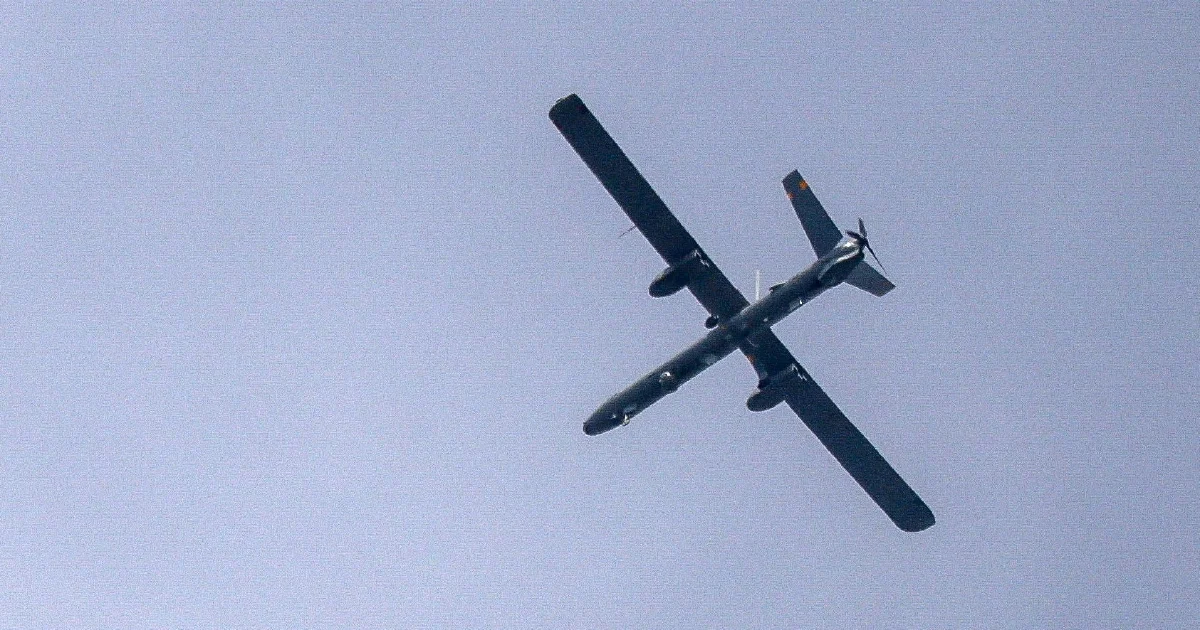
Prime Minister Datuk Seri Anwar Ibrahim has issued a clear mandate for Malaysia to move aggressively into unmanned aerial vehicle technology, positioning the nascent drone industry as critical to the nation's economic future. Speaking at Sepang, the premier stressed that delaying investment in this sector risks leaving the country further behind competitors already establishing dominance in what is projected to become a multi-billion-dollar global market. The remarks underscore growing recognition within government that Malaysia cannot remain passive in the race to harness transformative technologies that are reshaping commerce and logistics.
The unmanned aerial vehicle sector represents far more than just consumer gadgetry or hobbyist applications. Modern drone technology underpins innovations across agriculture, infrastructure inspection, emergency response, environmental monitoring, and last-mile delivery logistics. Nations that cultivate robust domestic UAV industries gain asymmetric advantages: reduced costs for critical operations, enhanced data collection capabilities, and substantial employment opportunities across manufacturing, software development, and specialized services. Without a concerted push, Malaysia risks becoming merely a consumer of foreign-designed systems rather than a generator of intellectual property and high-value exports.
Anwar Ibrahim's intervention carries particular weight given Malaysia's historical strengths in manufacturing and engineering. The country possesses existing expertise in electronics production, aerospace-adjacent sectors, and advanced materials that could form the foundation for a credible drone ecosystem. Yet translating latent capability into competitive advantage requires deliberate policy action. This includes streamlining regulatory frameworks that currently treat drone operations as niche activities requiring exceptional approval processes, when they should instead be integrated into mainstream commercial development strategies.
The current global trajectory makes the timing urgent. International players from the United States, China, and Europe have already captured significant market share and established design standards that are becoming industry benchmarks. Emerging manufacturers in Vietnam, South Korea, and Singapore are rapidly expanding capabilities in manufacturing, software integration, and applications development. Malaysia's window to establish meaningful presence in original manufacturing and not merely assembly operations grows narrower each year. Competitive entry now, while consolidation is still ongoing, offers better prospects than attempting penetration in five years when market leaders have become entrenched.
Domestically, fostering a genuine drone industry creates cascading benefits beyond the sector itself. It attracts multinational technology firms seeking regional manufacturing hubs, generates export revenue that strengthens the ringgit, and creates employment for engineers, programmers, and technicians that represents the high-value work Malaysia needs to transition toward. Smaller manufacturing enterprises can integrate drone components into supply chains, upgrading their technological sophistication. Educational institutions gain incentive to develop specialized training programmes, producing graduates with capabilities aligned to genuine market demand rather than abstract curricula.
The agricultural application alone holds significant promise for Malaysia's rural economy. Precision agriculture enabled by drone monitoring and analysis can reduce input costs, improve yields, and help smallholder farmers compete with larger operations. Environmental monitoring of forests, coastal zones, and water resources represents another domain where Malaysian expertise could develop competitive advantage while addressing pressing domestic conservation challenges. These applications represent genuine revenue-generating activities rather than theoretical possibilities.
However, acceleration of adoption requires removing institutional barriers that currently impede commercial deployment. Regulatory approval timelines for drone operations often stretch across months when international standards suggest processes could function adequately within weeks. Licensing frameworks for drone pilot certification could be harmonized with evolving global standards rather than remaining idiosyncratic. Spectrum allocation for UAV communications needs proactive management from relevant authorities rather than reactive responses to industry requests. These are administrative changes, not massive capital investments, yet they enable the cost structures that make commercial viability possible.
The remarks also implicitly acknowledge Malaysia's broader need to transition toward innovation-led growth as manufacturing labour cost advantages gradually erode. The nation cannot indefinitely compete on low-cost production of commodity goods. Technology-intensive sectors like advanced drone manufacturing, systems integration, and specialized services development represent precisely the categories where Malaysia could build defensible competitive advantages. This positioning aligns with long-term economic strategy rather than representing a tactical sector focus.
International partnerships will likely prove necessary given the sophisticated engineering required for modern UAV systems. Collaboration with established technology firms can accelerate domestic capability development while creating technology transfer mechanisms that build Malaysian capacity over time. Nations like Singapore have demonstrated that strategic openness to foreign investment in advanced sectors, coupled with domestic talent development and favourable regulatory frameworks, generates both economic returns and genuine industrial development.
The government's commitment will be measured by whether announced priorities translate into concrete policy changes, research funding allocations, and regulatory modifications. Generic statements about acceleration carry minimal weight without corresponding resource deployment and bureaucratic restructuring. Initial indicators will emerge from how quickly relevant agencies implement licensing reforms, establish innovation funding mechanisms, and remove regulatory friction from commercial drone operations. The sector's growth trajectory over coming years will reveal whether this intervention represents genuine strategic commitment or simply rhetorical positioning.

