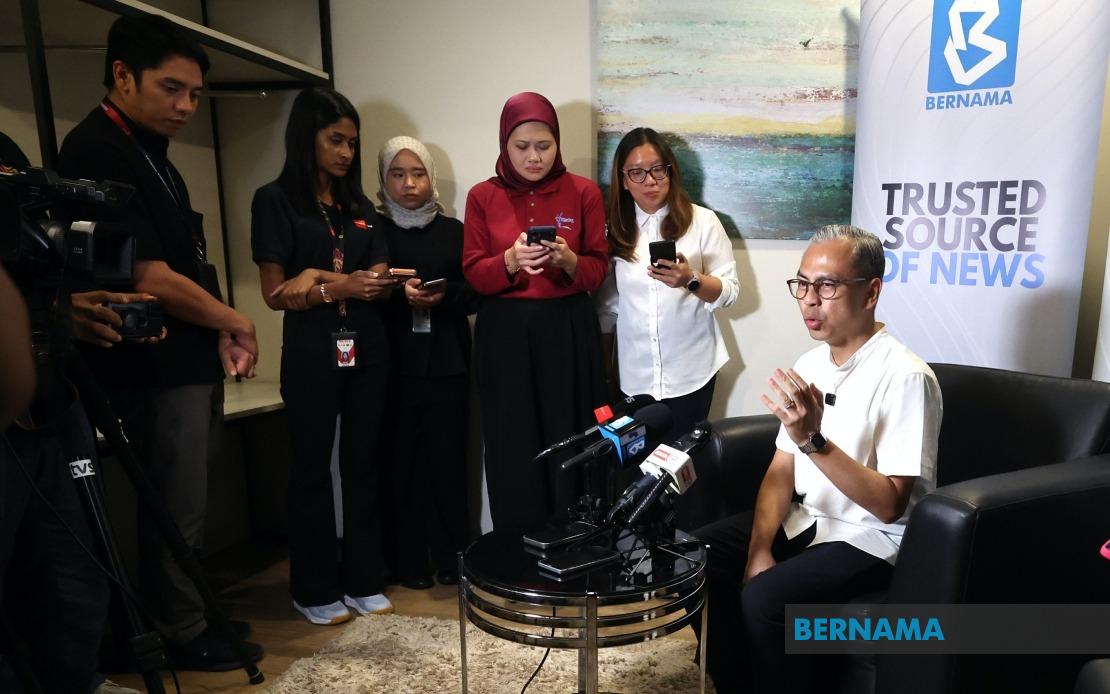
Communications Minister Datuk Fahmi Fadzil has stressed the critical importance of establishing a robust Malaysian Media Council to act as a credible self-regulatory institution that can safeguard the country's media landscape while ensuring ethical and responsible practices across the sector. Speaking in Johor Bahru during a visit to Bernama's operations centre, Fahmi outlined government plans to provide targeted support as the newly formed council gains institutional momentum, recognising the challenges inherent in launching such a body from inception.
The minister's comments reflect a broader strategic shift in how Malaysia intends to manage media governance, moving away from top-down regulatory approaches toward industry-led accountability mechanisms. This model follows international best practices where media organisations assume primary responsibility for upholding editorial standards and professional conduct. By positioning the Malaysian Media Council as the first recourse for addressing media-related grievances, the government aims to create space for journalism to operate with greater editorial independence while maintaining public trust through transparent, peer-reviewed processes.
Crucially, Prime Minister Datuk Seri Anwar Ibrahim has introduced a procedural change whereby complaints against journalists employed by recognised media organisations will no longer trigger automatic government investigations. Instead, such matters must first be referred to the Malaysian Media Council, establishing a buffer between state authorities and editorial operations. This mechanism theoretically provides journalists with protection against arbitrary action while ensuring that disciplinary processes remain fair, transparent and subject to independent scrutiny from within the profession itself.
Fahmi's emphasis on expanding the council's membership base reflects recognition that media regulation cannot succeed through isolation. The minister explicitly encouraged additional media organisations to join the self-regulatory framework, arguing that broader participation would enhance the council's legitimacy and effectiveness in addressing industry-wide challenges. Greater representation across the sector would create a more comprehensive and collectively binding set of standards that command respect across newsrooms and publishing houses throughout Malaysia.
However, perhaps the most significant aspect of Fahmi's remarks concerns the integration of social media platforms into the Malaysian Media Council framework. The minister identified a critical gap in current regulatory thinking: digital platforms, which now rival traditional media as primary sources of information for millions of Malaysians, operate under policies formulated in distant corporate headquarters with minimal consideration for local context, cultural sensitivities, or specific national circumstances. This regulatory blindspot has created genuine public safety concerns, exemplified by recent incidents where unverified details and identities of crime victims circulate rapidly across platforms.
The Banting incident cited by Fahmi illustrated the practical consequences of this gap. When a teenager stabbed a student, social media platforms amplified personal details and investigative information without regard for privacy protections, victim welfare, or ongoing police operations. Such content dissemination, while technically complying with international platform policies, violated Malaysian social norms around victim protection and investigative confidentiality. Platforms operating under generic global guidelines struggle to anticipate or prevent harm emerging from culturally specific contexts where information carries different implications than in Western societies.
Integrating social media platforms into the Malaysian Media Council would theoretically enable these organisations to develop platform-specific guidelines that respect Malaysian legal frameworks, religious considerations, and social conventions. Rather than treating Malaysia as simply another market subject to standardised policies, platforms would engage with local stakeholders to understand how their algorithms and moderation systems impact Malaysian society distinctly. This localisation of governance could address current failures where platforms remove content too slowly or inconsistently, or conversely, apply overly restrictive moderation that fails to account for legitimate local speech.
Fahmi explicitly connected this regulatory initiative to Malaysia's position within the World Press Freedom Index, acknowledging that international assessments of media freedom consider not only state actions but also the quality of self-regulatory institutions and the overall healthiness of the information ecosystem. By demonstrating robust industry self-regulation that incorporates digital platforms and establishes clear mechanisms for addressing grievances fairly, Malaysia can credibly argue that its media environment supports professional journalism and public discourse. This positioning carries particular significance within ASEAN, where media freedom assessments increasingly influence international diplomatic relations and investor confidence.
The government's commitment to providing early-stage support for the Malaysian Media Council reflects pragmatic acknowledgment that self-regulatory bodies require institutional investment to establish credibility and operational capacity. Providing administrative resources, facilitating stakeholder engagement, or assisting with training does not constitute editorial interference but rather represents necessary scaffolding enabling the council to develop into an independent, self-sustaining institution. This initial phase is critical; inadequate support could leave the council underfunded and ineffective, ultimately discrediting industry self-regulation and inviting heavier-handed government intervention.
For Malaysian readers and regional observers, the significance of this initiative extends beyond technical governance questions. The approach implicitly rejects both the extremes of state censorship and anarchic digital disorder, proposing instead a middle path where industry actors take collective responsibility for ethical standards while remaining independent from political control. Whether this model succeeds depends heavily on whether social media platforms genuinely commit to respecting Malaysian regulatory frameworks or merely perform compliance while maintaining algorithms and policies that prioritise engagement over context-specific harm prevention.
The challenge facing Malaysian policymakers involves ensuring that voluntary participation from digital platforms translates into meaningful behaviour change rather than symbolic compliance. Platforms possess little intrinsic motivation to alter successful global systems simply to accommodate local council membership, particularly if membership entails financial costs or operational constraints. Consequently, the Malaysian Media Council's viability may ultimately depend on whether regulatory incentives or sanctions can be structured to make platform participation sufficiently attractive or necessary to warrant genuine engagement with local governance structures.

