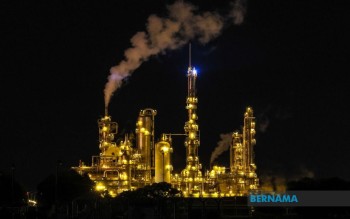
Prime Minister Datuk Seri Anwar Ibrahim's recent announcement that the government would examine establishing a national petroleum reserve stock has drawn careful scrutiny from economists concerned about the fiscal implications. While the objective of strengthening energy security amid volatile geopolitical conditions is widely recognised, IPPFA Sdn Bhd director of investment strategy and country economist Mohd Sedek Jantan has offered a sobering perspective on how Malaysia should proceed, cautioning against a path that simply mirrors the large-scale reserves maintained by wealthier nations.
The central tension underlying the petroleum reserve debate revolves around balancing legitimate security concerns against Malaysia's constrained fiscal environment. Mohd Sedek emphasised that the question facing policymakers is not whether Malaysia should build the world's largest reserve, but rather what scale of reserve makes economic sense given the country's specific circumstances. Unlike the United States and Japan, which have accumulated enormous strategic reserves as part of broader energy strategies, Malaysia operates within tighter budgetary constraints and faces a different energy risk profile shaped by its status as a regional energy exporter and its diverse economic structure.
The economist highlighted a fundamental principle underpinning sound public resource management: any significant expenditure must withstand rigorous scrutiny. Public funds allocated towards petroleum reserves cannot be deployed elsewhere, and this opportunity cost becomes particularly acute in a developing economy where competing demands for investment are substantial. Healthcare systems requiring modernisation, educational infrastructure needing expansion, and food security initiatives all compete for limited government resources. These are not abstract theoretical concerns but pressing policy challenges that affect millions of Malaysians daily.
Yet Mohd Sedek also acknowledged a counterargument that deserves serious consideration: the potential economic devastation triggered by an unexpected and prolonged petroleum supply disruption could ultimately prove far more costly than prudent reserve investment. A major global energy crisis or regional supply shock could severely disrupt Malaysia's economy, inflate energy costs across industries, and create cascading effects through manufacturing, transportation, and essential services. Viewed through this lens, strategic reserves function as insurance against catastrophic scenarios, and like all insurance, their value becomes apparent only when disaster strikes.
The economist's recommendation centres on a methodical, graduated approach that prioritises thorough analysis before physical investment. The government should commission a comprehensive risk assessment that examines multiple dimensions of Malaysia's energy vulnerability. This assessment must determine the optimal reserve size by modelling various disruption scenarios, evaluating their probability and potential impact, and calculating the reserve level that would meaningfully mitigate these risks without maintaining excess capacity that generates only costs.
Beyond sizing, policymakers must develop a credible financing model that does not destabilise broader fiscal objectives. Options might include dedicated taxation of energy producers, gradual budget allocations spread across fiscal years, public-private partnerships that distribute costs and risks, or international financing arrangements that leverage multilateral institutions. The financing mechanism matters enormously because it determines whether the reserve programme strengthens or weakens Malaysia's overall economic position.
Another critical dimension involves the operational framework. How would the reserve be managed, maintained, and strategically released during emergencies? What governance structure would oversee these decisions? Who determines when a supply disruption is sufficiently severe to justify reserve drawdown? These operational questions require careful definition because poorly designed governance could transform a security asset into a source of corruption or mismanagement.
Mohd Sedek also stressed the importance of evaluating private sector partnerships. Malaysia's energy industry includes substantial private investment and expertise. Strategic reserves need not be entirely government-owned or operated. Hybrid models that leverage private sector efficiency while maintaining public oversight might deliver superior outcomes at lower cost. Additionally, reserve infrastructure should be designed with scalability in mind, allowing expansion if circumstances warrant without requiring complete reconstruction.
The broader context for Malaysia's reserve deliberations involves the country's positioning within regional energy markets. As a significant oil and gas producer, Malaysia has historically viewed energy as an economic asset rather than a security vulnerability. However, rising energy consumption driven by industrialisation and growing living standards means Malaysia increasingly consumes domestically the energy it once exported wholesale. This transition reshapes energy security considerations, potentially justifying reserves that would have seemed unnecessary a decade ago.
The geopolitical environment also deserves emphasis. Recent years have witnessed increasing tension around critical energy chokepoints, including the Strait of Malacca through which substantial regional oil shipments transit. Supply disruptions stemming from regional conflict, climate-related disasters, or deliberate interference represent genuine, non-trivial risks for Southeast Asian economies. For Malaysia specifically, proximity to both major shipping lanes and volatile regions creates legitimate energy security concerns that differ markedly from those facing isolated island nations.
Mohd Sedek's conclusion emphasises that building the "smartest" reserve rather than the largest one reflects mature policymaking. This distinction acknowledges that effective governance often involves calibration and proportion rather than maximisation. A petroleum reserve properly sized to Malaysia's fiscal capacity and energy risk profile, financed through sustainable mechanisms, operated under clear governance frameworks, and positioned as part of broader economic security strategy could genuinely enhance the nation's resilience without imposing undue burdens.
The economist's framing ultimately advocates for what might be termed "strategic patience." Rather than rushing to construct physical infrastructure, the government should invest first in analytical capacity and strategic planning. Only after establishing a rigorous economic case, understanding Malaysia's true reserve requirements, and developing credible financing and governance mechanisms should implementation commence. This sequencing reduces the risk of costly mistakes while ensuring that when the government acts, it does so from a foundation of solid evidence rather than reactive anxiety.
As Malaysia considers this consequential decision, the guidance from experienced economists serves an important function: encouraging policymakers to view petroleum reserves not as a binary choice between action and inaction, but as a complex undertaking requiring careful calibration to Malaysian conditions, capacities, and broader economic priorities.

