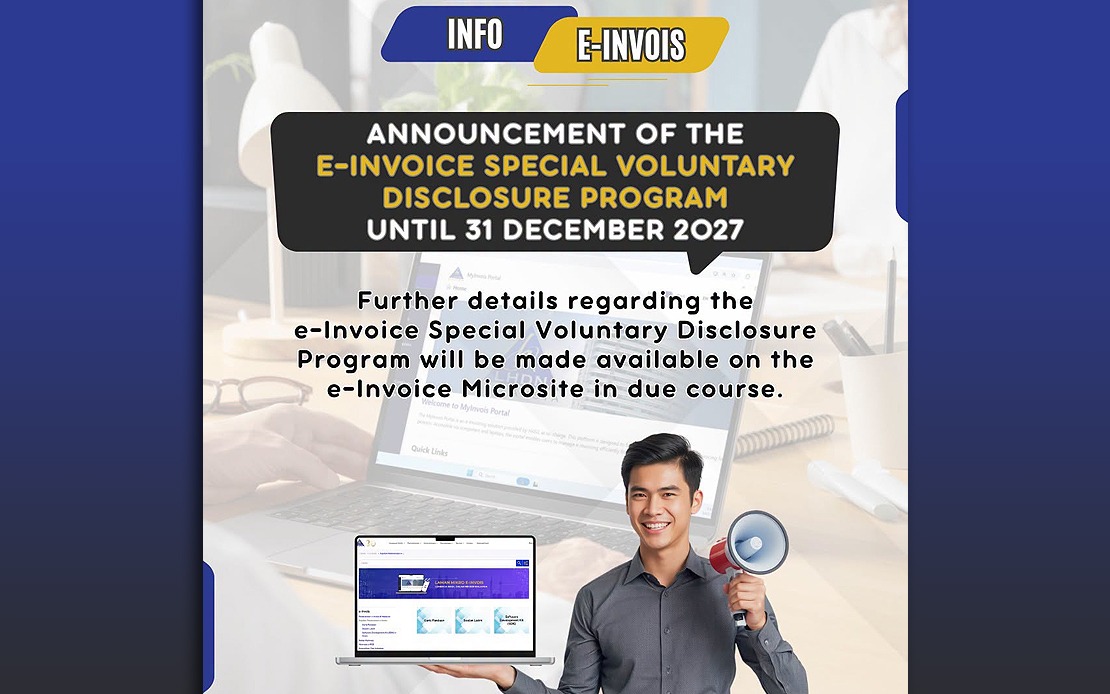
Prime Minister Datuk Seri Anwar Ibrahim has unveiled a significant tax compliance measure designed to ease the transition burden on Malaysian businesses navigating the country's mandatory e-Invoice requirements. Announced as part of broader efforts to reduce operational costs for enterprises across the economic spectrum, the e-Invoice Special Voluntary Disclosure Programme (PKPS) extends an invitation for businesses to self-correct their invoicing records through December 31, 2027, with no penalties attached to such corrections. This amnesty-style arrangement represents a pragmatic acknowledgement from the government that widespread implementation of digital invoicing systems encounters genuine compliance challenges, particularly among smaller operators unfamiliar with electronic processes.
The Inland Revenue Board (IRB) has delineated three distinct pathways through which taxpayers may participate in this programme, recognising the varied nature of invoicing failures across Malaysia's diverse business landscape. Businesses that completely failed to submit required e-Invoices for particular transactions form the first category eligible for the scheme, while those who transmitted invoices containing substantive errors or documentation that fell short of regulatory specifications comprise the second group. A third category encompasses enterprises that omitted e-Invoice submissions entirely across specified periods stretching back to when the government originally mandated electronic invoicing for qualifying transactions. This tripartite framework acknowledges that compliance lapses stem from different causes—whether deliberate evasion, technical misunderstanding, or systemic oversight—and treats each with appropriate flexibility.
The IRB has underscored that any voluntary disclosures submitted through this programme must themselves adhere strictly to established guidelines governing e-Invoice format, content, and submission protocols. Taxpayers cannot merely acknowledge past non-compliance; they must simultaneously provide corrected documentation meeting current regulatory standards. This requirement ensures that participation in the amnesty simultaneously advances the government's broader digitalisation agenda rather than simply forgiving incomplete transition efforts. The board has positioned the scheme as supporting Malaysia's strategic direction toward modernised business operations, framing voluntary compliance not as penalty avoidance but as positive engagement with necessary administrative evolution.
Beyond the penalty waiver itself, the government has sweetened incentives for businesses demonstrating full and timely e-Invoice compliance going forward. Datuk Seri Anwar Ibrahim, speaking in his capacity as Finance Minister, announced accelerated tax deduction mechanisms designed to offset implementation costs that many enterprises face. Specifically, businesses can now claim full capital allowances within a single taxation year for expenditures related to information and communication technology equipment purchased to support e-Invoice systems. Additionally, costs incurred in developing or substantially modifying software solutions specifically configured for e-Invoice generation and submission likewise qualify for single-year deduction treatment. These provisions effectively front-load tax relief for technology investments, improving cash flow for businesses undertaking system upgrades.
For Malaysia's micro, small, and medium enterprises—a category encompassing millions of registered operations across retail, services, manufacturing, and agriculture—these measures carry particular significance. MSMEs represent the backbone of Malaysia's economic activity outside the large corporate sector, yet they frequently operate with constrained information technology budgets and limited access to sophisticated tax planning advice. The combination of a penalty-free correction window with accelerated deductions directly addresses the compliance cost anxiety that such enterprises face when confronting mandatory digital systems. By removing both the punitive consequences of delayed implementation and some of the direct financial burden of systems integration, the government removes substantial barriers to participation, particularly for family-run operations and sole proprietorships.
The IRB has established multiple channels through which taxpayers can access specialised guidance as they navigate the disclosure programme. Dedicated e-Invoice helpdesk services operate at 03-8682 8000, providing telephone support for specific technical and procedural questions. The MyInvois Live Chat function offers real-time assistance for users encountering difficulties with submission platforms or documentation requirements. Physical IRB offices located throughout Malaysia enable face-to-face consultations with tax officers familiar with individual business circumstances. Email support similarly provides asynchronous assistance for documented inquiries. This multi-modal service infrastructure acknowledges that compliance support requirements vary significantly across the business population—some enterprises need sophisticated technical guidance, others require basic procedural explanation, and many benefit from personalised attention suited to their particular operational context.
From a regional perspective, Malaysia's approach to e-Invoice implementation reflects broader Southeast Asian trends toward mandatory electronic documentation as tax authorities seek to improve revenue collection efficiency and reduce fraud. Neighbouring jurisdictions including Indonesia, Singapore, and Thailand have implemented comparable systems with varying levels of strictness regarding enforcement timelines and penalty structures. Malaysia's decision to couple enforcement with substantial incentive packages and extended compliance windows positions it somewhat more accommodatively than some counterparts, potentially facilitating smoother adoption across heterogeneous business populations. The programme's duration until end-2027 also aligns implementation expectations across multiple fiscal years, allowing businesses to integrate systems during normal capital equipment refresh cycles rather than forcing compressed implementation timelines.
Economists and tax compliance specialists have generally welcomed such graduated approaches to mandatory digital system adoption, noting that excessive rigidity in enforcement can paradoxically reduce overall revenue collection if it drives businesses underground or encourages deliberate non-registration. The Malaysian framework balances legitimate tax authority interests in comprehensive documentation with practical recognition that voluntary compliance typically improves when businesses receive support rather than purely punitive treatment. By offering penalty-free correction opportunities while simultaneously reducing the financial friction of implementation through accelerated deductions, the government creates incentive alignment whereby businesses rationally choose cooperation.
The programme's extension through December 2027 provides a four-year correction window that accommodates varying business circumstances and operational calendars. Enterprises that have encountered technical difficulties, experienced staff transitions affecting administrative functions, or faced genuine confusion regarding documentation standards all benefit from extended timeframes allowing systematic remediation. The deadline simultaneously prevents indefinite deferral of compliance obligations, establishing clear expectations that non-disclosed non-compliance after the cut-off date faces standard enforcement consequences. This temporal framing—generous but finite—appears designed to encourage timely participation while maintaining eventual comprehensive coverage.
Looking forward, the programme's success will likely influence how Malaysian authorities approach future mandatory compliance initiatives, particularly as the nation continues advancing digital government services and automated tax administration. Positive outcomes demonstrating high participation and effective voluntary compliance would validate the government's hypothesis that supportive approaches generate better results than purely punitive enforcement. Conversely, lower-than-expected participation would prompt reconsideration of incentive levels or communication strategies. The e-Invoice programme thus functions simultaneously as a practical compliance mechanism and as a policy experiment informing future regulatory design across Malaysian government agencies.

