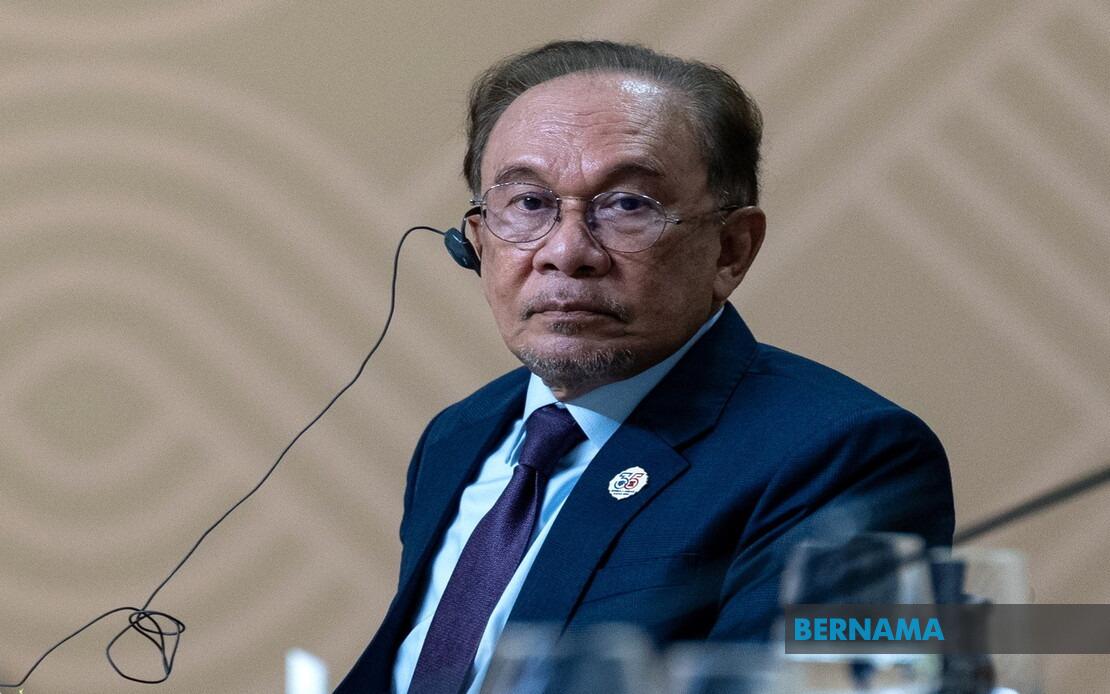
Prime Minister Datuk Seri Anwar Ibrahim has voiced considerable optimism regarding prospects for a memorandum of understanding between the United States and Iran that could fundamentally reshape the geopolitical landscape of West Asia. Speaking during the 35th ASEAN-Russia Commemorative Summit in Kazan on Thursday, Anwar suggested that successful negotiations between the two adversarial powers would represent a watershed moment for regional stability and lasting peace. His comments reflect Malaysia's diplomatic engagement with major powers and its stake in resolving conflicts that affect maritime trade routes, regional commerce, and broader geopolitical equilibrium.
The Malaysian leader grounded his optimism in intelligence gathered directly from Pakistan Prime Minister Shehbaz Sharif, who has emerged as a critical intermediary in the delicate diplomatic process. According to Anwar, Sharif has maintained detailed involvement throughout the negotiation timeline, conducting comprehensive discussions with all parties and remaining present at every substantive stage. This hands-on mediation, Anwar suggested, indicates genuine momentum rather than mere diplomatic posturing. The implicit message conveyed confidence that a seasoned regional operator like Pakistan, with deep ties to both Washington and Tehran, would not invest political capital unless concrete progress appeared achievable.
The negotiations operate under a compressed 60-day deadline for reaching a final agreement, a timeframe that Anwar acknowledged presents both urgency and risk. Rather than interpreting the constraint as problematic, he reframed it as a mechanism to prevent prolonged stalling and to concentrate the minds of negotiators on core issues. His invocation for collective prayer underscores the stakes involved and the genuine uncertainty that persists despite positive signals. The temporal pressure, paradoxically, may serve as a catalyst for compromise when both parties recognise that the window for agreement could close permanently.
Anwar's assessment received corroboration from a surprising quarter. During bilateral discussions with Russian President Vladimir Putin at the summit, the Russian leader articulated a similarly optimistic worldview about the peace negotiations. Moscow's backing carries particular weight given Russia's historical ties to Iran, its evolving relationship with the Trump administration, and its role as a permanent member of the UN Security Council. When Russia and Malaysia voice aligned perspectives on such a critical matter, it signals broader international consensus that the current negotiation phase differs materially from previous failed attempts.
The involvement of the United States under President Donald Trump introduces an element of unpredictability that Anwar explicitly acknowledged. Trump's previous withdrawal from the Joint Comprehensive Plan of Action in 2018 created deep scepticism about American commitment to Iran-related agreements. However, Anwar suggested that despite this historical baggage and the inherent volatility of dealing with Trump's administration, the overall trajectory remains encouraging. His careful formulation—avoiding categorical certainty while maintaining measured confidence—reflects diplomatic prudence appropriate to a Malaysian leader addressing sensitive international matters.
For Malaysia specifically, the implications of a US-Iran rapprochement extend well beyond symbolic peace. The Strait of Hormuz, through which a substantial portion of Malaysian trade passes, remains vulnerable to disruption during periods of acute US-Iranian tension. Approximately one-fifth of the world's petroleum exports flow through this chokepoint, and any sustained confrontation threatens energy prices, shipping insurance costs, and the predictability of global supply chains. A successful peace agreement would alleviate Malaysian business concerns about geopolitical risk premiums affecting its imports and exports.
The regional dimension of Anwar's comments warrants emphasis. Malaysia, as chair of the Association of Southeast Asian Nations at various intervals and as a significant regional economy, has institutional interests in West Asian stability. Persistent conflict in the Middle East generates refugee flows, destabilises neighbouring countries, and creates openings for extremist organisations to exploit sectarian tensions. The Trump administration's unpredictability represents a particular concern for Southeast Asian nations that depend on American security commitments while simultaneously deepening economic ties with China and other powers.
Anwar's diplomatic positioning reflects Malaysia's broader foreign policy orientation of engaging constructively with all major powers without surrendering strategic autonomy. By signalling support for US-Iran negotiations while maintaining cordial relations with both principals, Malaysia positions itself as a voice for pragmatic conflict resolution. This stance resonates with ASEAN's principle of centrality and its commitment to peaceful settlement of disputes through dialogue rather than confrontation.
The 60-day timeline mentioned by Anwar suggests that a resolution should materialise before August 2024, assuming the statement was made in June 2024. Whether the parties can overcome remaining obstacles—sanctionsrelief mechanisms, verification protocols, regional proxy issues—within this window remains genuinely uncertain. Nevertheless, Anwar's remarks, grounded in conversations with key mediators and major powers, provide substantive reason to believe that the current round of negotiations differs from previous cycles that collapsed despite initial optimism.

