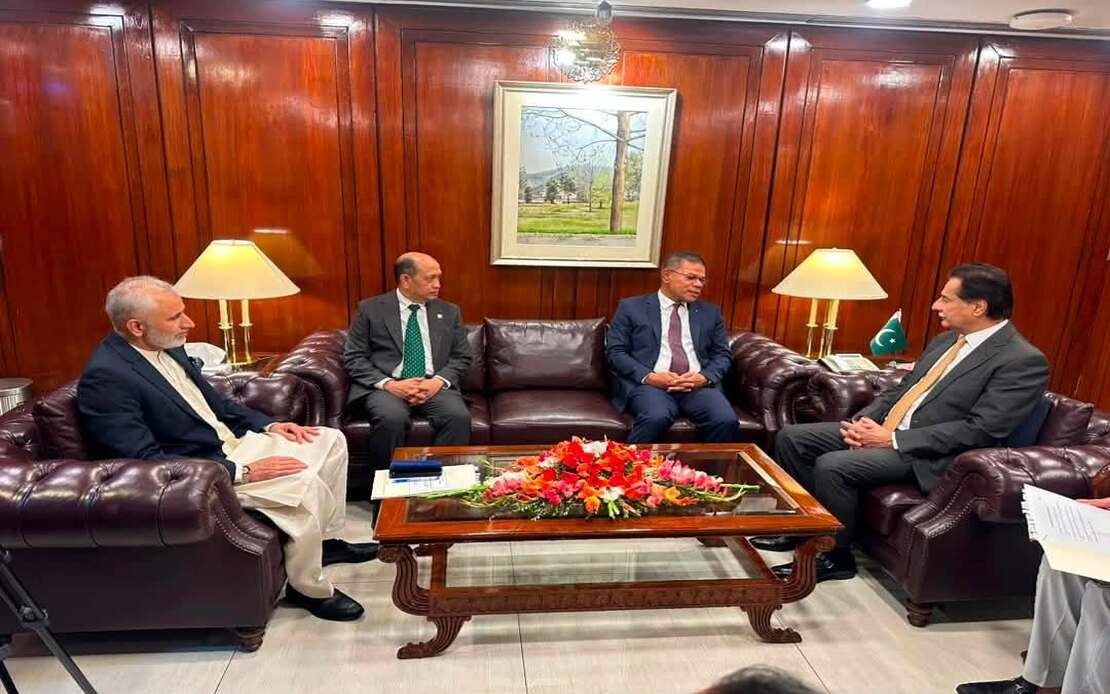
Malaysia's Home Minister Datuk Seri Saifuddin Nasution Ismail has reaffirmed both nations' commitment to resolving contemporary geopolitical tensions through constructive engagement and peaceful dialogue, following high-level meetings in Islamabad. The official visit, which centred on parliamentary and institutional exchanges, highlighted a shared conviction that multilateral cooperation remains essential for maintaining regional stability amid escalating security concerns across South Asia and beyond.
During the second day of his visit, the Home Minister held substantive discussions with Pakistan's Speaker of the National Assembly Sardar Ayaz Sadiq and Senate Chairman Syed Yousaf Raza Gilan. These encounters provided a platform for both delegations to explore common ground on pressing regional matters and to reaffirm the foundational principles underpinning the Malaysia-Pakistan relationship. The emphasis on dialogue reflects a broader diplomatic strategy employed by both countries to manage complex security environments without resorting to confrontational approaches.
Saifuddin Nasution outlined Malaysia's track record in leveraging ASEAN mechanisms as an instrument for peaceful conflict resolution and regional peacebuilding. He pointed to the Association of Southeast Asian Nations framework as a model for how smaller and medium-sized nations can exercise influence through institutionalised dialogue, regional codes of conduct, and consensus-building processes. This perspective carries particular significance given Pakistan's own neighbourhood challenges, suggesting that structured multilateral engagement offers viable alternatives to bilateral tensions.
The bilateral relationship between Malaysia and Pakistan, spanning decades of diplomatic ties, rests on shared Islamic heritage, cultural affinities, and complementary strategic interests. Both nations have historically prioritised people-to-people connections and mutual respect as cornerstones of their partnership. The meetings in Islamabad underscore how institutional relationships—particularly between parliamentary bodies—can deepen understanding and facilitate cooperation on matters extending beyond traditional bilateral concerns to encompass broader regional security architectures.
Parliamentary diplomacy emerged as a focal point during these discussions. The Home Minister stressed the potential for strengthened engagement between Malaysia's Dewan Rakyat and Dewan Negara with Pakistan's National Assembly and Senate. Such parliamentary exchanges serve multiple functions: they build informal networks among legislators, facilitate knowledge-sharing on legislative matters, enable discussion of sensitive political issues in less formal settings, and foster personal relationships that can ease diplomatic interactions at higher levels. This dimension of engagement often proves crucial in preventing misunderstandings and maintaining channels of communication during periods of bilateral tension.
A highlight of the visit involved Saifuddin Nasution's tour of the Parliament Museum in Islamabad, where he gained insights into Pakistan's democratic evolution and constitutional development. This cultural and educational component of diplomatic visits carries symbolic weight, demonstrating respect for the host nation's institutional heritage and commitment to mutual understanding. Pakistan's journey toward consolidated democratic governance, despite considerable challenges, represents a significant undertaking that neighbouring democracies like Malaysia can appreciate and learn from in their own institutional contexts.
The substance of these discussions reflects growing recognition among Southeast and South Asian policymakers that managing geopolitical competition requires mechanisms beyond military deterrence or economic coercion. Malaysia, despite its smaller size and different regional circumstances, has developed considerable expertise in maintaining strategic autonomy while engaging with multiple major powers. This experience, shared through dialogues like those in Islamabad, provides useful perspectives for Pakistan as it navigates complex relationships with regional and global actors.
The timing of these high-level exchanges carries particular significance. South Asia currently faces mounting pressures from great-power competition, climate-driven resource scarcity, and transnational security challenges including terrorism and organised crime. Malaysia's position as a stable, multilateral-oriented middle power offers Pakistan a counterexample to more confrontational approaches, while Pakistan's geopolitical importance and democratic aspirations make it a valuable partner for Malaysia's own regional diplomacy. Strengthening these bonds serves both nations' long-term security interests.
Beyond bilateral considerations, the Malaysia-Pakistan engagement signals to the broader region that dialogue-centered approaches to security challenges remain viable even amid considerable tensions. Both nations carry significant influence within their respective regional organisations—Malaysia within ASEAN and Pakistan within South Asian forums—making their commitment to peaceful resolution mechanisms consequential for wider stability efforts. The explicit focus on parliamentary cooperation suggests that both governments view sustained institutional engagement as protective against the erosion of diplomatic channels that might occur should bilateral or regional tensions escalate.
The Home Minister's characterisation of the Malaysia-Pakistan relationship as grounded in trust and mutual respect points to deeper civilisational and historical connections that transcend contemporary political calculations. These foundations provide resilience during periods when specific policy disagreements might otherwise strain bilateral ties. As regional environments grow more complex and competitive pressures intensify, such deep-rooted relationships become increasingly valuable assets for maintaining stability and pursuing shared interests.
Looking forward, the outcomes of these Islamabad discussions may inform how both countries approach broader regional security dialogues. Malaysia's experience with ASEAN protocols and consensus-building methodologies could inform Pakistani approaches to managing South Asian disputes, while Pakistan's perspective on great-power management in challenging geographies offers lessons for Malaysian strategic thinking. These cross-pollinations of diplomatic experience, facilitated through ministerial visits and parliamentary exchanges, contribute incrementally to building a more stable regional order based on institutionalised cooperation rather than zero-sum competition.

