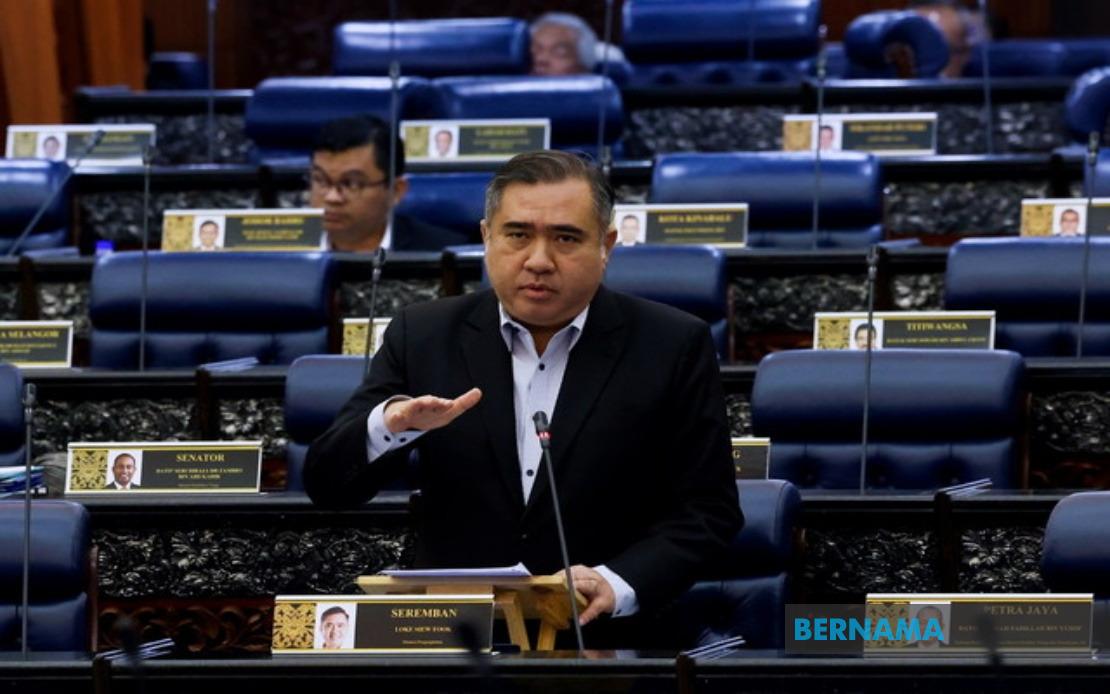
Malaysia is moving towards establishing a formal compensation framework for road accident victims, addressing a long-standing gap in protecting families devastated by traffic fatalities. Transport Minister Anthony Loke announced in Parliament that the Ministry is pursuing amendments to the Road Transport Act 1987 that would empower courts to order convicted offenders to pay compensation to victims or their next of kin in cases where deaths or serious injuries result from dangerous driving or related offences.
The proposed mechanism represents a significant shift in how Malaysian courts approach serious traffic crimes, moving beyond mere fines and imprisonment toward accountability that directly addresses the financial and non-financial losses suffered by victims' families. Under the framework, judges would assess compensation awards based on multiple factors, including the severity of injuries sustained, the extent of losses incurred, and critically, the offender's capacity to pay. This tiered approach acknowledges that meaningful compensation must be realistic and enforceable while ensuring families receive tangible redress.
This initiative comes amid escalating public concern over illegal street racing, which has claimed multiple lives in recent years and emerged as a defining road safety crisis in Malaysia. The government's response extends beyond victim compensation to attacking the problem at its source through the Road Transport (Amendment) Bill 2026, which was passed by the Dewan Rakyat and introduces a dedicated offence category for illegal racing under new Section 42A. The legislative approach reflects recognition that existing traffic laws treated organised racing activities as ordinary violations rather than the dangerous criminal conduct they represent.
The penalties introduced are substantially more severe than traditional speeding infractions. A first conviction for illegal racing now carries a fine ranging from RM2,000 to RM10,000, imprisonment up to two years, or both. Subsequent offences attract significantly harsher sentences, with fines between RM5,000 and RM20,000 and possible imprisonment extending to five years. Critically, this amendment allows authorities to prosecute individuals engaged in illegal racing before any accident occurs, eliminating the previous requirement to wait for a collision before taking action, thereby preventing tragedies rather than merely responding to them.
Enforcement intensity has already begun to reflect this tougher stance. The latest crackdown in Johor resulted in 16 arrests and the seizure of 260 motorcycles implicated in illegal racing activities, demonstrating that the government is translating legislative commitments into operational reality. These enforcement operations, conducted nationwide, aim to dismantle organised racing networks and deter participation through visible consequences.
The urgency underlying these proposals crystallised following a particularly deadly incident on June 1 at Km27 of Jalan Renggam-Simpang Renggam in Johor, which claimed five lives. The Attorney-General's Chambers directed that investigations proceed under Section 302 of the Penal Code—the culpable homicide provision—signalling an intention to pursue the most serious charges available. This elevation of charging standards sends an unmistakable message that deaths resulting from reckless driving will be prosecuted as criminal homicide rather than traffic violations.
Contextually, Malaysia faces a persistent road safety crisis that claims more than 6,000 lives annually, positioning the country among the worst performers for traffic fatalities in the Asia-Pacific region. The illegal racing phenomenon exacerbates this toll, as organised street racing concentrates high-risk behaviours in populated areas during evening and night hours, maximising exposure for innocent road users. Younger drivers particularly dominate both participation in and victimisation by illegal racing, suggesting intergenerational impacts on families and communities.
Loke's parliamentary statements underscore that the government recognises enforcement and legislation alone cannot solve this challenge. He emphasised that behavioural transformation and public awareness must accompany legal reforms to achieve meaningful reductions in road fatalities. This acknowledgment reflects international best practice, which demonstrates that sustainable traffic safety improvements require community engagement, institutional coordination, and sustained public health messaging rather than legislative initiatives in isolation.
The minister's remarks about needing "whole society will" rather than merely "political will" reflect an implicit acknowledgment that previous fragmented approaches have proven insufficient. Road safety in Malaysia remains fragmented across multiple agencies without unified strategic coordination, and the Transport Ministry's proposal for a cross-ministerial national strategy addresses this structural weakness. Such coordination would theoretically ensure that enforcement agencies, education institutions, healthcare systems, and community organisations all reinforce consistent messaging and objectives.
For Malaysian families who have lost members to road accidents, the proposed compensation mechanism offers a degree of recognition and restitution that current law does not provide. However, the scheme's effectiveness will depend critically on implementation details not yet publicly disclosed, including whether compensation is mandatory or discretionary, what maximum and minimum awards are established, and how enforcement of payment orders occurs. Courts in Malaysia have historically shown reluctance to impose substantial compensation orders in criminal cases, suggesting that legislative permission alone may not guarantee that victim families receive meaningful awards.
The implications extend beyond immediate road safety concerns to broader questions about Malaysia's approach to criminal accountability. By introducing compensation as an integral component of sentencing in serious traffic crimes, the framework aligns Malaysian practice with jurisdictions that view victim restitution as a fundamental justice principle rather than an optional sentencing consideration. This philosophical shift could establish precedent for expanding compensation mechanisms into other categories of crime where victims suffer quantifiable losses.
For Southeast Asian context, Malaysia's approach offers a potential model for other nations grappling with similar street racing phenomena and traffic fatality crises. The combination of enhanced penalties, pre-incident enforcement capability, and victim compensation creates a more comprehensive framework than most regional jurisdictions currently employ. However, regional variations in policing capacity, judicial systems, and public engagement mean that effective adaptation would require contextualisation rather than direct replication.
Moving forward, the success of these initiatives will be measurable against concrete outcomes: declining illegal racing incidents, reduced traffic fatalities, and demonstrated compensation payments to affected families. The coming months will reveal whether Malaysia's legislative reforms translate into genuine behavioural change or represent symbolic responses to public pressure. Public commitment to these policies from both political leadership and enforcement agencies will ultimately determine whether the transport crisis trajectory reverses or continues unchanged despite enhanced legal frameworks.

