Malaysia is advancing a coordinated diplomatic and legal strategy to resolve financial claims arising from the abrupt cancellation of its Naval Strike Missile system procurement deal with Norwegian defence contractor Kongsberg Defence & Aerospace AS. Defence Minister Datuk Seri Mohamed Khaled Nordin disclosed that both the Defence Ministry and Foreign Ministry have formally communicated Malaysia's stance and intended approach to the Norwegian government, signalling a methodical approach to what has become a significant defence procurement dispute affecting bilateral relations.
The government's approach centres on leveraging official government-to-government channels rather than pursuing adversarial litigation pathways. By notifying Norway's authorities upfront, Malaysia aims to position the Norwegian government as a neutral facilitator capable of encouraging the defence contractor to engage constructively on settlement discussions. This diplomatic manoeuvre reflects recognition that defence procurement disputes often benefit from high-level political mediation, particularly when multinational defence relationships hang in balance.
According to the Defence Minister, Malaysia specifically requested that Norway's government assume a mediating role between the Defence Ministry and Kongsberg Defence & Aerospace. Such an intermediary position would theoretically lower barriers to negotiation by removing direct adversarial posturing and creating structured dialogue mechanisms. The approach suggests Malaysia believes the contractor may be more receptive to resolution discussions when encouraged through official government channels rather than facing Malaysian legal action unilaterally.
The Naval Strike Missile contract cancellation represents a watershed moment for Malaysian defence procurement policy. The NSM system, a sophisticated anti-ship guided weapon, was intended to strengthen the Royal Malaysian Navy's maritime strike capabilities in an increasingly contested Indo-Pacific environment. The programme's termination—whether for budgetary, technical, or political reasons—has left Malaysia exposed to contractual liabilities while simultaneously complicating its broader naval modernisation trajectory.
The Parliamentary Public Accounts Committee intervened by requesting an emergency briefing from the Defence Ministry on the compensation dispute. This legislative scrutiny reflects broader parliamentary concerns about defence procurement accountability and fiscal stewardship. The PAC subsequently urged the government to intensify mitigation efforts while pursuing fair-value resolution, underscoring the tension between securing reasonable settlement terms and protecting Malaysia's budgetary and diplomatic interests.
The PAC's emphasis on "safeguarding the country's fiscal sovereignty" carries particular weight given Malaysia's medium-term fiscal consolidation imperatives. Large unbudgeted compensation payments to foreign defence contractors could strain public finances and reduce resources available for other priority spending. The committee's language suggests awareness that Malaysia occupies a weaker negotiating position and must therefore leverage diplomacy rather than litigation to achieve acceptable outcomes.
For Malaysia's defence establishment, this episode highlights persistent vulnerabilities in procurement planning and execution. Cancellation of major defence contracts typically triggers substantial financial penalties, penalties that defence ministries must either absorb internally or renegotiate through complex international dispute mechanisms. The fact that Malaysia is pursuing diplomatic rather than arbitral pathways suggests confidence that Norwegian government pressure on its domestic contractor could achieve faster, cheaper resolution than formal contract dispute procedures.
Norway's role as a mediator carries historical and contemporary significance. As a fellow maritime nation with substantial naval interests and as a member of Western defence ecosystems, Norway maintains strong institutional connections to Kongsberg Defence & Aerospace. Norwegian government willingness to facilitate discussions could prove decisive in convincing the contractor that continued confrontation with Malaysia serves no commercial interest, particularly if future sales to Southeast Asian customers hang in balance.
The compensation dispute emerges amid broader shifts in regional defence dynamics. Southeast Asian nations increasingly compete for cutting-edge maritime capabilities as they navigate great power competition and maritime territorial complexities. Malaysia's inability to proceed with the NSM procurement may reflect budget constraints induced by post-pandemic fiscal pressures or shifting strategic priorities. Regardless, the unresolved contractor dispute threatens to damage Malaysia's reputation as a reliable defence procurement partner, potentially complicating future military equipment acquisitions from advanced defence industries.
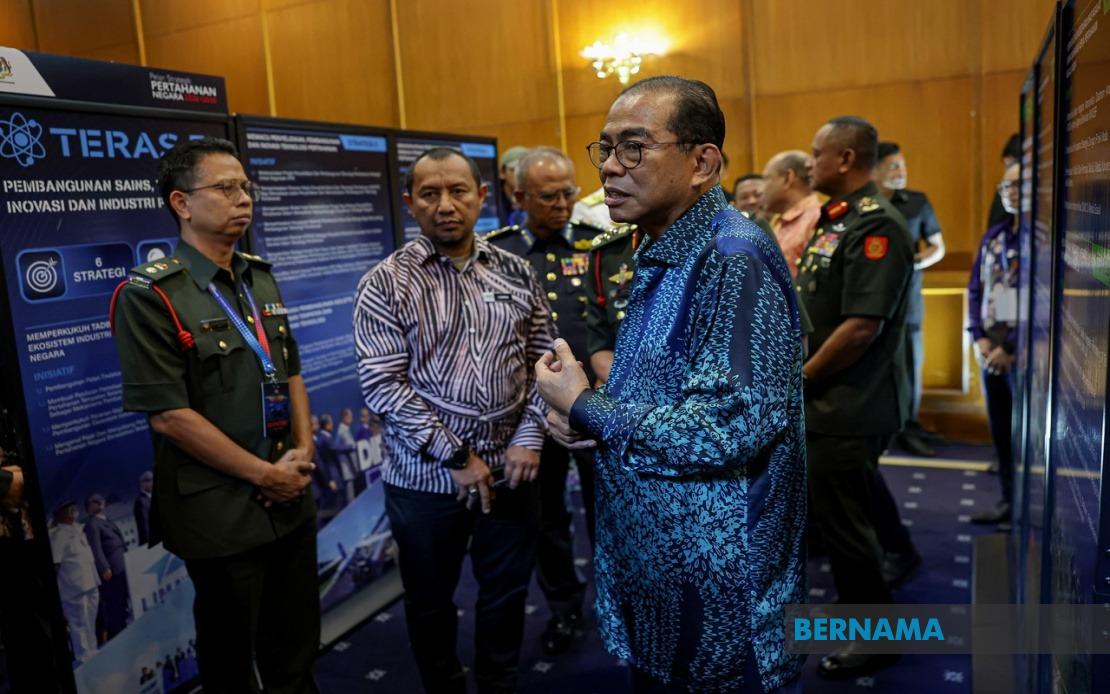
The Defence Ministry's parallel launch of the National Defence Strategic Plan and Defence Capability Blueprint 2026-2030 provides temporal context for the missile contract cancellation. These strategic documents presumably chart Malaysia's defence trajectory over the coming decade, potentially including revised approaches to maritime capability development. The timing of their release alongside diplomatic efforts on the NSM compensation issue suggests the government is attempting to demonstrate forward momentum in defence planning despite the contracted programme's failure.
Resolution of the compensation claim will likely require months of protracted negotiation through diplomatic channels. Malaysia's strategy—early notification, diplomatic engagement, and leveraging Norwegian government facilitation—differs markedly from confrontational approaches but reflects realistic assessment of negotiating leverage. The outcome will illuminate whether patient diplomatic engagement proves more cost-effective and relationship-preserving than adversarial legal proceedings in defence procurement disputes.
For regional observers, Malaysia's handling of this dispute carries implications beyond bilateral relations with Norway. Other Southeast Asian nations pursuing modern defence acquisitions will monitor how Malaysia navigates contractor compensation disputes, potentially learning whether diplomatic persistence yields better outcomes than formal arbitration. The eventual resolution will either vindicate Malaysia's cooperative approach or expose its weaknesses, shaping how defence procurement relationships evolve across the region.

