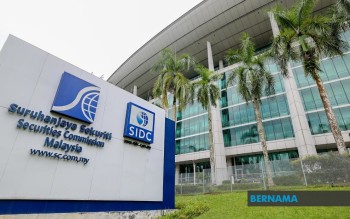
Malaysia is making a concerted push to position itself as a bridge between Russian capital and global Islamic finance markets, signalling a strategic diversification of investor sources beyond traditional corridors. The Ministry of Finance, working alongside the Securities Commission Malaysia (SC), has outlined an ambitious roadmap that extends beyond conventional trade relationships to encompass the export of Malaysia's considerable expertise in structuring shariah-compliant financial products and services. This initiative represents a calculated response to emerging demand from the Russian federation, particularly following high-level engagement with Tatarstan's leadership in May 2025 regarding the adoption of Malaysian Islamic finance development models.
The timing of Malaysia's outreach reflects broader geopolitical and economic shifts reshaping global finance. As Western financial sanctions constrain Russian access to conventional capital markets and credit systems, alternative financing architectures aligned with Islamic principles offer Moscow and its regional partners a pathway to circumvent restrictions whilst maintaining regulatory legitimacy. For Malaysia, this intersection of Russian necessity and Malaysian capability creates a unique commercial opportunity. The country's three decades of Islamic finance innovation have produced a mature ecosystem capable of exporting not merely financial products but entire institutional frameworks, governance standards, and human capital development programmes.
Central to this strategy is an exploratory mission planned for 2026 or 2027 targeting the Central Asian region under Malaysia's broader internationalisation agenda for Islamic capital markets. This expedition will serve multiple functions simultaneously: assessing local market conditions and regulatory environments, identifying anchor institutions willing to adopt Malaysian standards, and establishing networks of stakeholders spanning financial authorities, commercial banks, and fintech operators. The preliminary groundwork has already commenced through bilateral engagements between the SC and Russian counterparts, including meetings with the Central Bank of Russia and the Saint Petersburg International Mercantile Exchange (SPIMEX) conducted in 2023 and 2025.
The services Malaysia intends to export extend far beyond passive investment vehicles. These include shariah advisory consulting, regulatory framework development, professional training programmes, and capacity-building initiatives designed to help Russian and Central Asian institutions construct compliant Islamic finance operations from the ground upward. Such export-oriented services generate high-margin revenue streams with minimal capital requirements compared to direct investment attraction, positioning Malaysian professional services firms as intermediaries in Russia's financial reorientation. This model mirrors Malaysia's earlier success in exporting Islamic banking expertise to countries across the Middle East, Africa, and Southeast Asia.
The Capital Market Masterplan 2026-2030 (CMP 2026-2030) provides the institutional scaffolding supporting this initiative, directing the SC to enhance Malaysia's competitive positioning through stronger regulatory frameworks, accelerated product innovation, and deepened international partnerships. Within this context, the Russian engagement represents one pillar of a broader internationalisation strategy rather than an isolated commercial venture. The masterplan acknowledges that attracting capital flows and establishing Malaysia as a credible gateway between different financial systems requires continuous regulatory modernisation and the ability to offer products tailored to diverse investor requirements and cultural preferences.
The emphasis on Maqasid al-Shariah—the overarching objectives and purposes underlying Islamic law—signals Malaysia's commitment to ensuring that Russian capital flows do not merely replicate conventional finance under Islamic nomenclature but genuinely embody the ethical and social welfare principles underpinning Islamic banking philosophy. This positioning differentiates Malaysian offerings from competitors offering superficial shariah compliance and appeals to Russian institutional investors and government entities seeking legitimacy and sustainability aligned with their own development priorities.
For Malaysian financial institutions and professional services providers, the Russian market represents significant growth potential. Russia's banking sector has longstanding relationships with Malaysian counterparts and possesses sufficient capital and technical sophistication to implement complex Islamic finance structures. Moreover, Russia's regional influence across Central Asia, the Caucasus, and parts of Eastern Europe creates potential multiplier effects whereby Malaysian expertise adopted in Moscow or Saint Petersburg could proliferate throughout Russia's sphere of economic influence.
However, the initiative operates within carefully delineated parameters that Malaysia has publicly emphasised. The government has explicitly stated that capital flows from Russia remain subject to domestic legal frameworks and adherence to international standards, a formulation that implicitly acknowledges ongoing Western sanctions regimes and Malaysia's position within the global financial system. This cautious approach protects Malaysia's relationships with Western trading partners and its standing within international financial institutions whilst creating sufficient operational space for legitimate commercial engagement with Russian entities.
The parliamentary response confirming government support for these measures indicates cross-party acknowledgement of the commercial and strategic merits of Russian engagement, particularly through Wan Ahmad Fayhsal Wan Ahmad Kamal's (PN-Machang) question regarding concrete measures to facilitate Russian investment. This suggests that rather than representing contentious foreign policy, the initiative enjoys sufficient political consensus to proceed without legislative or regulatory impediments.
For Southeast Asia more broadly, Malaysia's Russian engagement offers lessons regarding Islamic finance's evolving geopolitical significance. As Western financial networks fragment and regional actors seek alternatives, Islamic finance emerges as a genuinely multi-lateral system capable of facilitating transactions across ideological divides and sanctions architectures. Malaysia's willingness to position itself as the premier expertise provider and gateway institution reflects recognition that sustainable competitive advantage in financial services derives not from blocking alternatives but from offering superior frameworks and trusted intermediation.
The success of this initiative ultimately depends on Russia's willingness to adopt Malaysian institutional models and commit capital to structured Islamic finance products. Early indicators suggest receptivity, particularly among regional authorities in territories like Tatarstan with significant Muslim populations and existing Islamic banking operations. If sustained over the next three to five years, Malaysian-Russian Islamic finance cooperation could generate meaningful economic benefits for Malaysian service providers, create employment for Malaysian professionals deployed in advisory and training roles, and establish Malaysia as the primary architect of Russian Islamic finance development.

