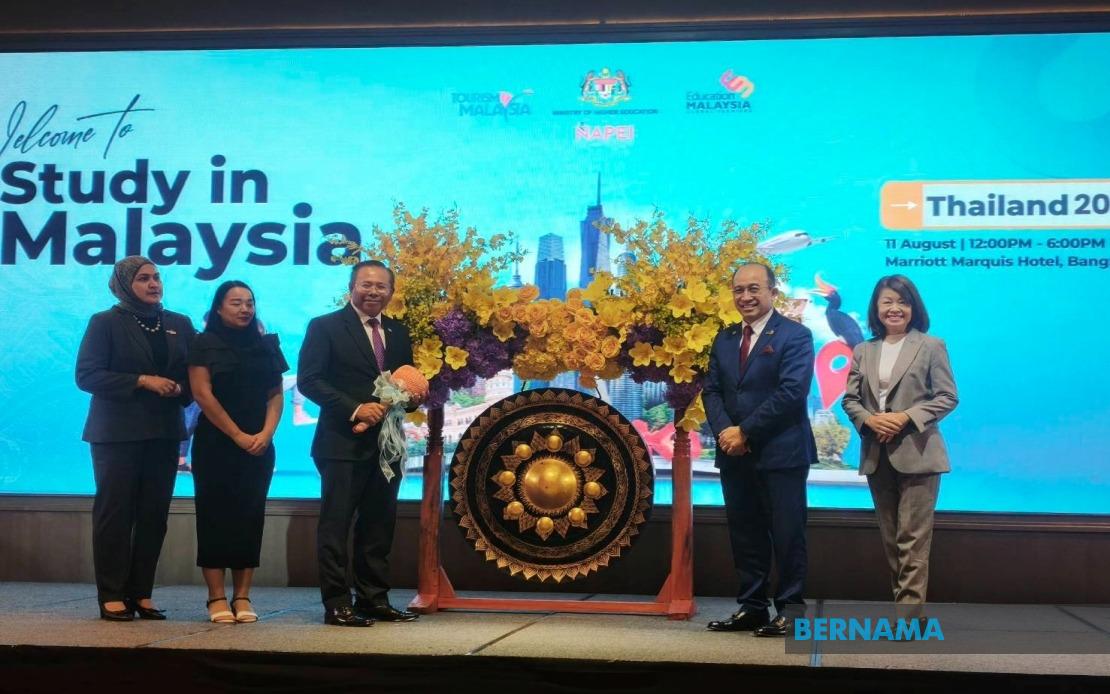
Malaysia is stepping up its international student recruitment strategy in Thailand, targeting a significant surge in enrolments from the neighbouring kingdom. Education Malaysia Global Services, the government agency tasked with promoting Malaysia's higher education sector globally, has unveiled an ambitious campaign to attract over 20 per cent more Thai students to Malaysian universities and colleges within the coming years. The initiative signals a concerted effort to deepen educational and cultural ties between the two countries while addressing Malaysia's broader ambitions to position itself as a premier regional hub for tertiary learning.
Novie Tajuddin, chief executive officer of EMGS, outlined the agency's multi-pronged approach during the launch of the Study in Malaysia Education Fair in Bangkok this week. Rather than relying solely on direct marketing, EMGS is leveraging established networks within Thailand's education consultancy sector. The agency has partnered with the Thai International Education Consultants Association, a professional body representing 78 active education agents across Thailand, to amplify its outreach and build credibility among prospective students and their families. This partnership recognises that local agents serve as trusted intermediaries in Thailand's student recruitment ecosystem and possess deep knowledge of Thai student preferences and regional educational aspirations.
Current enrolment figures paint a picture of steady but untapped potential. As of 2025, approximately 634 Thai students are pursuing degrees at Malaysian institutions, with a fairly even split between undergraduates and postgraduates. This figure represents a noteworthy 20 per cent jump from 2024, when 300 Thai students were enrolled, suggesting that momentum is already building. However, viewed against Thailand's total student population and the scale of outbound mobility from the kingdom, these numbers underscore significant room for growth. Malaysia's recruitment push seeks to capitalise on this expansion trajectory and convert it into sustained, longer-term enrolment gains.
The appeal of studying in Malaysia rests on several tangible advantages that resonate strongly with Thai families and students. Geographic proximity stands foremost—Malaysia shares a land border with Thailand and remains just hours away by road or rail, allowing students to maintain connections to home while pursuing advanced qualifications. This factor proves particularly compelling for students who wish to balance independence with cultural continuity. Equally important is the cost of education; Malaysian universities typically charge significantly lower tuition fees than institutions in developed nations such as Australia, the United Kingdom, or the United States, making tertiary education accessible to a broader segment of Thai society. Furthermore, Malaysia's higher education quality has steadily improved over recent years, with several Malaysian universities now ranking prominently in global university tables, offering students internationally recognised credentials at regional prices.
A crucial policy lever in this recruitment drive is Malaysia's Graduate Pass visa scheme, which permits international graduates to remain in Malaysia and work in designated economic sectors for up to one year following degree completion. This provision addresses a common concern among international students and their parents: whether the investment in overseas education translates into tangible career opportunities. For Thai graduates, the Graduate Pass opens doors to employment in Malaysia's growing knowledge economy, multinational corporations, and service sectors, effectively extending the value proposition of a Malaysian degree. The ability to build professional experience in Malaysia post-graduation, coupled with the possibility of progressing to longer-term work visas, creates a compelling pathway for ambitious Thai students seeking to broaden their career horizons beyond their home market.
The education fair itself constitutes an important tactical element of the recruitment strategy. Jointly organised by EMGS, Tourism Malaysia, and the National Association of Private Educational Institutions, the initiative tours multiple Thai cities—Chiang Mai, Bangkok, and Hat Yai—bringing Malaysian universities directly to Thai students and their families. This roadshow format allows institutions to establish direct engagement with prospective applicants, showcase their programmes and facilities through representatives on the ground, and address specific concerns or questions in real time. By spanning different regions of Thailand, the fair also signals Malaysia's intent to attract students from across the kingdom, not merely from Bangkok's metropolitan centre, thereby diversifying the geographic and socioeconomic composition of the Thai student cohort in Malaysia.
Datuk Wan Zaidi Wan Abdullah, Malaysia's Ambassador to Thailand, has advanced an additional strategic proposal to strengthen Thai student attraction. He has called on Malaysian public and private universities to establish dedicated scholarship schemes targeting Thai students. Such financial support mechanisms would substantially lower the barriers to entry for academically talented but financially constrained Thai applicants, whilst simultaneously demonstrating Malaysia's commitment to building the relationship through tangible investment. Scholarship programmes also serve a soft power function, cultivating goodwill and fostering deeper people-to-people connections that extend beyond immediate transactional educational outcomes.
The coordination between EMGS and the Thai Embassy in Malaysia underscores the institutional depth of this recruitment push. Rather than operating as isolated efforts, the various government agencies and educational bodies involved are aligning their activities to create a coherent, mutually reinforcing campaign. This coordination extends to student engagement and support after arrival, with the Thai Embassy playing a role in facilitating community connections and addressing any welfare concerns that may arise. Such alignment reflects a sophisticated understanding that successful international student recruitment depends not merely on initial attraction but on creating comprehensive ecosystems that support students throughout their educational journey and foster lasting institutional and personal relationships.
For Malaysia, expanding Thai student enrolments serves multiple strategic objectives beyond immediate revenue generation for universities. A larger Thai student presence strengthens bilateral educational cooperation, builds familiarity among Thai professionals who may later engage with Malaysia in business, government, or cultural contexts, and enhances Malaysia's regional soft power positioning. Thailand remains a significant source of outbound students, yet Malaysian universities historically have captured a relatively modest share of this mobility. Increasing Thai enrolments therefore represents an opportunity to capture value within the region that currently flows to competitors such as Thailand's own international institutions, Australia, or other developed-nation destinations.
The broader context of this initiative reflects evolving dynamics in Southeast Asian higher education. As demographic pressures and increased competition reshape global student flows, regional countries are increasingly recognising the strategic importance of intra-regional student mobility. Malaysia's push to attract Thai students sits within this wider recalibration, reflecting a recognition that cooperation and integration within Southeast Asia offer mutual benefits. For Thai students, nearby alternatives to distant Western institutions provide practical advantages, whilst Malaysian universities gain access to motivated students from a neighbouring country with whom they share cultural and geographic ties. This regional focus also aligns with Malaysia's aspirations to develop as a knowledge-based economy, where quality higher education institutions serve as anchors for innovation and talent development.
As the recruitment campaign unfolds, success will depend on sustained execution across multiple fronts—continued agent engagement, competitive scholarship offerings, positive student experiences that generate word-of-mouth referrals, and ongoing policy refinements that enhance the attractiveness of studying and remaining in Malaysia post-graduation. The 20 per cent enrolment growth target, if achieved, would represent meaningful progress in Malaysia's positioning within Thailand's student recruitment landscape. However, the longer-term opportunity lies in establishing Malaysia as the preferred regional destination for quality, affordable higher education among Thai students, a positioning that would generate sustained flows of talent and strengthen educational interdependence across one of Southeast Asia's most important bilateral relationships.

