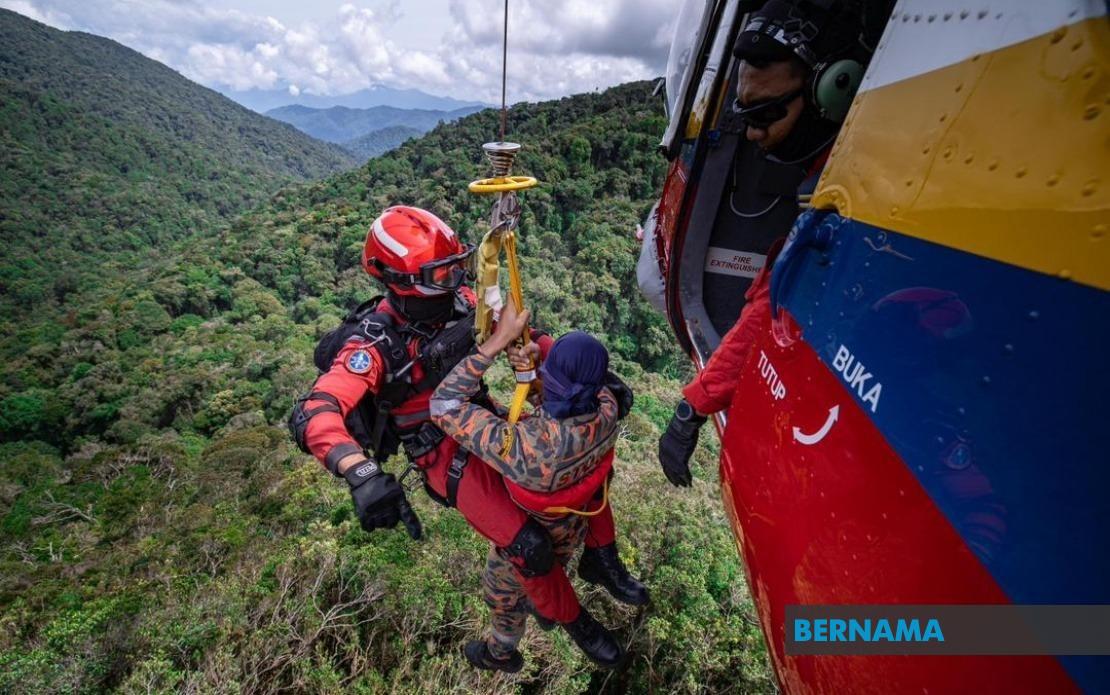
The escalating toll of hiking-related incidents across Malaysia has prompted government action, with official figures revealing 1,059 accidents over the past five years, including 63 fatalities and 87 injuries. Deputy Minister of Natural Resources and Environmental Sustainability Syed Ibrahim Syed Noh disclosed these statistics to parliament this week, underscoring a growing concern about recreational safety as hiking and forest activities gain popularity nationwide. The Fire and Rescue Department data serves as a sobering reminder that Malaysia's natural attractions, while increasingly visited, require comprehensive safety frameworks to protect adventurers from preventable tragedies.
The government's response centres on three interconnected strategies designed to transform how hiking activities are regulated and monitored. Working with the Peninsular Malaysia Forestry Department and financial backing from the United Nations Development Programme, authorities have developed the Mountain Risk Assessment and Management Guideline—a technical framework intended to standardise risk mitigation practices across protected forests. This guideline establishes protocols for managing trail capacity and identifying hazards before accidents occur, representing a shift from reactive emergency response toward proactive prevention. The initiative recognises that not all hiking areas face equal risk, necessitating tailored approaches that account for terrain difficulty, weather exposure, and rescue accessibility.
A cornerstone of this safety enhancement involves certifying and deploying trained mountain guides across high-risk areas. The Forestry Mountain Guide programme has now certified 2,322 individuals—many drawn from indigenous and local communities—who serve as the frontline safeguards for hikers. These guides receive comprehensive training in emergency protocols, first aid, survival techniques, and search and rescue procedures, creating a distributed network of expertise throughout 189 designated high-risk hiking zones. By integrating local knowledge with formal safety certification, the programme strengthens community livelihoods while building institutional capacity for accident prevention and response. The emphasis on community participation also ensures that safety improvements benefit the regions most dependent on forest-based tourism.
A critical gap in Malaysia's current system involves the fragmented nature of hiking registrations. Individual state forestry departments manage their own records through a patchwork of manual and online systems, reflecting Malaysia's federal structure where states retain jurisdiction over forest permits. While this decentralisation respects constitutional boundaries, it hampers national coordination during emergencies and prevents comprehensive monitoring of hiking patterns. The government now recognises that a unified digital registration platform could dramatically improve search and rescue operations by recording hiker movements systematically, enabling rapid location identification when incidents occur, and supporting more efficient deployment of emergency personnel.
The proposed national digital hiking registration system represents a technological modernisation with immediate practical applications. Integrated with geographic information systems and satellite imagery from the Malaysian Space Agency, this system would map terrain features, identify hazard zones, and track environmental changes affecting trail conditions. Real-time data on hiker locations would transform rescue operations from time-consuming searches into targeted responses with precise coordinates. Such infrastructure also enables authorities to enforce carrying capacity limits on popular trails, preventing overcrowding that amplifies accident risk. For Malaysian hikers, the system promises faster assistance during emergencies, while for administrators it offers visibility into usage patterns that inform infrastructure investment and maintenance decisions.
The regulatory framework underpinning these initiatives reflects growing recognition that recreational freedom requires responsible management. The mandatory engagement of certified guides in high-risk areas balances access with accountability, ensuring that popular challenging trails operate under professional supervision. Training programmes emphasise not merely technical competence but the interpersonal and decision-making skills required when guiding strangers through unpredictable terrain. The government's commitment to regular skills updates and welfare support for guides acknowledges that safety depends on adequately resourced personnel, not merely regulatory requirements on paper.
For Malaysian readers and regional visitors, these developments signal a maturation in how Southeast Asian nations approach outdoor recreation governance. Malaysia's challenges mirror those facing other countries experiencing tourism booms in natural areas—balancing economic benefits from visitor spending against the costs of accidents, rescues, and fatalities. The integration of technology, community engagement, and technical standards positions Malaysia as a leader in developing comprehensive approaches. Neighbouring countries managing their own hiking hotspots may observe these innovations, potentially leading to regional knowledge-sharing on safety best practices.
The human cost underlying these statistics warrants emphasis. The 63 deaths since 2021 represent families disrupted, communities grieving, and rescue personnel traumatised by recoveries of deceased hikers. Many of these deaths likely prove preventable through better information, trained guidance, and infrastructure investment. While regulations and technology cannot eliminate outdoor risk entirely, they can substantially reduce the probability of fatal accidents. The government's focus on prevention through assessment tools and guide certification directly addresses the conditions that transform ordinary hikes into disasters.
Implementing these measures nationwide requires sustained commitment and adequate funding. The involvement of the Malaysian Space Agency and UNDP indicates federal seriousness, yet deployment across diverse terrain and numerous trails demands ongoing resource allocation. State forestry departments will need capacity-building support to transition from existing systems to integrated national registration. Training and certification programmes must remain continuous, particularly as guide-dependent areas expand. The financial investment required remains modest compared to the costs of major rescue operations and societal losses from preventable deaths.
Looking forward, Malaysia's hiking safety framework demonstrates how government can enhance public experiences of natural attractions without resorting to restrictive closures. By making information accessible, ensuring qualified guidance available, and maintaining infrastructure through data-driven monitoring, authorities create conditions where hiking remains rewarding but safer. The emphasis on local community employment through guide certification additionally illustrates how safety improvements can align with economic development and cultural preservation. As Malaysia continues diversifying tourism beyond beaches and cities, investing in comprehensive safety systems for mountain recreation represents essential infrastructure, comparable to road safety standards or building codes.
The parliament disclosure of accident statistics and policy responses also reflects democratic accountability, with government transparency enabling public scrutiny of safety efforts. Citizens can now understand what measures protect them in forests, who ensures compliance, and how technology aids emergency response. This visibility encourages both public participation in safety-conscious hiking practices and confidence that national institutions address documented dangers. Moving forward, periodic updating of accident statistics and progress reports on the digital registration system will demonstrate whether these initiatives substantively reduce fatalities or require additional interventions. The government's willingness to acknowledge the problem and propose systematic solutions suggests that Malaysia's hiking community may expect steadily improving safety records in coming years.

