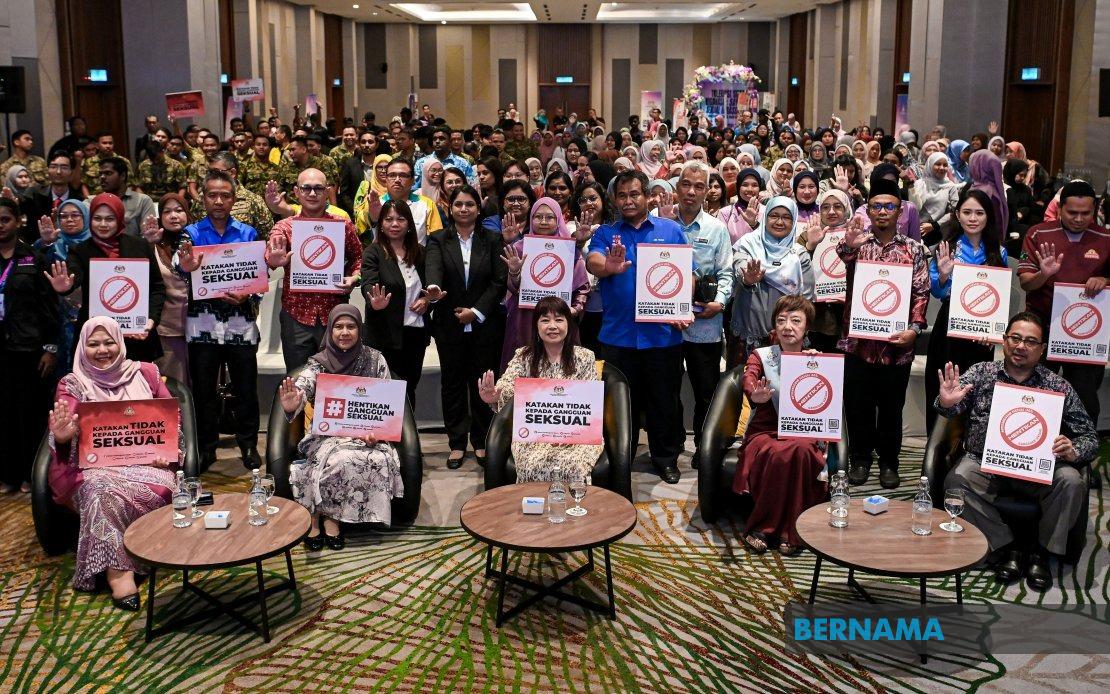
The prevalence of sexual harassment in Malaysia continues to capture official attention, with Deputy Minister of Women, Family and Community Development Lim Hui Ying revealing that 388 cases were formally recorded during the opening five months of this year. The disclosure, made in Port Dickson on June 18, underscores an ongoing challenge across Malaysian workplaces and communities that demands sustained policy intervention and cultural change.
Data compiled by the Royal Malaysia Police presents a striking upward trajectory. The force documented 477 sexual harassment complaints in 2022, a figure that nearly doubled to 1,038 cases last year. This near-doubling within twelve months might initially suggest a deteriorating situation, yet Lim offered a more nuanced interpretation that carries important implications for how Malaysia understands these dynamics. Rather than interpreting the surge as evidence of an epidemic of harassment itself, she framed the increase as reflecting enhanced societal awareness, reduced stigma around reporting, and crucially, a growing willingness among victims to reject the culture of silence that historically shrouded such misconduct.
This distinction proves analytically significant for policymakers across Southeast Asia grappling with similar patterns. When harassment reporting rises sharply, it frequently signals not a crisis of new emergence but rather the lifting of longstanding barriers to disclosure. Many victims historically remained silent due to compounded fears: anxiety over career consequences, dread of family rupture, and profound shame. For Malaysia specifically, where communal and familial bonds carry considerable weight, these psychological and social obstacles have traditionally proven formidable. The increasing willingness to lodge formal complaints therefore represents progress in victim empowerment, though it simultaneously reveals the true scale of a problem that previously remained submerged.
Lim's analysis pinpointed workplace settings as the primary arena where sexual harassment manifests. Equally significant, she highlighted that a substantial proportion of cases involve perpetrators with family connections to victims. This second finding carries particular resonance in the Malaysian and wider Southeast Asian context, where family ties and hierarchical relationships within extended networks create both opportunities for abuse and powerful disincentives to report. The intersection of professional dynamics and kinship relationships generates acute vulnerability and complicates victim recovery, as professional consequences intertwine with potential family estrangement.
The gender dimension of sexual harassment, while not the exclusive focus, remains substantial. Lim acknowledged that although women constitute the overwhelming majority of reported victims, men also experience harassment, albeit in markedly lower numbers. This gendered disparity reflects global patterns but carries specific cultural dimensions within Malaysian society. Male victims face compounded barriers to disclosure, including stronger social expectations around emotional resilience and masculine self-reliance, which may render them even less likely than female victims to seek official recourse. The ministry's recognition of this dynamic suggests a commitment to comprehensive approaches that do not presume harassment is exclusively or even primarily a women's issue, though data clearly indicates it disproportionately affects women.
A notable institutional development has been the establishment of the Tribunal for Anti-Sexual Harassment (TAGS), which functions as a dedicated mechanism for accelerating justice. As of mid-June, the tribunal had processed 100 complaints with an impressive efficiency metric: 82 cases achieved resolution within sixty days of the initial hearing. For a region where judicial processes frequently extend across years, this performance represents a significant structural achievement. The tribunal's capacity to deliver expedited outcomes potentially removes a major deterrent to victim reporting, as individuals no longer face the prospect of prolonged, emotionally taxing proceedings that extend across multiple years.
Beyond legal and institutional mechanisms, the Ministry of Women, Family and Community Development is advancing Women, Peace and Security initiatives aligned with the National Action Plan 2025–2030. This strategic framework positions the reduction of sexual harassment as integral to broader national security and development objectives, rather than as a standalone welfare concern. By linking harassment prevention to peace and development outcomes, Malaysian policymakers signal recognition that workplace and interpersonal safety for all citizens constitutes a foundational prerequisite for economic participation, social stability, and national cohesion.
Lim's public messaging emphasised collective responsibility across multiple societal domains. Parents, educators, employers, colleagues, and students all bear accountability for cultivating organisational cultures and family environments that reject normalisation of harassment. This distributed responsibility framework contrasts with approaches that locate accountability primarily within enforcement mechanisms, instead positioning cultural transformation as a shared undertaking. Early education emerges as particularly critical, with the implicit argument that harassment prevention must commence in formative years before problematic attitudes calcify into ingrained patterns of behaviour.
The government's support infrastructure extends beyond criminal justice and tribunal mechanisms to encompass psychosocial assistance. Talian Kasih 15999, operating continuously across all twenty-four hours, provides counselling and psychological support for victims and affected individuals. Alongside this telephone hotline, local social support centres offer in-person services designed to ensure accessibility for those unable or unwilling to navigate formal legal processes. For a diverse nation with varying digital literacy levels and regional variations in access, this multi-channel approach acknowledges that different victim populations require differentiated service delivery models.
Lim's insistence that early intervention prevents escalation into more severe violence reflects recognition of a progression dynamic. Harassment that receives no institutional response, no social sanction, and no victim support frequently intensifies, evolving toward greater severity and potentially transitioning into physical violence. By constructing anti-harassment work as preventive intervention against violent crime, the ministry reframes harassment not as a peripheral concern but as a priority matter with direct bearing on serious crime prevention. This strategic framing may prove instrumental in securing political support and resource allocation for comprehensive harassment prevention programmes.
For Malaysian employers, particularly those operating in multinational contexts where international standards influence domestic practices, the government's stance creates both pressure and opportunity. Multinational corporations increasingly implement sexual harassment policies exceeding legal minimums, responding to shareholder activism and global workforce expectations. Domestic Malaysian enterprises face growing pressure to match these standards to retain talented employees and to align with government policy directions. The tribunal's existence and documented effectiveness provides employers with concrete evidence that formal complaints processes generate manageable administrative burdens while demonstrating institutional commitment to workplace dignity.
Regionally, Malaysia's experience offers lessons and benchmarks for other Southeast Asian nations. The documented rise in reporting, the tribunal's efficiency metrics, and the integrated multi-agency support framework represent components of an emerging model that other ASEAN members might scrutinise and adapt. However, the persistence of significant unreported cases—acknowledged implicitly in ministerial statements about the chilling effects of shame and career anxiety—indicates that reporting growth has not yet approached saturation. Many victims remain reluctant disclosers, suggesting substantial scope for expansion of awareness campaigns and further reduction of reporting barriers.

