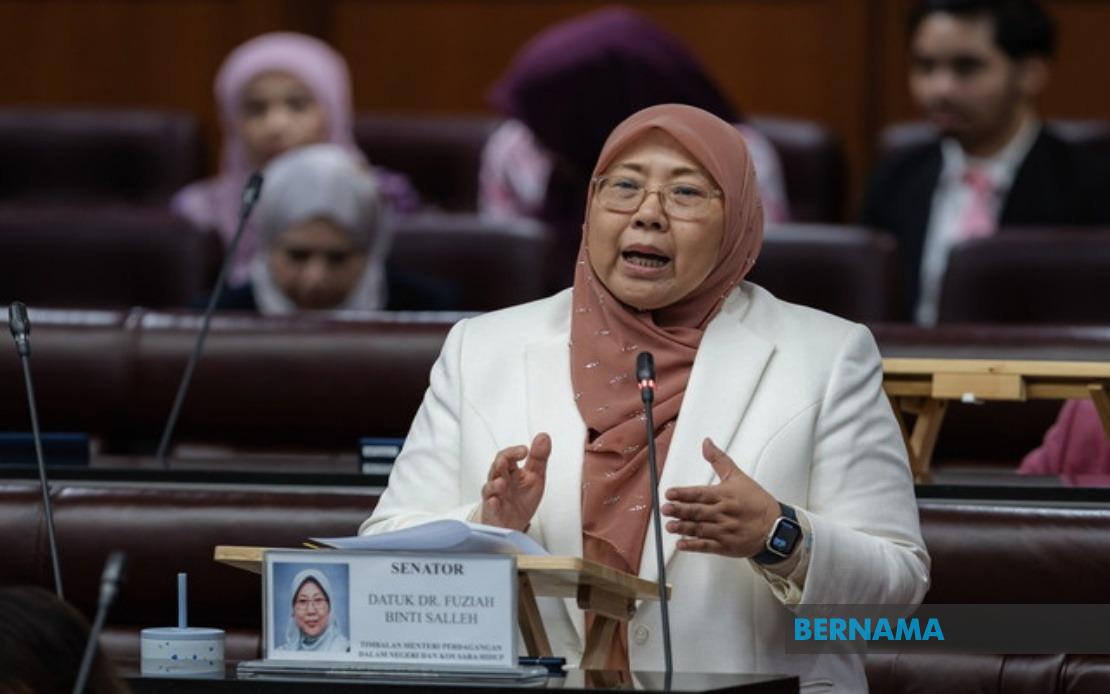
Malaysia's government has clarified that copyright owners must grant approval before their creative works are used to train artificial intelligence models, establishing a firm legal position on a contentious global issue. Deputy Domestic Trade and Cost of Living Minister Datuk Dr Fuziah Salleh made the pronouncement during parliamentary proceedings at the Dewan Negara, responding to concerns raised by Senator Datuk Wu Him Ven about protecting local creators' interests in the rapidly expanding AI sector.
The minister confirmed that Malaysia's existing Copyright Act 1987 already contains sufficient legal mechanisms to govern the use of protected works in AI applications. The legislation does not distinguish between traditional uses and artificial intelligence training, meaning the same permission requirements apply universally. This interpretation provides clarity for technology companies, creative professionals, and content platforms operating within Malaysian jurisdiction, though enforcement remains a separate challenge.
Under the current framework, copyright owners retain the right to negotiate compensation through multiple pathways. Licensing agreements represent the most direct mechanism, allowing creators to establish terms and royalty structures on a case-by-case basis. Alternatively, copyright holders may assign rights through contractual arrangements with AI developers or technology platforms. A third option involves Collective Management Organisations, which function as intermediaries representing groups of creators and simplifying negotiations at scale.
Section 27 of the Copyright Act 1987 delegates payment and compensation negotiations to the parties themselves rather than establishing fixed statutory rates. This flexibility theoretically permits market-driven arrangements but risks disadvantaging individual creators who lack negotiating power against well-resourced technology corporations. The absence of standardized frameworks means outcomes depend heavily on individual bargaining positions, potentially creating disparities across Malaysia's creative economy.
The government's cautious approach reflects broader global uncertainty about regulating artificial intelligence development. Datuk Dr Fuziah acknowledged that Malaysia has not yet conducted formal impact assessments examining how AI-generated content affects employment and income within the creative industries. This knowledge gap is significant, given growing evidence from other markets that generative AI systems trained on copyrighted material increasingly displace traditional creative work in writing, illustration, music composition, and visual design.
Instead of rushing toward regulatory reform, Malaysian policymakers are pursuing an observation strategy, studying legislative and policy approaches adopted by international counterparts before proposing new measures. The European Union's recently implemented AI Act, with its stringent copyright provisions, and ongoing legislative initiatives in countries including the United States and the United Kingdom represent reference points for Malaysian consideration. This cautious approach allows time for technological standards to stabilize and for clearer evidence of economic impacts to emerge.
Currently, Malaysia has recorded no court cases involving copyright disputes arising from AI technology applications. This absence suggests either strong voluntary compliance by technology developers, limited awareness of legal remedies among affected creators, or insufficient litigation maturity in this novel domain. As AI adoption accelerates across Southeast Asia and Malaysia's digital economy expands, the probability of copyright disputes will inevitably increase, potentially testing the adequacy of existing legal frameworks.
A critical limitation in Malaysia's current copyright protection involves artificial intelligence-generated content. The Copyright Act 1987 protects only original works demonstrating human creativity, intellectual contribution, and technical skill. Fully AI-generated works that lack meaningful human authorship do not qualify for copyright protection under Malaysian law. This distinction creates a potential asymmetry: human creators' works can be restricted from AI training, but AI-generated outputs remain unprotected, theoretically allowing unrestricted reuse and modification.
This protection gap raises uncomfortable questions for Malaysia's creative workforce. If AI systems train on protected Malaysian creative works and subsequently generate new content without copyright protection, creators lose not only compensation for training but also control over derivative outputs. The distinction between protected and unprotected works may incentivize technology companies to maximize AI autonomy and minimize human involvement in content generation, potentially accelerating job displacement in creative sectors.
The minister's commitment to ongoing stakeholder engagement provides some reassurance that policymakers recognize the issue's complexity and economic importance. Consultations with creative professionals, technology developers, intellectual property experts, and industry bodies should illuminate practical enforcement challenges and identify regulatory gaps. However, the government's deliberate pace may frustrate creators anxious about immediate threats to their livelihoods as AI capabilities expand rapidly.
For Malaysian creators and content industries, the current position offers legal clarity but limited practical protection without investment in enforcement mechanisms. Copyright holders possess rights under the Copyright Act 1987, but translating those rights into effective compensation requires either individual negotiation capacity or collective action through management organisations. Smaller creators and independent professionals may struggle to negotiate favorable terms against multinational technology platforms with substantially greater resources.
The regional implications extend beyond Malaysia's borders. As Southeast Asian countries develop AI regulatory frameworks, Malaysia's position—combining existing legal requirements with measured policy development—positions the country as middle ground between restrictive and permissive approaches. Neighbouring jurisdictions may reference Malaysia's Copyright Act 1987 interpretation when developing their own policies, making Malaysia's eventual regulatory choices potentially influential across the region.
Looking forward, the Malaysian government faces mounting pressure to translate legal principles into practical enforcement and protection mechanisms. Whether current copyright legislation proves sufficient or whether new AI-specific frameworks become necessary will depend partly on how technology evolves and partly on how vigorously creators assert their rights through licensing negotiations and litigation. The window for proactive policymaking may be closing as AI integration accelerates, suggesting that Malaysia's period of study and consultation should yield concrete regulatory proposals within months rather than years.

