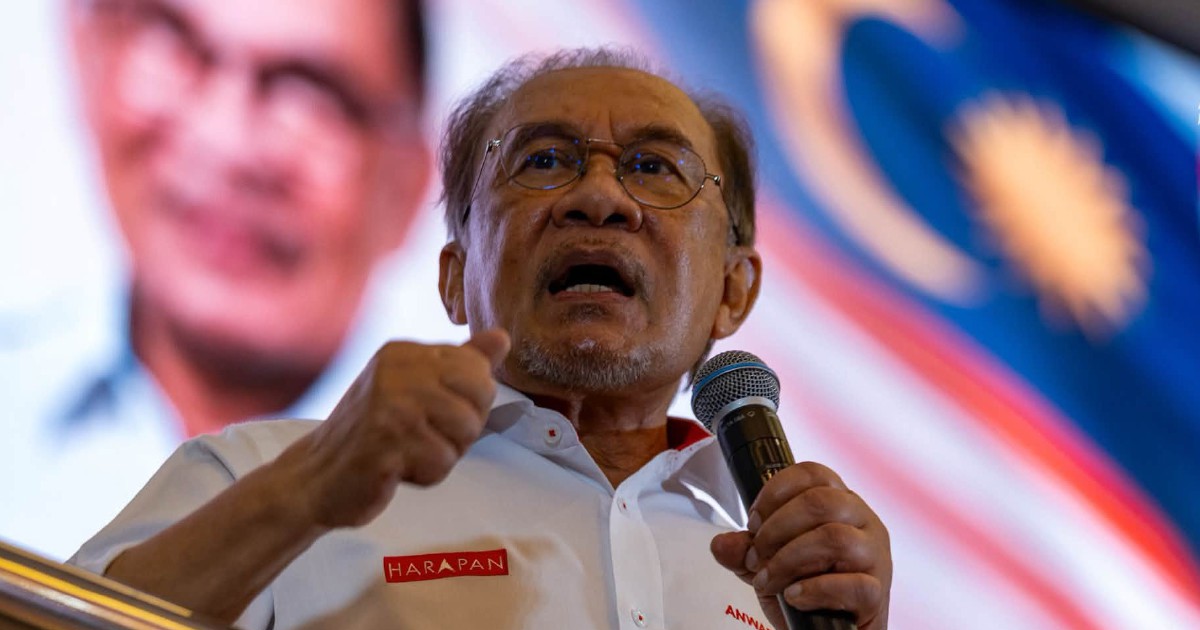
Prime Minister Datuk Seri Anwar Ibrahim has ruled out seeking Singapore's cooperation to arrange voting facilities for Malaysians employed across the Causeway during the Johor state election slated for July 11. The statement comes amid broader discussion about electoral logistics for the state poll and reflects a strategic decision to keep voting arrangements entirely within Malaysia's purview rather than pursuing cross-border electoral infrastructure.
The Johor election represents a significant political event for the state, which lies at the southern tip of Peninsular Malaysia and shares the strategically important Causeway with Singapore. Thousands of Malaysian workers traverse this 1.4-kilometre bridge daily to employment in Singapore, where they contribute substantially to both economies. The potential complexity of enabling these cross-border workers to vote at home during weekday polling has emerged as a practical concern for electoral administrators planning the exercise.
Anwar's decision reflects Malaysia's historical approach to safeguarding electoral sovereignty and maintaining separation between domestic voting procedures and foreign jurisdictions. While logistics across the Causeway are frequently coordinated between Malaysia and Singapore on matters of trade, transportation, and immigration, voting remains a distinctly national matter. The government's preference to manage polling entirely through Malaysian institutions underscores the delicate nature of electoral processes and the importance of maintaining full administrative control over their conduct.
The timing of the Johor election carries particular weight given the economic interdependence between the state and Singapore. Johor's manufacturing, logistics, and services sectors rely heavily on workers who commute regularly, and the state government has invested significantly in cross-border economic initiatives. Yet despite these close ties, electoral participation is regarded as fundamentally different from commercial cooperation, requiring Malaysian sovereignty to remain paramount throughout the process.
For Malaysian voters working in Singapore, the July 11 election presents a practical challenge. Those unable to return to Johor during polling day face the likelihood of not casting their ballot unless they either take leave from work or leverage existing postal voting mechanisms. Malaysia's electoral commission has established postal voting as the mechanism for citizens unable to vote in person, and this pathway would likely remain the primary option for cross-border workers seeking to participate remotely.
The postal voting system, while established, involves procedural requirements that voters must satisfy well before election day. Applications must be submitted through prescribed channels, and ballot papers must be returned by specified deadlines. For commuters managing hectic schedules between two nations, navigating these requirements demands advance planning and administrative diligence. The accessibility of postal voting varies depending on how effectively public information campaigns reach workers in Singapore and whether employer accommodations facilitate the application process.
Anwar's statement also reflects broader Southeast Asian norms around electoral administration. While some jurisdictions have experimented with innovative voting mechanisms for diaspora populations, most nation-states maintain conservative approaches that privilege in-person voting within national territory. This conservative stance stems partly from concerns about electoral integrity, verification processes, and the perceived need for complete transparency in ballot handling and counting procedures.
The decision carries implications beyond mere logistics. It signals that Malaysia prioritizes conventional voting structures and rejects external facilitation even from neighbouring allies. This approach may disappoint some workers who hoped for streamlined arrangements, yet it aligns with Malaysia's commitment to transparent, nationally-controlled electoral processes. The stance also avoids establishing precedents that might complicate future elections or create expectations for reciprocal arrangements.
For Johor's political landscape, the decision means that cross-border workers will participate according to established rules rather than through specially negotiated arrangements. This uniformity ensures consistent application of electoral law and prevents any perception of preferential treatment for specific voter groups. It also simplifies the Electoral Commission's administrative burden by maintaining a single framework applicable to all voters, whether they work locally, elsewhere in Malaysia, or abroad.
The Johor election itself carries significance for Malaysia's broader political trajectory. The state has historically wielded considerable influence within national politics, and results may offer signals about voter sentiment and political alignment across Peninsular Malaysia. Whether cross-border workers successfully navigate postal voting mechanisms to participate could subtly influence turnout patterns and, potentially, overall electoral outcomes.
Looking forward, this decision establishes expectations for future elections. Malaysian authorities have signalled their commitment to managing electoral processes through conventional means, without seeking external assistance even for logistical purposes. Should cross-border worker participation become increasingly important to electoral outcomes, pressure might eventually mount for Malaysia to reconsider, perhaps developing enhanced domestic mechanisms rather than seeking foreign facilities.
The July 11 Johor election will ultimately proceed with Malaysia maintaining complete control over voting arrangements. This choice reflects both practical considerations and fundamental principles about national sovereignty in electoral matters. Workers across the Causeway will participate through existing mechanisms, demonstrating how Malaysia balances the reality of cross-border employment with the imperative of maintaining distinct, nationally-controlled democratic processes.

