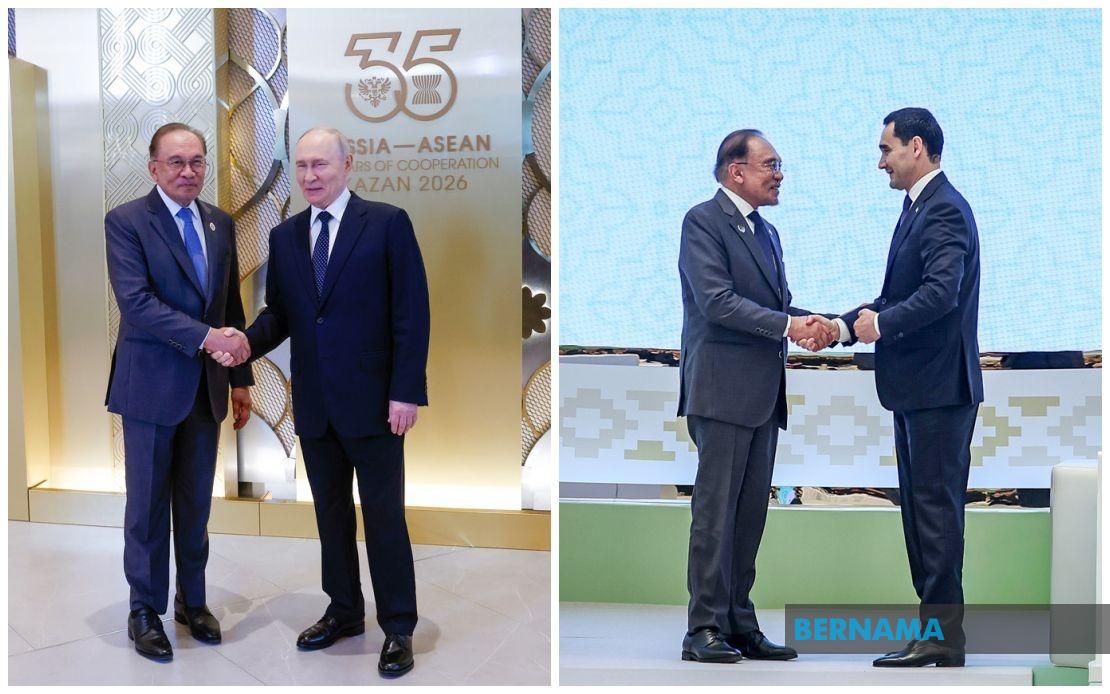
Prime Minister Datuk Seri Anwar Ibrahim's recent diplomatic missions to Russia and Turkmenistan represent a watershed moment for Malaysia's energy security strategy, with government officials hailing the agreements as transformative for the nation's long-term economic stability and international standing. The two-day working visit to Kazan, the capital of Russia's Republic of Tatarstan, culminated in Russia committing to supply Malaysia with oil and petroleum products over a two-decade horizon, a development that addresses one of the country's most pressing structural vulnerabilities in an increasingly volatile global energy market.
Energy security has long been a strategic concern for Malaysia, which despite its offshore oil and gas reserves has sought to diversify its supply sources to insulate itself from price shocks and geopolitical disruptions. The 20-year commitment from Russia fundamentally reshapes Malaysia's energy portfolio by replacing the precarious annual or seasonal renewal arrangements that characterised previous agreements. This multi-year stability framework enables Malaysian policymakers to maintain the BUDI MADANI RON95 subsidy programme at a fixed price of RM1.99 per litre without the perpetual fiscal exposure that short-term contracts impose. Housing and Local Government Minister Nga Kor Ming emphasised that this achievement directly translates into sustained purchasing power for ordinary Malaysians, preventing the periodic pump price fluctuations that destabilise household budgets and amplify inflationary pressures across the broader economy.
The broader strategic architecture underpinning the government's energy diversification strategy reflects a calculated pivot away from dependence on any single supplier or geographic region. By simultaneously engaging Russia while deepening ties with Central Asia's energy-rich nations, Malaysia positions itself as a discerning purchaser capable of leveraging competitive dynamics to secure favourable terms. This approach acknowledges the reality that energy commodities remain fundamental to regional power politics, and countries that can balance multiple partnerships enjoy greater negotiating leverage than those locked into bilateral relationships. The implications extend beyond simple economic transaction; they signal Malaysia's determination to maintain strategic autonomy in critical infrastructure domains.
Equally significant is the breakthrough securing Petronas as operator of a major gas field in Turkmenistan, one of the world's largest natural gas reserves repositories. This achievement represents a qualitative advancement in Malaysia's positioning within global energy markets, elevating the national champion beyond contract execution into the rarefied category of field operators responsible for capital-intensive, technologically complex developments. Petronas, currently ranked 139th on the Fortune Global 500 list, stands to achieve both financial scale and operational prestige that could propel the company closer to the top 100 rankings if the Turkmenistan project is developed and monetised effectively. For Malaysia, the implications are profound: a home-grown institution competing successfully against international oil majors demonstrates technological maturity and project management capability that enhances the country's soft power and investment attractiveness.
The Turkmenistan contract carries particular significance given the nation's position as custodian of some of the world's most substantial natural gas reserves. Central Asia's energy wealth has historically been contested terrain in great power competition, with Russia, China, and Western powers competing for influence and market access. Malaysia's insertion into this equation through Petronas reflects both the company's technical credentials and the diplomatic groundwork laid by Anwar's administration in building relationships across diverse geographies and political systems. This neutrality and capability-based positioning distinguishes Malaysia from countries that approach energy partnerships through ideological or bloc-based frameworks.
Human Resources Minister Datuk Seri R. Ramanan contextualised these energy gains within a broader human capital dimension, noting that the Turkmenistan opportunity extends beyond resource extraction into technology transfer, skills development, and workforce training collaborations. This framing reveals sophisticated thinking about how resource-based contracts can catalyse human capital accumulation and institutional learning. Rather than treating energy agreements as simple commodity transactions, the Malaysian government views them as platforms for building absorptive capacity within domestic institutions and workforce pools. The emphasis on high-skilled training and technology development suggests recognition that sustainable competitive advantage derives not merely from resource access but from the technical and managerial capabilities deployed to extract and commercialise those resources.
The geopolitical context surrounding these visits merits examination, particularly Malaysia's navigation of great power competition in Asia-Pacific. Neither Russia nor Turkmenistan occupies primary positions in Malaysia's traditional diplomatic architecture, which has historically weighted ties with Western nations, ASEAN neighbours, and China more heavily. The deliberate cultivation of Russia and Central Asian relationships reflects a conscious strategy of hedging and diversification that mirrors Malaysia's broader foreign policy orientation. This pragmatic engagement with diverse partners, regardless of their international standing or political systems, enables Malaysia to extract maximum benefit from bilateral relationships without incurring the opportunity costs and strategic constraints that exclusive partnerships entail.
The energy security dimension of these agreements assumes heightened importance in light of growing regional energy demand driven by industrialisation and rising living standards across Southeast Asia. Malaysia itself faces mounting petroleum consumption from transport, manufacturing, and power generation sectors, whilst its domestic production plateau necessitates import dependency for sustained economic growth. The Russian and Turkmenistan contracts mitigate this vulnerability by establishing predictable, long-term supply channels insulated from annual price volatility. This stability matters not merely for consumer subsidies but for industrial competitiveness: manufacturers require predictable energy input costs to maintain productive efficiency and price competitiveness in export markets. Energy security thus becomes a foundational element of manufacturing competitiveness and employment sustainability.
For Petronas specifically, the Turkmenistan operatorship represents a pivotal career inflection point. Transitioning from contractor or minority stakeholder roles into primary operational control of a major field requires demonstrating technical mastery, financial capacity, and project governance standards comparable to international majors. Success in Turkmenistan could unlock similar opportunities across Central Asia and the Caspian region, potentially establishing Petronas as a preferred partner for resource-rich nations seeking operators with Southeast Asian credentials and transparent governance frameworks. Conversely, operational challenges or project delays would reverberate across Petronas' reputation and Malaysia's standing in resource-rich markets where performance track records heavily influence future contract awards.
The diplomatic mechanism through which these agreements were achieved also deserves attention. Prime ministerial-level visits with substantive energy outcomes reflect not accidental achievement but calculated relationship investment and negotiation strategy. Anwar's personal engagement in these discussions signals Malaysia's seriousness and his administration's priority weighting of energy security within the broader national development agenda. Such high-level diplomatic energy demonstrates that premier Asian economies increasingly recognise energy partnerships as core strategic assets worthy of executive-level attention rather than routine technical negotiations delegated to energy ministries alone.
These developments carry implications extending well beyond bilateral Malaysia-Russia and Malaysia-Turkmenistan relations. Within ASEAN, Malaysia's success in diversifying energy sources and securing operational control of major projects potentially positions it as a knowledge broker and diplomatic facilitator for neighbours facing similar energy security challenges. Thailand, Vietnam, and Indonesia might view Malaysia's approach as a model for deepening Central Asian energy partnerships whilst maintaining relationships across competing geopolitical blocs. The demonstration that Southeast Asian companies can successfully operate world-class energy infrastructure projects enhances the region's collective credibility in global energy markets and reduces the traditional presumption that only Western majors or Chinese state enterprises possess the technical capacity for such ventures.
Looking forward, the successful translation of these agreements into stable, productive long-term partnerships will require sophisticated project management, transparent governance frameworks, and sustained diplomatic engagement across changing administrations in Russia and Turkmenistan. Energy projects operate across decades with multiple political cycles, necessitating institutional anchoring that transcends personality-dependent relationships. Malaysia's challenge will be embedding these energy partnerships within robust bilateral frameworks that survive inevitable political transitions and maintain momentum through technical and operational challenges that inevitably arise in complex resource development projects. The immediate diplomatic achievement, whilst significant, represents merely the foundation upon which Malaysia must construct enduring energy security architecture serving the nation's prosperity for generations to come.

