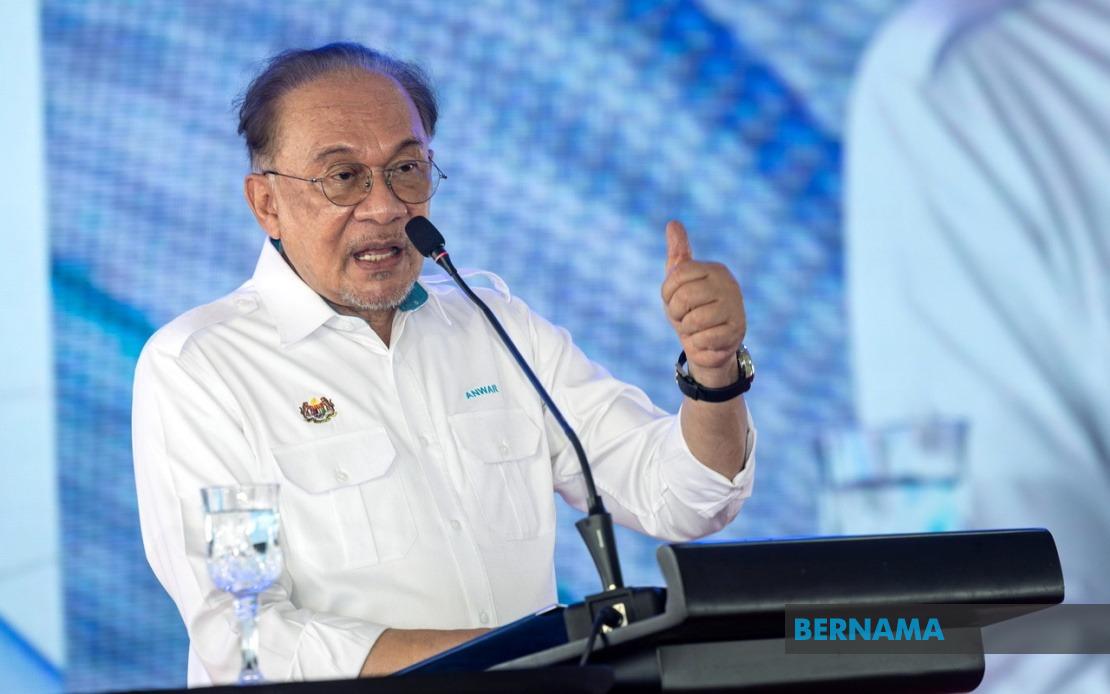
Malaysia has moved decisively to lock in its energy future through long-term strategic partnerships with Russia and Turkmenistan, according to Prime Minister Datuk Seri Anwar Ibrahim. During remarks at the groundbreaking ceremony for the Setia Fontaines Industrial Park in Kepala Batas, Anwar outlined how these bilateral agreements will provide the nation with sustained access to critical fuel supplies extending well into the coming decades, addressing one of Southeast Asia's most pressing economic concerns.
The Russian commitment emerged during Anwar's recent visit to Kazan, where President Vladimir Putin personally conveyed Moscow's willingness to enter a comprehensive long-term arrangement guaranteeing supplies of crude oil, natural gas, and diesel for a minimum of 20 years. This represents a significant diplomatic achievement, underscoring the strengthening relationship between Kuala Lumpur and Moscow at a time when energy security has become paramount for regional economies navigating volatile global markets. The assurance from the Russian leadership reflects not merely a commercial transaction but rather a deepening of bilateral ties that positions Malaysia as a trusted partner in Putin's energy diplomacy strategy.
Yet the Turkmenistan engagement has delivered even more substantial outcomes for Malaysia's energy architects. Following Anwar's official visit to the Central Asian nation, Turkmenistan's government has granted Malaysia expanded access to its vast hydrocarbon reserves, fundamentally reshaping the country's energy portfolio. This breakthrough carries enormous strategic weight, as Turkmenistan possesses some of the world's largest natural gas deposits, positioning Malaysia to benefit from reserves that dwarf many conventional sources globally. The arrangement transcends immediate consumption needs and opens possibilities for Malaysia to function as a regional energy hub, leveraging these supplies not merely for domestic requirements but as a commodity for export markets.
The implications extend across East Asia's energy-hungry economies. With secured access to Turkmenistan's gas and Russian oil, Malaysia now possesses tangible assets to offer major regional purchasers including China, Japan, and South Korea—all nations facing their own energy constraints and import dependencies. This transforms Malaysia's geopolitical positioning within Asia-Pacific energy markets, elevating it from a traditional consumer to a potential intermediary capable of facilitating energy flows to multiple destinations. The export dimension particularly benefits Malaysia's trade balance and provides opportunities for downstream industries and petrochemical sectors to expand operations on the strength of more predictable feedstock availability.
The diplomatic groundwork for these agreements evolved incrementally through sustained engagement. The foundation was laid during Turkmenistan President Serdar Berdimuhamedov's December 2024 visit to Malaysia, when both nations began formalizing the terms of cooperation. These negotiations, conducted at presidential level, demonstrate the Malaysian government's strategic prioritization of energy security as a cornerstone of national economic policy. By investing political capital in cultivating relationships with energy-rich nations, Anwar's administration has effectively created insurance against supply disruptions that might otherwise jeopardise Malaysia's industrial base and economic growth trajectories.
For Malaysia's manufacturing and export sectors, the downstream benefits prove substantial. Reliable access to competitively priced energy enables Malaysian factories to maintain competitive positions against regional rivals, particularly in energy-intensive industries like petrochemicals, fertiliser production, and metal processing. The 20-year commitment horizon provides sufficient certainty for corporations to make long-term capital investments in new facilities and technologies, knowing that energy input costs will remain predictable rather than subject to the whims of spot market volatility. This stability proves especially valuable for export-oriented manufacturers competing against Chinese and Indian producers benefitting from substantial domestic energy reserves.
Anwar framed these partnerships within a broader philosophy that leverages international relations to advance Malaysia's core national interests. In this conceptualisation, diplomacy becomes an instrument for securing tangible economic benefits—employment opportunities, industrial development, and household energy affordability. The approach reflects recognition that in an interconnected global economy, bilateral partnerships serve as the mechanisms through which nations advance prosperity for their citizens. By cultivating strong relationships with resource-rich states, Malaysia positions itself to negotiate favourable terms unavailable to nations lacking such diplomatic leverage.
The timing of these announcements carries significance within Malaysia's broader economic narrative. The country faces medium-term challenges related to its domestic energy production outlook, with conventional oil and gas reserves gradually declining. Rather than accepting energy dependency driven by desperation, Malaysia has proactively negotiated partnerships that grant it agency in determining its energy future. This contrasts with approaches adopted by some neighbours who have experienced sudden supply disruptions or price escalations when lacking diversified supplier relationships.
Regional observers note that Malaysia's success in securing these agreements reflects both its diplomatic acumen and its position as a stable, non-aligned state capable of maintaining constructive relationships across ideological divides. Unlike some Southeast Asian nations constrained by alliance commitments, Malaysia has preserved sufficient diplomatic flexibility to engage simultaneously with Russia and Western partners, and with both Russia and China without sacrificing relationships with either. This strategic autonomy enables the country to pursue energy security partnerships based purely on national interest calculations rather than Cold War bloc dynamics.
The agreements also carry implications for Malaysia's renewable energy transition. While the 20-year gas and oil commitments address near-to-medium-term requirements, the certainty provided by these partnerships allows Malaysia to proceed deliberately with renewable energy investments rather than rushing into premature transition strategies that might jeopardise industrial competitiveness. The flexibility to balance conventional and renewable energy sources over coming decades, underpinned by secure hydrocarbon supplies, represents pragmatic energy policy that acknowledges both economic and environmental imperatives.
Looking forward, Malaysia's energy partnerships with Russia and Turkmenistan establish a template for how smaller regional economies can navigate energy security challenges through strategic diplomacy. The agreements demonstrate that careful cultivation of bilateral relationships, sustained high-level political engagement, and clear articulation of mutual benefits can yield durable arrangements that serve national interests across decades. For Malaysia specifically, these partnerships provide breathing room to develop domestic energy innovations, expand industrial capacity, and position the nation as a key player in regional energy markets during a period of significant global energy transition.

