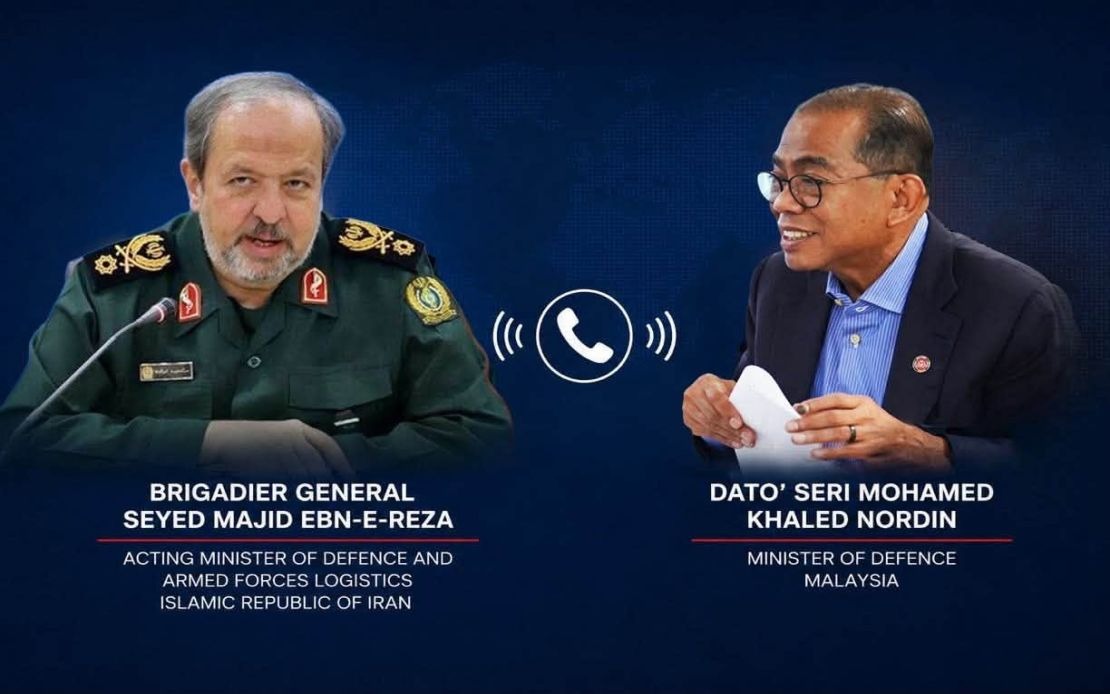
Malaysia is signalling a significant expansion of its defence relationship with Iran, moving beyond diplomatic niceties to establish formal institutional frameworks for military cooperation. Defence Minister Datuk Seri Mohamed Khaled Nordin conveyed this commitment during a telephone discussion with Iran's Acting Minister of Defence and Armed Forces Logistics, Brigadier General Seyed Majid Ebn-e-Reza, underscoring Kuala Lumpur's intention to translate longstanding bilateral friendship into concrete defence partnerships.
The centrepiece of this enhanced engagement is a proposed Memorandum of Understanding on defence cooperation, which officials hope to finalise in the coming months. Such an MoU would serve as the foundational legal instrument governing military exchanges, technology sharing, joint training initiatives, and strategic consultation between the two nations—moving the relationship from ad-hoc engagement to structured cooperation. For Malaysia, which has historically maintained pragmatic defence ties across diverse geopolitical spheres, this formalisation reflects both confidence in the relationship and recognition of shared regional interests.
A particularly symbolic dimension of this deepening partnership is Iran's anticipated participation in next year's Langkawi International Maritime and Aerospace Exhibition, one of the region's premier defence showcases. LIMA has long served as Malaysia's platform for advancing defence diplomacy and demonstrating commitment to emerging partnerships. Iran's presence would allow both nations to explore collaborative opportunities in defence technology, maritime security solutions, and aerospace capabilities—sectors where Iran possesses indigenous expertise and Malaysia seeks to enhance its own capabilities.
The maritime dimension assumes particular significance in the context of regional geopolitical challenges. Mohamed Khaled explicitly referenced Malaysia's appreciation for Iran's cooperation in facilitating safe passage through contested waters during the ongoing West Asian conflict, a tacit acknowledgment of the practical security benefits derived from coordination with Tehran. More broadly, the defence minister emphasised the imperative of safeguarding critical maritime corridors, particularly the Strait of Hormuz, through which flows essential global energy supplies and significant regional trade.
This Malaysian initiative unfolds against the sobering backdrop of escalating conflict in West Asia, where Iranian military personnel, security forces, and civilians have sustained substantial losses. By conveying formal condolences and expressing hope for ceasefire arrangements, Malaysia positioned itself as a constructive voice advocating for diplomatic resolution and regional de-escalation. This stance reflects Kuala Lumpur's broader foreign policy orientation, which privileges dialogue and peaceful settlement of disputes over military confrontation, even while strengthening defence capabilities.
Malaysia's engagement with Iran also acknowledges the latter's considerable indigenous defence innovation capacity. The defence minister specifically praised Iran's demonstrated resilience and independently developed defence systems, recognition that carries diplomatic weight in a region where technological self-sufficiency carries both practical and symbolic importance. For Malaysia, partnering with a nation that has achieved substantial defence autonomy despite international sanctions offers potential avenues for technology transfer and joint development in areas of mutual interest.
The timing of this defence overture carries broader implications for Malaysia's strategic positioning in the Indo-Pacific. As regional powers navigate increasingly complex geopolitical alignments, Malaysia has consistently sought to maintain balanced relationships across competing blocs and interests. Strengthening ties with Iran complements this strategy by diversifying Malaysia's defence partnerships while signalling independence in foreign policy decision-making. The move also reflects recognition that regional stability requires constructive engagement with all significant actors, including those facing international isolation.
From a Southeast Asian perspective, Malaysia's initiative demonstrates how middle powers can exercise diplomatic agency by building relationships that serve legitimate security interests while maintaining commitment to regional peace. As tensions in the Middle East periodically spill into maritime Southeast Asia through piracy, terrorism, and trade disruption, Malaysian defence cooperation with Iran potentially enhances Kuala Lumpur's ability to manage these transnational security challenges. Enhanced intelligence sharing and coordinated maritime patrols in critical waterways could yield mutual benefits.
The proposed defence MoU also signals Malaysia's confidence in institutionalising relationships that might otherwise remain contingent on personality-driven diplomacy. By establishing formal protocols and regular consultation mechanisms, both nations create predictability and reduce miscalculation risks. For Malaysia, such frameworks enable systematic advancement of defence interests without the vulnerabilities of informal arrangements that depend on individual leaders' tenure and preferences.
Looking ahead, the success of Malaysia's defence engagement with Iran will likely depend on navigating complex international sensitivities. While Southeast Asian nations generally enjoy latitude in managing bilateral defence relationships, broader geopolitical developments—particularly regarding Western sanctions and regional power competition—could affect implementation of cooperative initiatives. Malaysia must balance its commitment to Iran with maintaining productive relationships with other strategic partners, a delicate equilibrium that has long characterised Malaysian diplomacy.
The defence ministry's public articulation of these intentions also serves domestic audiences, signalling Malaysia's capacity to pursue independent foreign and defence policies grounded in national interest rather than external pressure. In an era when middle powers face increasing pressure to choose sides, Malaysia's persistent commitment to strategic autonomy and balanced engagement remains distinctive within Southeast Asia, offering a model of how smaller nations can maintain agency in their own security arrangements.

