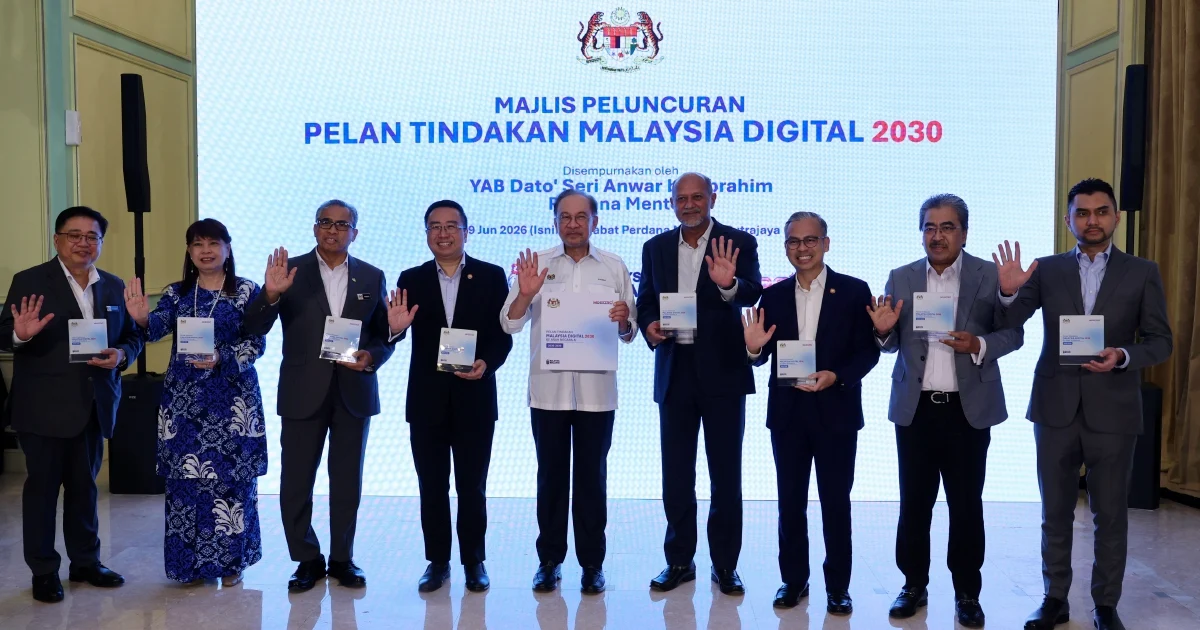
Prime Minister Datuk Seri Anwar Ibrahim formally introduced Malaysia Digital 2030 (MD2030) in Putrajaya, unveiling an extensive national action plan covering the 2026-2030 period that represents a fundamental recalibration of how the country approaches digital advancement. The initiative signals a decisive pivot away from Malaysia's traditional posture as a technology importer and end-user of foreign solutions, instead casting the nation as an active creator of original digital innovations suited to regional and global markets.
The timing of MD2030 reflects growing recognition within Malaysian policymaking circles that reliance on imported technology leaves the country vulnerable to external economic shocks and limits the economic value captured domestically. By transitioning towards indigenous technology development and artificial intelligence applications, Malaysia aims to cultivate a knowledge-based economy that generates higher-margin revenue streams and employment opportunities in cutting-edge sectors. This philosophical shift acknowledges the widening gap between technology-producing nations and technology-consuming ones, a disparity that has reshaped global competitiveness over the past two decades.
Artificial intelligence sits at the core of MD2030's conceptual framework, reflecting international consensus that AI will define economic and societal trajectories for the coming decade. Rather than adopting AI tools developed elsewhere, the strategy emphasises developing Malaysian expertise in AI research, model training, and application development tailored to Southeast Asian contexts. This localised approach recognises that generic global AI solutions often fail to address specific cultural, linguistic, and operational requirements unique to the Malaysian market and the broader region.
The five-year horizon through 2030 provides a definitive timeframe for measuring progress and maintaining political momentum across successive administrations. National digital transformation initiatives frequently falter when spanning multiple electoral cycles, but explicitly time-boxing MD2030 to 2030 establishes clear benchmarks and encourages sustained resource allocation. The plan's comprehensiveness suggests coordination across multiple government departments, reflecting an understanding that digital transformation cannot succeed through isolated sectoral efforts alone.
For Malaysia's technology sector and the wider ecosystem of startups, research institutions, and private enterprises, MD2030 potentially creates new opportunities and market certainty. When government establishes a clear strategic direction favouring domestic innovation, venture capital, skilled talent, and corporate investment typically follow. Malaysia's competitive position relative to regional rivals such as Singapore and Vietnam may hinge partly on successfully executing such a vision, as all three nations vie for prominence in Southeast Asian technology development.
The emphasis on developing homegrown innovation capacity has immediate implications for education and skills development. Producing world-class AI researchers and engineers requires investing in graduate training programmes, research infrastructure, and partnerships with leading international institutions. Universities across Malaysia will likely be tasked with expanding computer science and AI-related programmes, while vocational training must adapt to prepare workers for roles within an innovation-focused economy.
International partnerships will prove essential to MD2030's success, particularly in the early stages. While the goal is building independent Malaysian capabilities, collaborating with established AI leaders in countries such as Canada, South Korea, and the United States can accelerate knowledge transfer and reduce development timelines. The strategy likely contemplates attracting foreign technology companies to establish regional research and development hubs in Malaysia, leveraging the country's strategic location, multilingual talent pool, and existing digital infrastructure.
Regional context matters significantly in assessing MD2030's potential impact. Southeast Asia collectively represents over 650 million people with increasing digital adoption and rising demand for locally-relevant technology solutions. Malaysia's success in producing innovations applicable across the region could position the country as a technology hub serving millions beyond its borders, multiplying economic returns and influence. Conversely, failure to execute effectively risks ceding this opportunity to more assertive regional competitors.
Financial commitments underpinning MD2030 will determine its credibility and achievability. Transforming from technology consumer to producer requires sustained government investment alongside private sector participation. Infrastructure development, research funding, tax incentives for innovation, and direct financing for promising startups all demand substantial resources. The plan's success hinges on whether allocated budgets match the scale of ambition articulated in the strategy's rhetoric.
Implementation challenges should not be understated. Building excellence in artificial intelligence and digital innovation takes years of sustained effort, attracts fierce international competition for talent, and requires maintaining focus despite inevitable setbacks and changing market conditions. Countries worldwide have launched similar digital transformation initiatives; execution separates aspirational plans from genuine economic transformation. Malaysia's track record in completing major national development programmes will influence stakeholder confidence in MD2030.
The launch represents more than administrative announcement—it signals strategic repositioning at the highest political level. By prioritising technology production over consumption, Malaysia acknowledges that economic prosperity in the coming decades depends on participation in high-value innovation ecosystems rather than assembly manufacturing or wholesale adoption of foreign solutions. This philosophical realignment, if translated into concrete action across government, private sector, and educational institutions, could reshape Malaysia's economic trajectory and regional standing throughout the remainder of this decade.

