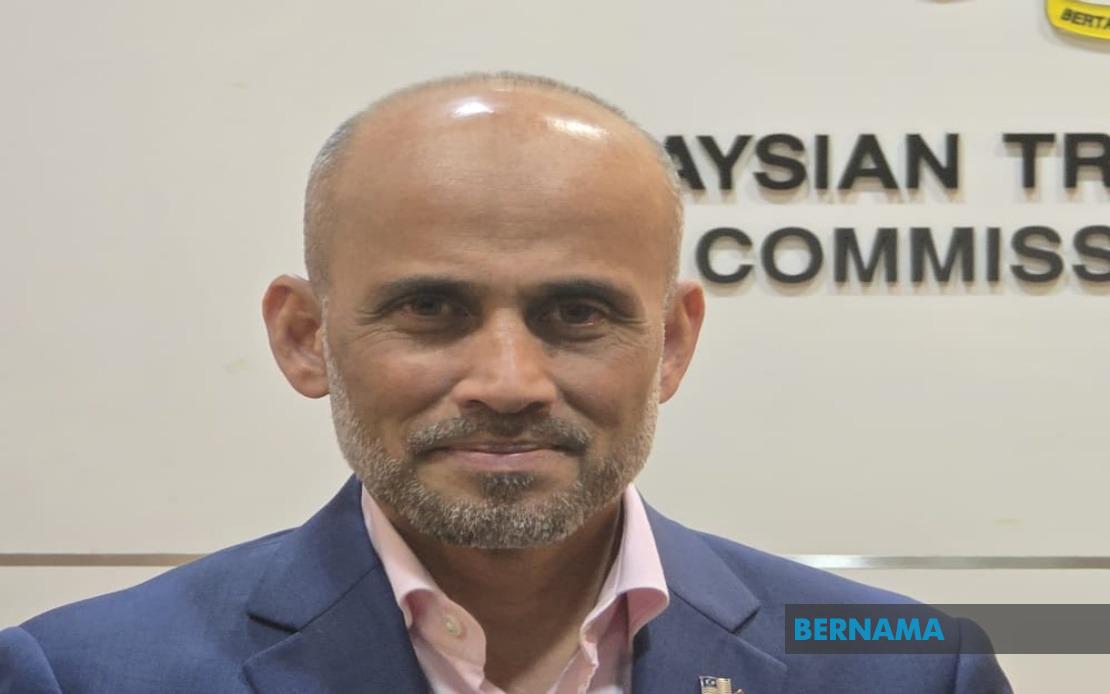
Malaysia and Singapore have substantially deepened their partnership over the past five years through careful management of shared challenges, according to Datuk Dr Azfar Mohamad Mustafar, the Malaysian High Commissioner whose tenure in the city-state is concluding after five years. In reflecting on his posting, which officially ends as he assumes a new role as High Commissioner to the United Kingdom on July 1, Azfar characterised the relationship as increasingly resilient despite persistent global uncertainties. The diplomat received his instruments of appointment from His Majesty Sultan Ibrahim, King of Malaysia, in mid-May, marking a transition that underscores Malaysia's continued commitment to maintaining strong diplomatic representation across key international capitals.
During his time in Singapore beginning June 2021, Azfar navigated some of the most testing circumstances in recent diplomatic history. The COVID-19 pandemic presented immediate practical challenges that extended beyond health concerns into fundamental bilateral infrastructure. When movement restrictions tightened across the causeway, tens of thousands of Malaysians whose daily livelihoods depended on crossing into Singapore found themselves unable to commute to work. This created acute consular pressures, requiring rapid coordination between authorities on both sides to develop solutions that balanced pandemic control with economic necessity. Azfar identified this period as defining, as it demanded not merely reactive crisis management but proactive diplomatic engagement to prevent disruption from escalating into broader bilateral tensions.
The economic dimension of the Malaysia-Singapore relationship has demonstrated notable recovery in recent years. Trade figures and investment flows between the neighbours have rebounded to and now surpassed pre-pandemic levels, indicating the underlying robustness of economic ties despite external shocks. Singapore maintains its position among Malaysia's most significant trading partners, a status reflecting decades of integrated supply chains and complementary economic structures. The city-state simultaneously functions as a major source of foreign direct investment into Malaysia, channelling capital into various sectors that support Malaysian economic growth. This mutual investment relationship extends beyond simple capital transfers; it represents deep integration of business ecosystems and technological expertise across the border.
A pivotal development that Azfar highlighted as promising fresh economic opportunities is the establishment of the Johor-Singapore Special Economic Zone. This initiative moves beyond traditional trade frameworks by creating a geographically defined space where both nations can coordinate regulatory environments and investment incentives. The zone represents sophisticated economic cooperation, allowing companies operating within its boundaries to benefit from streamlined procedures and coordinated policy frameworks. Azfar expressed optimism that Singapore's investment into Malaysia will accelerate significantly, particularly as infrastructure and institutional arrangements within Johor mature. The economic zone concept reflects broader regional trends toward deeper integration and suggests the Malaysia-Singapore relationship is evolving from transactional coexistence toward structural interdependence.
Beyond immediate bilateral matters, the two neighbours are positioning themselves to support broader ASEAN objectives. Singapore's assumption of the ASEAN chairmanship in 2025 represents a significant opportunity for regional agenda-setting. Malaysia has committed to supporting Singapore's presidency, particularly in priority areas that Singapore has identified as central to its term. Economic integration stands foremost among these priorities, with Singapore advocating for mechanisms that would deepen intra-ASEAN trade and investment flows. Malaysia's willingness to align with this agenda reflects recognition that enhanced regional integration ultimately benefits all member states, including Malaysia, by expanding market access and facilitating more efficient regional supply chains.
Another strategic priority commanding joint attention from Malaysia and Singapore is the ASEAN Power Grid initiative. This infrastructure project, still in early development phases, aims to create interconnected electricity networks across Southeast Asia, allowing member states to share generating capacity and balance demand fluctuations. The ambition underlying this initiative extends beyond mere technical cooperation; it represents a commitment to regional energy security and climate resilience. By coordinating development of renewable energy capacity and transmission infrastructure, ASEAN members can collectively reduce dependence on fossil fuels while enhancing grid reliability. Malaysia and Singapore, as economically developed neighbours with complementary energy resources and expertise, position themselves as natural leaders in advancing this agenda.
Azfar's career trajectory illustrates the depth of experience that Malaysia brings to its diplomatic relationships. Having served as Administrative and Diplomatic Officer since 1996 and subsequently joining the Foreign Ministry in 2001, he accumulated over two decades of professional experience before his Singapore posting. His tenure as Ambassador to France from 2018 to 2021 provided him exposure to European diplomatic cultures and multilateral forums before returning to Singapore. This background equipped him to navigate not only bilateral relationship management but also positioning Malaysia within broader great power dynamics affecting Southeast Asia. His appointment to London signals Malaysian confidence in his ability to articulate Southeast Asian interests within the United Kingdom's post-Brexit foreign policy framework.
The transition in diplomatic personnel, while routine in nature, carries significance for bilateral continuity. The incoming High Commissioner will inherit established relationships and institutional knowledge accumulated over Azfar's tenure. The timing of his departure, as regional challenges including geopolitical tension and economic uncertainty persist, underscores the importance Malaysia attaches to seamless diplomatic transitions. The High Commissioner's office in Singapore operates as Malaysia's primary instrument for managing one of its most complex international relationships, requiring sustained attention to multifaceted issues spanning trade, people-to-people contacts, infrastructure coordination, and strategic alignment on regional issues.
Looking forward, the Malaysia-Singapore relationship appears positioned for continued deepening despite headwinds buffeting the broader international environment. The foundation of practical cooperation established during Azfar's tenure—managing crises, coordinating economic recovery, and aligning on regional priorities—provides institutional momentum for his successor to build upon. Both nations have demonstrated capacity to convert challenges into opportunities for closer collaboration, suggesting the bilateral relationship possesses inherent stability rooted in geographic proximity, economic complementarity, and shared interest in regional stability.

