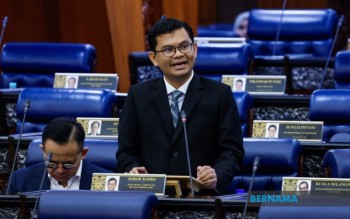
The Malaysian government is ramping up its economic defences against the grinding global supply crisis, with Economy Minister Akmal Nasrullah Mohd Nasir revealing that 120 decisions from the National Economic Action Council (MTEN) are either implemented or actively underway. Addressing Parliament on June 29, the minister projected a cautious outlook, acknowledging that supply chain turbulence will likely persist for another year or two while energy markets gradually stabilise from the third quarter of 2026 onwards. The comprehensive intervention signals the administration's determination not to wait passively for international conditions to improve, but instead to cushion the domestic economy through sustained monitoring and targeted action.
Of the 120 decisions being pursued, 27 have already achieved full implementation, demonstrating tangible progress in a challenging environment. The remaining 93 decisions are actively being executed across multiple government agencies and stakeholders, reflecting the breadth and urgency of the government's response. This staggered implementation approach allows for real-time learning and adjustment as circumstances evolve, rather than rushing all measures simultaneously. The minister emphasised that this structured execution shows government interventions are not merely announced but rigorously tracked and sustained, providing reassurance to businesses and citizens that policy commitments are being converted into concrete action.
The crisis response encompasses both immediate relief measures and longer-term stabilisation strategies. Micro, small and medium enterprises (MSMEs) are being prioritised alongside broader efforts to guarantee the uninterrupted flow of essential goods to the general public. For Malaysia's MSME sector, which accounts for the bulk of small businesses and employment, such targeted support is critical given their limited capacity to absorb supply disruptions or price volatility independently. The government's dual focus on protecting household purchasing power whilst maintaining supply chains reveals an understanding that economic stability rests on both consumer confidence and the viability of the private sector foundation.
Minister Akmal Nasrullah's remarks underscore a philosophy of measured realism rather than either dismissive optimism or alarmism. He acknowledged that a prolonged global supply crisis poses genuine economic risks, yet stressed these are being managed through structured, data-driven approaches rather than ad-hoc responses. This distinction matters for market sentiment and investor confidence; it signals to both domestic and international observers that Malaysia is neither ignoring the problem nor being reckless about its implications. The government's willingness to openly discuss downside risks whilst demonstrating mitigation capacity can paradoxically strengthen confidence compared to official narratives that deny or minimise challenges.
The timeline for energy market stabilisation carries particular weight for Southeast Asia's energy-dependent economies. The projection that energy price and supply uncertainty will persist for another one to two years reflects realistic expectations that the geopolitical drivers of the current crisis—from ongoing international conflicts to disrupted trade routes—are unlikely to fully resolve imminently. For Malaysia, an energy exporter with petrochemical and manufacturing bases sensitive to feedstock costs, this prolonged uncertainty underscores why proactive government intervention remains necessary rather than being simply a temporary measure.
The National Economic Action Council mechanism itself reflects institutional maturity in crisis management. Rather than scattering decision-making across separate ministries, the MTEN centralises coordination and monitoring, reducing bureaucratic duplication and enabling faster implementation of time-sensitive decisions. This institutional arrangement has proven valuable during previous economic shocks, and its deployment here suggests the government is treating supply disruptions as a serious challenge warranting coordinated state response comparable to pandemic or financial crisis-level interventions.
Cooperation from private stakeholders is explicitly positioned as essential to the government's strategy. Businesses, industry bodies, logistics providers, and retailers cannot be sidelined—they possess operational knowledge and market information that government planners lack. By framing the challenge as requiring multi-stakeholder engagement rather than top-down government direction alone, the minister acknowledges that sustainable solutions must involve the private sector's voluntary participation and expertise. This collaborative posture could facilitate smoother implementation compared to purely regulatory approaches.
The government's commitment to transparent communication represents another layer of the response. By committing to share information with the public as circumstances warrant, authorities aim to prevent information vacuums that might otherwise fuel rumour, panic, or erratic consumer behaviour. For a nation with diverse media consumption patterns and active social networks, clear official messaging about supply situations and government actions can meaningfully shape how citizens and businesses respond to shortages or price pressures. Credible communication becomes a tool of economic management in itself.
For Malaysia specifically, this supply crisis arrives amid broader economic headwinds including trade tensions and regional competition. The country's reliance on imported raw materials and intermediate goods for its manufacturing and refining sectors makes supply chain resilience a strategic priority. By demonstrating proactive management capacity now, the government is also sending a signal to multinational corporations and supply chain decision-makers that Malaysia remains a dependable operating environment even during global disruptions—a message relevant to foreign direct investment decisions and corporate location strategies.
The emphasis on remaining "vigilant without undue concern" encapsulates the balancing act required of contemporary policymaking. Markets punish both complacency and panic; the government must therefore project competence and readiness whilst avoiding language that might trigger self-fulfilling prophecies of economic dysfunction. The 120-point action plan, with its measurable progress markers and multi-agency implementation, provides the factual foundation for this rhetorical position. Rather than mere reassurance, the government can point to concrete steps being taken across supply chain management, price monitoring, and business support.
Looking forward, the durability of this response will depend on maintaining both political commitment and resource allocation over the extended timeline likely needed. Supply crises that last years rather than months test government resolve differently than short-term shocks. The initial 27 completed decisions suggest momentum, but success will ultimately be measured by whether supply chains stabilise with less economic damage than might otherwise have occurred, and whether MSMEs and ordinary consumers experience materially less hardship due to government interventions. The government's actions now will shape assessments of its competence when this crisis eventually recedes.

