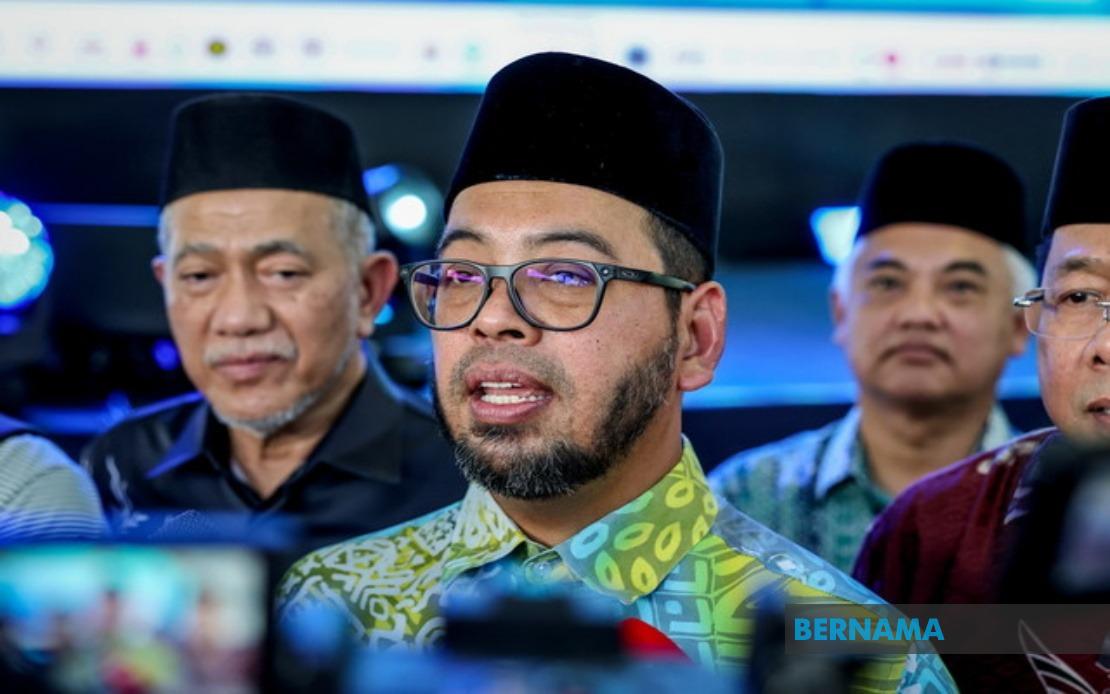
Malaysia's standing as a global leader in Islamic affairs management reflects decades of institutional development and strategic policy implementation, according to Minister in the Prime Minister's Department (Religious Affairs) Dr Zulkifli Hasan. Speaking at the opening of the Northern Zone MADANI Ulama and Umara Multaqa at Masjid Timah, Permatang Pauh, in Bukit Mertajam on July 5, he emphasised that the country's reputation rests on tangible achievements recognised by international scholars, policymakers, and observers across multiple sectors.
The minister's remarks carry particular significance given persistent domestic debates about religious freedoms and pluralism in Malaysia. By anchoring his argument in empirical data and international validation, Dr Zulkifli directly countered narratives that Islam faces marginalisation or existential threat in the country. Instead, he positioned Malaysia as an exemplar that other nations study and seek to emulate, a framing that reshapes the conversation from defensive posturing to confident global leadership. This distinction matters for Malaysia's identity as a multi-faith nation that can simultaneously champion Islamic governance excellence and maintain constitutional protections for religious minorities.
Malaysia's halal certification system, administered through the Department of Islamic Development Malaysia (JAKIM), stands as perhaps the most visible symbol of this expertise. The system's international recognition reflects rigorous standards that have become a benchmark for countries establishing their own halal frameworks. As global halal markets expand—particularly across Southeast Asia, the Middle East, and increasingly in Western nations—JAKIM's credibility becomes a competitive asset for Malaysian businesses exporting halal products and services. The certification carries commercial weight that extends beyond religious considerations into economic opportunity, making Islamic affairs management directly relevant to Malaysia's trade agenda.
The Lembaga Tabung Haji's management of hajj operations demonstrates operational competence at scale. Each year, the institution coordinates the travel and accommodation of over 200,000 Malaysian pilgrims performing one of Islam's five pillars, a logistical undertaking that demands expertise in international travel, finance, and pastoral care. Multiple international recognitions of this programme underscore that Malaysia has mastered complexity that many Muslim-majority nations still grapple with, positioning the country as a potential adviser and partner for other governments seeking to improve their own hajj management systems.
Perhaps most striking is Malaysia's Islamic finance sector, which has held the global number-one ranking consecutively for eleven years. This dominance reflects Kuala Lumpur's emergence as a genuine financial hub where sharia-compliant banking, insurance, and capital markets operate at institutional scale and sophistication. The sector's success demonstrates that Islamic principles and modern finance are entirely compatible, a message with implications extending well beyond Malaysia. For Southeast Asian economies watching Islamic finance develop, Malaysia's model offers both inspiration and practical guidance on regulatory frameworks, talent development, and market structure.
The government's commitment to Islamic education, particularly through the KAFA 2.0 initiative and the comprehensive tahfiz ecosystem, indicates a long-term strategy to produce both religious scholars and professionals capable of influencing national development. The National Tahfiz Council, standardised tahfiz policies, and the Malaysia Tahfiz Certificate create pathways allowing graduates to transition into higher education and technical fields, rather than limiting them to traditional religious roles. This approach acknowledges that Malaysia's Islamic affairs leadership depends on individuals trained to operate across multiple domains—not merely as clerics but as educators, administrators, business leaders, and policymakers who understand Islamic principles deeply.
The Northern Zone MADANI Ulama and Umara Multaqa itself represents deliberate institutional engagement between religious scholars and political leaders. The forum's existence, and the minister's participation in it, signals that Malaysia's approach to Islamic affairs involves continuous dialogue between theological expertise and governance implementation. This structure contrasts with models where religious authority remains isolated from state machinery or where state control stifles authentic religious discourse. The balance Malaysia attempts to strike—maintaining religious institutional autonomy while ensuring alignment with national development priorities—accounts for much of the international interest in its approach.
Dr Zulkifli's observation about his international travels carries specific weight for Southeast Asian audiences. As Malaysia's neighbours engage with similar questions about managing Islamic identity within diverse, developing societies, they observe how Malaysia navigates these tensions. The region includes Indonesia, the world's largest Muslim-majority nation; Brunei, with its recent shift toward hudud law implementation; and Singapore, with its Muslim minority requiring protective legal frameworks. Malaysia's visible success in Islamic affairs management becomes a reference point for regional policymaking, even when neighbouring countries ultimately make different choices.
The announcement of Yayasan Takwa's RM280,000 contribution to 28 Penang mosques, with each receiving RM10,000, and similar allocations to selected religious schools, demonstrates that recognition and policy are paired with material support. These funds enable institutions to maintain facilities, enhance educational programming, and extend community services. For Malaysian Muslim communities, particularly in states like Penang, such investments translate abstract principles about Islamic affairs excellence into tangible improvements in worship spaces and educational infrastructure.
Understanding Malaysia's Islamic affairs leadership requires recognising that it does not stem from isolation or monoculturalism but rather from institutional innovation within a constitutional framework that permits religious diversity. The halal system works because it operates to international standards while reflecting Islamic principles. Islamic finance thrives in Malaysia because regulatory clarity and professional expertise coexist. The tahfiz ecosystem functions because it creates multiple pathways rather than forcing religious education into a single mould. These achievements suggest that excellence in Islamic affairs management and pluralistic governance are mutually reinforcing rather than contradictory goals.
For Malaysia's regional position, this framing carries strategic implications. As the country competes for influence and investment across Southeast Asia and the broader Indo-Pacific, its demonstrated capability in Islamic institutional management becomes part of its soft power portfolio. Nations seeking expertise in halal systems, Islamic finance, or religious education look toward Malaysia. This influence operates through channels distinct from military or economic coercion—it flows through professional networks, educational partnerships, and institutional collaboration. For policymakers in Kuala Lumpur, these achievements represent not merely cultural accomplishments but strategic assets that advance Malaysia's interests in an increasingly multipolar region.

