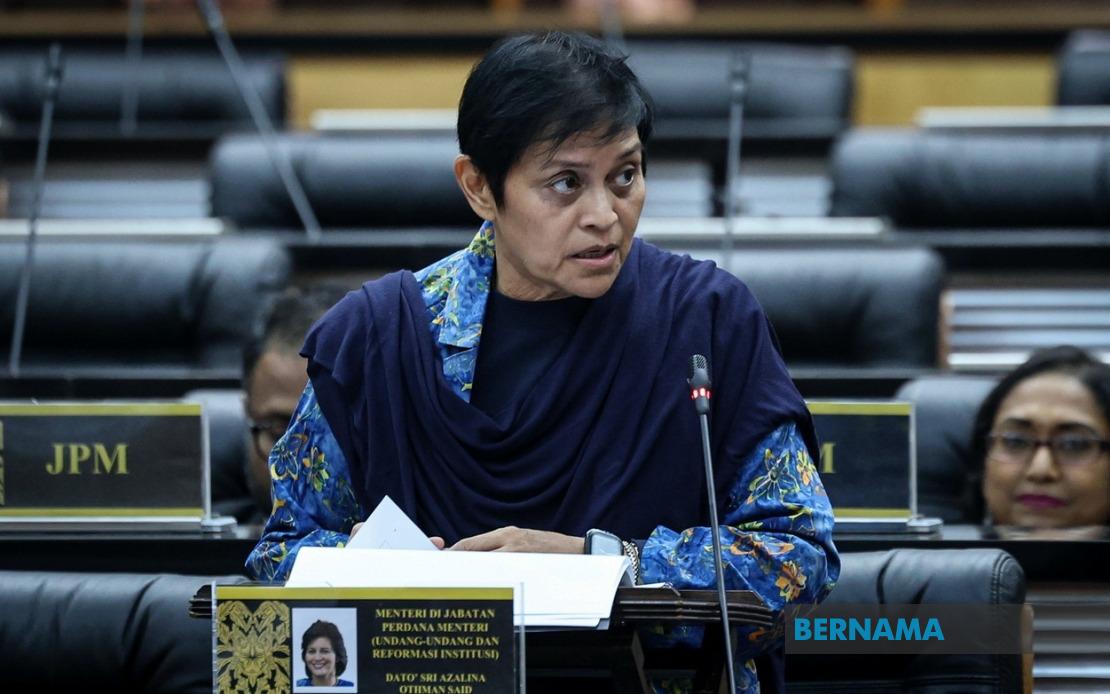
Malaysia's legislative efforts to strengthen its witness protection framework took a significant step forward on July 13 when the Witness Protection (Amendment) Bill 2026 was tabled for first reading in the Dewan Rakyat. Datuk Seri Azalina Othman Said, the Minister in the Prime Minister's Department (Law and Institutional Reform), formally introduced the legislation, which is designed to comprehensively modernise protections for vulnerable witnesses appearing in legal proceedings. The minister indicated that the Bill would proceed immediately to its second reading during the current parliamentary sitting, suggesting government determination to advance the measure swiftly through the legislative process.
The proposed amendments address several critical gaps in Malaysia's existing witness protection framework established under the Witness Protection Act 2009. A key innovation recognises the particular vulnerability of child witnesses by permitting parents or legal guardians to initiate programme membership on behalf of witnesses lacking legal capacity to make such decisions independently. This expansion, effected through amendments to subsection 7(3) of the 2009 Act, broadens protective coverage beyond the existing provisions for minors under eighteen years old. The inclusion of capacity considerations acknowledges that vulnerability extends beyond age to encompass individuals with cognitive disabilities or other conditions affecting decision-making ability, reflecting evolving international standards for victim and witness protection.
Central to the legislative package are two newly proposed sections designed to formalise and clarify the contractual relationship between the state and programme participants. Section 10A introduces a requirement for written agreements executed before designated officers, establishing transparent terms governing the protection and assistance participants receive, their corresponding obligations, and ancillary matters. This formalisation enhances accountability, creates documented expectations, and provides grievance mechanisms should disputes arise regarding service delivery or participant conduct. The structured approach mirrors best practices adopted in jurisdictions with mature witness protection systems, where clarity and documentation have proven instrumental in maintaining programme integrity and participant confidence.
The legislative framework also protects continuity for existing participants. Section 10B ensures that agreements executed under previous arrangements retain validity provided they remain active, allowing participants to benefit from the amended Act's enhanced protections without disruption. This transitional provision demonstrates legislative pragmatism, recognising that programme participants require stability and continuity; retroactive cancellation of existing agreements would undermine trust in government protection commitments and potentially deter future witness cooperation. The clause simultaneously clarifies that both government and participants continue entitled to rights and subject to obligations under the amended legislative regime.
Perhaps the most consequential innovation concerns expanded psychosocial support. Clause 4 formally incorporates psychological assistance and counselling services as recognised programme components, acknowledging that physical security alone proves insufficient for effective witness reintegration. Witnesses—particularly those testifying in serious criminal cases—frequently experience trauma, anxiety, and psychological disruption requiring professional therapeutic intervention. Malaysian courts have increasingly recognised the psychological toll of testimony, particularly in high-profile cases involving organised crime, trafficking, or violence. This amendment rectifies a significant legislative omission, embedding mental health support within the statutory framework rather than treating it as discretionary or ad hoc assistance.
The implications of these amendments extend beyond procedural refinement to reflect Malaysia's evolving approach to victim and witness welfare. International comparative experience demonstrates that robust psychological support directly correlates with improved witness willingness to testify, enhanced evidence quality, and better prosecution outcomes. For Malaysia's criminal justice system—currently grappling with serious crimes including drug trafficking, corruption, and organised crime—the capacity to assure witnesses that comprehensive protection encompasses both physical security and psychological care could fundamentally strengthen prosecutorial capability. Organised criminal networks operate with particular ferocity where witness intimidation succeeds; legislative frameworks that deter such intimidation through credible protection promises disrupt criminal operational logic.
The Bill arrives at a moment when Malaysia confronts sustained pressures on witness cooperation. High-profile cases including corruption investigations, drug trafficking prosecutions, and transnational crime matters regularly depend upon witness testimony from individuals facing genuine safety risks. Previous protection mechanisms, while existing, operated within constraints that potentially discouraged participation from reluctant witnesses weighing safety concerns against civic obligation. The enhanced framework addresses these practical deterrents by demonstrating legislative seriousness about comprehensive support extending beyond security protocols to encompass psychological wellbeing and post-protection assistance.
For Malaysian legal practitioners and prosecutors, the amendments create clearer operational parameters. The formalised written agreement requirement establishes explicit understanding regarding participant obligations—such as maintaining secure communications, avoiding public identification, and complying with relocation requirements—while simultaneously documenting government commitments regarding protection duration, support levels, and assistance modalities. This contractual transparency reduces friction and misunderstanding that historically complicated witness protection relationships, where participants sometimes harboured unrealistic expectations regarding compensation or support duration, or conversely, where authorities struggled to enforce participant compliance with security protocols.
The psychological support provisions particularly resonate within regional context. Southeast Asian criminal justice systems increasingly recognise that adequate witness protection requires multidisciplinary approaches integrating security professionals, legal advisors, and mental health specialists. Thailand, Indonesia, and the Philippines have each expanded psychological support components within witness protection regimes, establishing regional momentum toward comprehensive approaches. Malaysia's legislative alignment with these standards reflects both international best practice adoption and competitive concern that credible protection frameworks represent comparative advantage in encouraging witness cooperation in cross-border investigations and regional law enforcement coordination.
The inclusion of provisions for witnesses lacking legal capacity represents meaningful progress for child protection frameworks. Malaysian courts have increasingly encountered cases involving child witnesses to serious crimes, including trafficking, sexual offences, and organised crime involvement. Guardian-initiated protection programme entry removes administrative barriers that previously required children themselves to navigate complex procedures, recognising that effective protection must accommodate developmental realities and family involvement. This amendment particularly benefits trafficking victims and children exploited within organised crime networks, populations disproportionately reliant upon adult advocates navigating protection systems.
As the Bill advances to second reading, legislative scrutiny will likely focus on implementation mechanisms and resource implications. Psychological support expansion requires trained counsellors with security clearances and expertise in trauma-informed care, representing substantial resource commitments. The formalised agreement requirement necessitates designated officer training regarding contractual documentation, participant rights communication, and dispute resolution. These operational requirements demand coordination across multiple agencies including law enforcement, judicial authorities, and mental health services, creating implementation complexity beyond straightforward legislative amendment.
The amendments also reflect legislative responsiveness to practical experience accumulated over the Witness Protection Act 2009's sixteen-year operation. Judicial feedback, prosecutor input, and participant accounts likely informed these specific amendments, suggesting evidence-based legislative design rather than abstract theoretical impositions. This grounding in operational reality enhances prospect that amendments will prove workable rather than creating bureaucratic obstacles.
Looking forward, the Bill's passage would position Malaysia among ASEAN jurisdictions with statutorily mandated comprehensive witness protection frameworks integrating security, legal support, and psychological services. This alignment with international standards and regional peer practices strengthens Malaysia's commitment to rule of law while simultaneously acknowledging that effective justice system functioning requires treating witnesses not merely as evidence sources but as individuals deserving comprehensive protection and support. The legislative initiative signals that Malaysian policymakers recognise witness protection as fundamental to prosecutorial capacity and public safety, investing institutional capacity toward frameworks that encourage cooperation from those willing to testify against powerful criminal enterprises at genuine personal risk.

