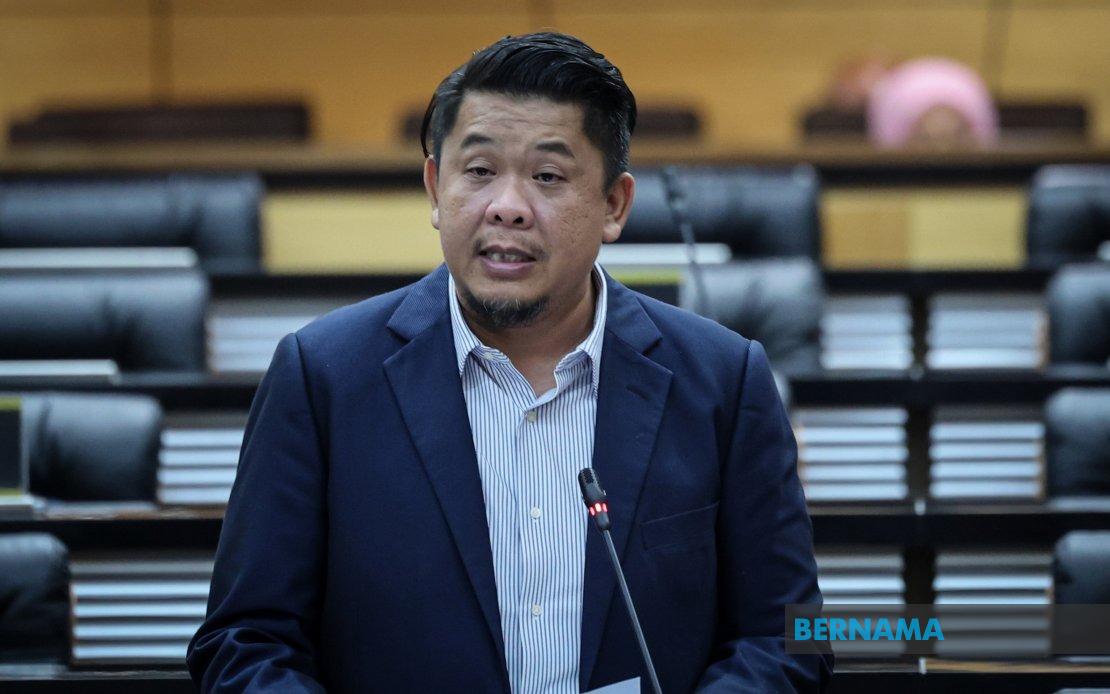
Malaysia has formally entered the race for a non-permanent seat on the United Nations Security Council for the 2036–2037 term, signalling its continued commitment to shaping the global governance agenda and advancing its vision of a more equitable international order. The submission, announced through Deputy Foreign Minister Datuk Lukanisman Awang Sauni during parliamentary proceedings, represents a strategic repositioning for the country on the world stage and reflects Kuala Lumpur's determination to influence multilateral decision-making during a period of mounting geopolitical tension and unresolved regional conflicts.
Datak Lukanisman articulated Malaysia's central policy plank with unequivocal clarity: the veto power exercised by permanent Security Council members is fundamentally unjust and should be scrapped entirely. This uncompromising stance carries particular weight given the recent weaponisation of the veto to shield allies accused of serious breaches of international humanitarian law. Malaysia's position gains resonance across the Global South, where smaller and mid-sized nations have grown increasingly frustrated by a post-World War II system that concentrates decision-making authority among five victorious powers at the expense of broader UN membership.
The deputy foreign minister elaborated that even if total abolition remains politically unrealistic in the near term, the international community should at minimum restrict veto usage in situations involving egregious violations of international law. He specifically highlighted categories that have proven most contentious in recent years: war crimes, genocide, crimes against humanity, and the deliberate targeting of civilian infrastructure. This formulation directly references the Palestinian-Israeli conflict, where Russian and Chinese vetoes have repeatedly blocked Security Council resolutions addressing alleged Israeli military operations, underscoring the paralysis that permanent member obstruction can inflict on the Council's primary mandate to maintain international peace and security.
Foreign Minister Datuk Seri Mohamad Hasan is scheduled to reaffirm these priorities during Malaysia's National Statement at the upcoming 81st UN General Assembly session in New York this September. This high-profile platform offers Malaysia an opportunity to build international coalition support for its candidacy while positioning itself as a principled advocate for institutional reform rather than merely seeking a seat for diplomatic prestige or narrow national interests. The timing coincides with growing momentum for UN overhaul discussions, particularly as middle powers and developing nations increasingly challenge the legitimacy of a Security Council structure that reflects twentieth-century geopolitical alignments rather than contemporary global realities.
Malaysia's previous tenure on the Security Council provides valuable institutional memory and credibility for a return engagement. The country brings a Southeast Asian perspective to global security debates, a region where great-power competition has intensified amid territorial disputes in the South China Sea, tensions over Myanmar's political upheaval, and broader strategic rivalry between the United States and China. Malaysian officials have demonstrated competence in navigating these crosscurrents while maintaining diplomatic equidistance—a skill set the current fractious Security Council sorely lacks as ideological and strategic divisions deepen among permanent members.
The candidacy also reflects Malaysia's broader foreign policy orientation toward championing issues of particular concern to developing nations and regional actors often marginalised in global security deliberations. Kuala Lumpur has positioned itself as a voice for the Global South, seeking to redirect international attention toward systemic inequalities embedded in global institutions. By contesting for the Security Council seat, Malaysia signals that reform, not mere participation, constitutes its ultimate objective—a posture that distinguishes it from candidates seeking elevation without substantive institutional change.
Domestically, the announcement generated parliamentary engagement when Datuk Seri Sh Mohmed Puzi Sh Ali from Pekan raised questions about Malaysia's stance on permanent member veto power, prompting the deputy foreign minister's detailed response. This legislative scrutiny demonstrates that Security Council aspirations command attention within Malaysian political circles, reflecting broader societal interests in how the country positions itself within international affairs and the extent to which national foreign policy aligns with principles of justice and multilateral equity.
The path toward securing the 2036–2037 seat will require sustained diplomatic engagement across UN membership, particularly among African, Asian, and Latin American nations that collectively wield decisive voting power in the General Assembly elections. Malaysia will compete against other candidates, with success dependent on building consensus around its reform agenda and demonstrating how its presence would strengthen the Security Council's legitimacy and operational effectiveness. The country's track record of consensus-building within ASEAN and its historical alignment with non-aligned principles provide advantages in courting support from nations equally invested in challenging structural inequities within the international system.
Beyond the immediate candidacy objective, Malaysia's submission crystallises a substantive debate about whether the Security Council can continue functioning effectively under its current institutional design. The veto mechanism, conceived to prevent victorious World War II powers from returning to conflict, now frequently serves as an instrument to obstruct accountability for contemporary atrocities and sustain geopolitical deadlock. Malaysia's unambiguous advocacy for fundamental reform positions the country as a principled player in discussions that will likely intensify as more nations demand that international institutions evolve to reflect contemporary realities and emerging power distributions.
The bid underscores Malaysia's conviction that participation in exclusive multilateral forums carries responsibilities beyond securing seat allocation. By foregrounding institutional reform in its candidacy platform, Malaysia demonstrates that smaller powers need not accept the international status quo passively. The country's willingness to openly challenge the veto system while pursuing Security Council membership represents a calculated gamble that principle-driven diplomacy can enhance rather than diminish candidacy prospects, particularly among fellow developing nations sceptical of candidates advancing purely instrumental objectives without commitment to meaningful systemic change.

