Timor-Leste President Jose Ramos-Horta has characterised the diplomatic relationship between his nation and Malaysia as exceptionally robust, offering warm praise for Malaysia's standing on the global stage in security, governance and democratic values. The Nobel laureate and former journalist made these remarks during a dialogue at Taylor's University in Petaling Jaya on Monday, where he addressed students on shifting geopolitical dynamics and enduring principles. His comments come as Timor-Leste charts an ambitious course within Southeast Asia's political architecture, having only recently secured full membership in the regional bloc.
The historical foundations of Malaysia-Timor-Leste cooperation run deeper than many observers realise. Ramos-Horta traced Malaysia's consistent engagement with his country back four decades, well before Timor-Leste's formal independence in 2002. Malaysia's role proved particularly consequential during the critical 1999 peacekeeping operations, when the Southeast Asian nation contributed military and civilian personnel to stabilise the territory during its transition from Indonesian administration. This early commitment established a pattern of partnership that has only deepened over subsequent decades, creating a foundation of trust and mutual understanding between the two governments.
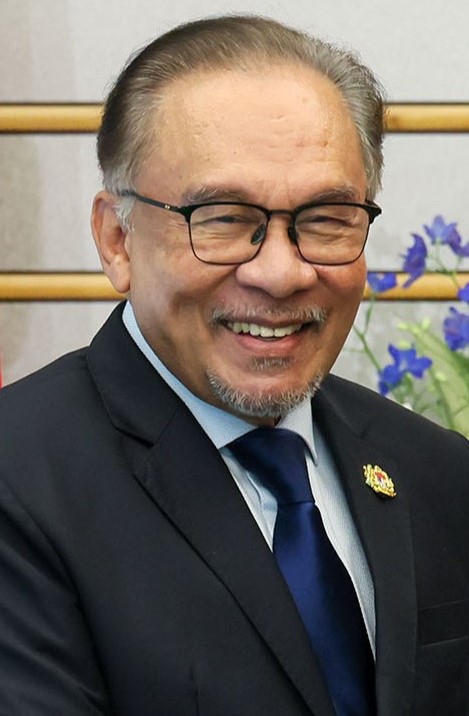
The president specifically highlighted how Prime Minister Datuk Seri Anwar Ibrahim's leadership has elevated Malaysia's international profile and economic performance in recent years. Ramos-Horta suggested that under Anwar's stewardship, Malaysia has not only strengthened its regional influence but has also enhanced its standing among the international community. This external perspective from a respected global statesman carries particular weight, as Ramos-Horta's background as a Nobel Peace Prize winner and international mediator gives him credibility in assessing comparative governance and leadership quality across nations.
Ramos-Horta's five-day official visit to Malaysia, concluding on Wednesday, underscores the diplomatic significance both nations attach to their bilateral relationship. The timing and scope of such visits reflect the importance each government places on maintaining high-level dialogue. For Timor-Leste, engagement with established Southeast Asian powers like Malaysia remains crucial as the young nation consolidates its regional role and addresses developmental challenges. For Malaysia, maintaining strong relations with fellow ASEAN members, particularly newer ones still establishing their governance frameworks, serves strategic interests in regional stability and cohesion.
Addressing Malaysia's National Journalists' Day, or HAWANA, celebration scheduled for Penang this Saturday, Ramos-Horta conveyed a message about the indispensable role of free press in democratic societies. He articulated a fundamental principle: that an adequately informed populace provides the essential foundation for social cohesion, national unity and collective problem-solving. This emphasis on journalism's democratic function reflects Ramos-Horta's own career trajectory, which intertwined activism, writing and international diplomacy as tools for advancing human rights and regional peace. His recognition of Malaysian journalism's contribution to public discourse represents both a compliment to the profession and an affirmation of Malaysia's democratic institutions.
Timor-Leste's forthcoming chairmanship of ASEAN in 2029 represents a watershed moment for the young nation's international standing. Ramos-Horta expressed confidence that his country will successfully host the regional summit and related meetings, though he acknowledged the substantial infrastructure undertaking this commitment entails. The president indicated that Timor-Leste is actively accelerating development projects to ensure adequate facilities, displaying determination to meet the expectations this responsibility carries. Successfully hosting ASEAN would constitute powerful validation of Timor-Leste's capacity to function as a full regional stakeholder, moving beyond its historical status as a post-conflict territory requiring external support.
Malaysia's instrumental role in facilitating Timor-Leste's path to ASEAN membership warrants examination as a case study in constructive regional diplomacy. During Malaysia's own ASEAN chairmanship in the preceding year, the country actively championed Timor-Leste's accession process, navigating diplomatic complexities and building consensus among member states. This support was not merely ceremonial; it reflected substantial diplomatic effort at multiple levels. Ramos-Horta's explicit gratitude for this assistance acknowledges Malaysia's commitment to regional inclusivity and expansion, principles that align with ASEAN's foundational charter of maintaining an open architecture receptive to qualified new members.
The formal admission of Timor-Leste as ASEAN's eleventh member on October 26, 2025, marked the regional organisation's first enlargement in 26 years, ending a quarter-century of institutional stasis. This expansion holds implications extending far beyond ceremonial significance. Timor-Leste's inclusion strengthens ASEAN's geographic reach across the maritime Southeast, enhances the bloc's collective economic weight, and reinforces its claims to regional representativeness. For Timor-Leste itself, ASEAN membership provides access to institutionalised dialogue mechanisms, economic cooperation frameworks and security consultation channels that would be unavailable to an isolated island nation. Malaysia's role in shepherding this expansion reflects the country's continued investment in ASEAN's vitality and relevance.
The broader geopolitical context illuminates why statements like Ramos-Horta's carry significance for Malaysian and regional observers. As great power competition intensifies in the Indo-Pacific and concerns mount about strategic rivalry, organisations like ASEAN and functional bilateral relationships gain heightened importance. Nations like Malaysia that maintain strong connections across the regional spectrum position themselves as stabilising influences and honest brokers. Timor-Leste's affirmation of these ties, articulated by a president with international standing and credibility, reinforces the value these relationships hold for all participants.
Looking forward, the Malaysia-Timor-Leste relationship will likely deepen as both nations navigate shared regional challenges including maritime security, climate resilience and economic integration. Timor-Leste's upcoming ASEAN hosting responsibilities will provide occasions for practical cooperation and demonstration of regional solidarity. Malaysia's experience managing complex regional relationships and institutional responsibilities offers potential templates for Timor-Leste's emerging role. The foundation laid through decades of support and demonstrated partnership suggests this bilateral relationship will remain a durable feature of Southeast Asia's political landscape.