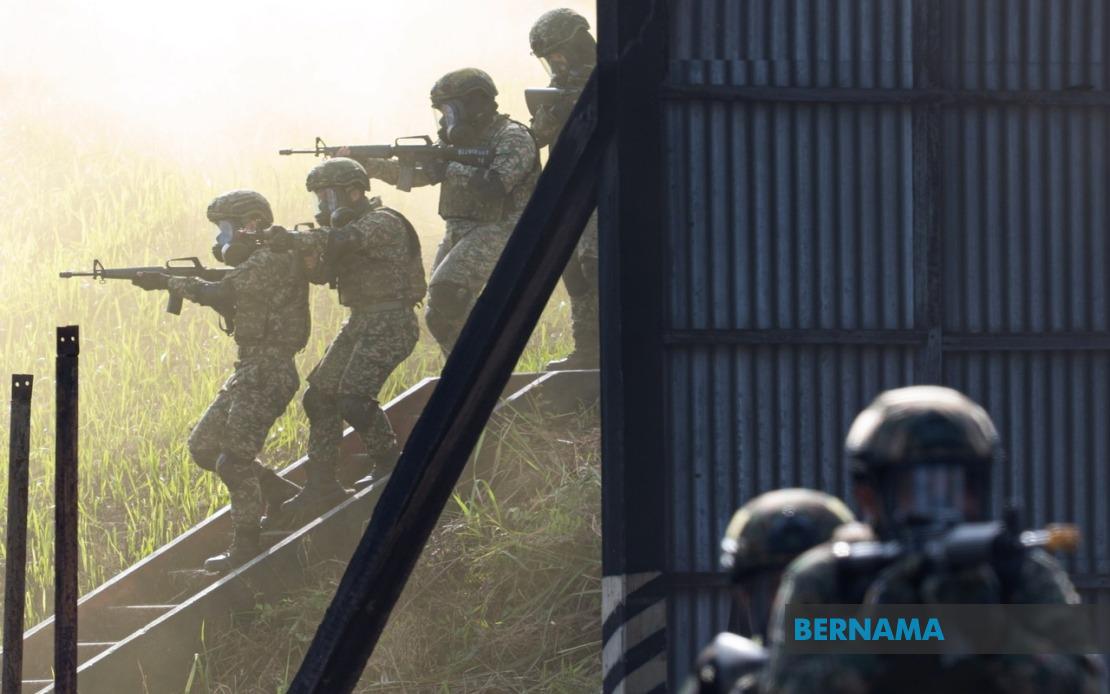
Prime Minister Datuk Seri Anwar Ibrahim has committed to seeking a higher defence allocation in the 2027 budget to bolster the Malaysian Armed Forces' operational capacity and enhance the living standards of military personnel. Speaking in Melaka on August 7, Anwar, who doubles as Finance Minister, underscored that safeguarding national peace required sustained investment in defence capabilities, framing security preparedness as a foundational element of Malaysia's prosperity.
Anwar emphasised that military readiness cannot be treated as a reactive measure, waiting for threats to materialise before resources are mobilised. Rather, defence systems must be continuously maintained and upgraded to ensure the nation can respond effectively to unforeseen challenges. This proactive stance reflects growing regional security concerns, including territorial disputes in the South China Sea and the need for Malaysia to maintain credible deterrence without escalating tensions with neighbours.
The Prime Minister stressed that procurement processes must be conducted with full transparency and fiscal discipline, explicitly rejecting practices involving inflated commissions or middleman profiteering that have historically plagued defence acquisitions across the region. This transparency mandate aligns with broader government efforts to combat corruption and improve public trust in defence spending, an area where accountability has long been questioned by civil society groups and international observers.
Over the preceding three years, the MADANI Government has channelled defence funds at levels exceeding 35 percent above previous allocations, yet Anwar acknowledged that these investments remain insufficiently publicised. The apparent gap between actual spending increases and public awareness suggests a communication challenge—defence ministry achievements in modernisation and capability enhancement have not translated into broader public confidence or understanding of how resources are deployed.
Anwar linked the prospect of higher defence spending to Malaysia's improving macroeconomic fundamentals, including currency strength, rising foreign direct investment, and contained inflation rates. Economic stability provides the fiscal headroom necessary for increased defence allocation without crowding out other essential services such as healthcare and education. This economic-security nexus reflects sophisticated budgetary planning that recognises Malaysia's middle-power status requires credible armed forces within sustainable fiscal constraints.
The proposed budget increases will specifically target personnel welfare improvements, encompassing upgraded military accommodation, construction of a modern medical facility to serve armed forces families, and maintenance of essential infrastructure including water and sanitation systems across bases. These improvements carry significance beyond morale considerations—better living conditions enhance recruitment and retention in a competitive labour market, directly affecting military effectiveness and operational readiness.
During the Melaka event, Anwar announced disbursements totalling RM147,000 to the Armed Forces Family Welfare Association and RM1 million dedicated to mosque and prayer hall maintenance at four military installations in the state, reflecting the government's attention to religious and community services within defence establishments. These allocations demonstrate recognition that force cohesion and personnel satisfaction encompass dimensions beyond equipment and training.
The Budget 2027 announcement comes at a delicate moment in Malaysia's security landscape. Regional tensions have intensified, including maritime incidents and strategic competition among major powers, necessitating Malaysia's careful navigation between maintaining credible defence capabilities and avoiding provocation. Increased defence spending must balance deterrence against destabilisation concerns, particularly given Malaysia's sizeable defence budget relative to its economy.
Officials present at the Melaka event included Minister in the Prime Minister's Department (Religious Affairs) Senator Dr Zulkifli Hasan, Deputy Defence Minister Adly Zahari, Chief Secretary to the Government Tan Sri Shamsul Azri Abu Bakar, and Army chief General Tan Sri Azhan Md Othman. Their collective attendance underscored the cross-governmental coordination required for defence planning, spanning security, economic, and administrative portfolios.
The government's commitment to transparent, commission-free procurement carries particular importance for Southeast Asian regional stability. Defence spending credibility depends on demonstrated fiscal responsibility and systemic corruption prevention—concerns that affect not only Malaysia but regional confidence in defence modernisation across the bloc. Other nations including Indonesia, Thailand, and Vietnam face similar pressures to upgrade military capabilities while maintaining fiscal discipline.
Budget 2027 is scheduled for tabling in the Dewan Rakyat on October 9, marking the formal legislative stage where defence allocations will be debated and scrutinised by parliamentarians. This timeline provides several months for public discourse regarding defence priorities and spending justifications, potentially engaging broader society in understanding security investments.
For Malaysian businesses, particularly those in defence-related sectors including engineering, manufacturing, and technology services, the pledged budget increase signals potential opportunities in equipment supply and infrastructure development contracts. However, the emphasis on transparent, competitive procurement may shift advantage toward qualified local vendors operating under strict governance standards rather than those dependent on commission-based relationships.
The defence budget announcement reflects government confidence in Malaysia's economic trajectory while acknowledging persistent security challenges requiring sustained investment. As regional competition intensifies and technological military advancement accelerates, Malaysia's ability to modernise forces while maintaining fiscal responsibility will significantly influence its strategic positioning in Southeast Asia.

