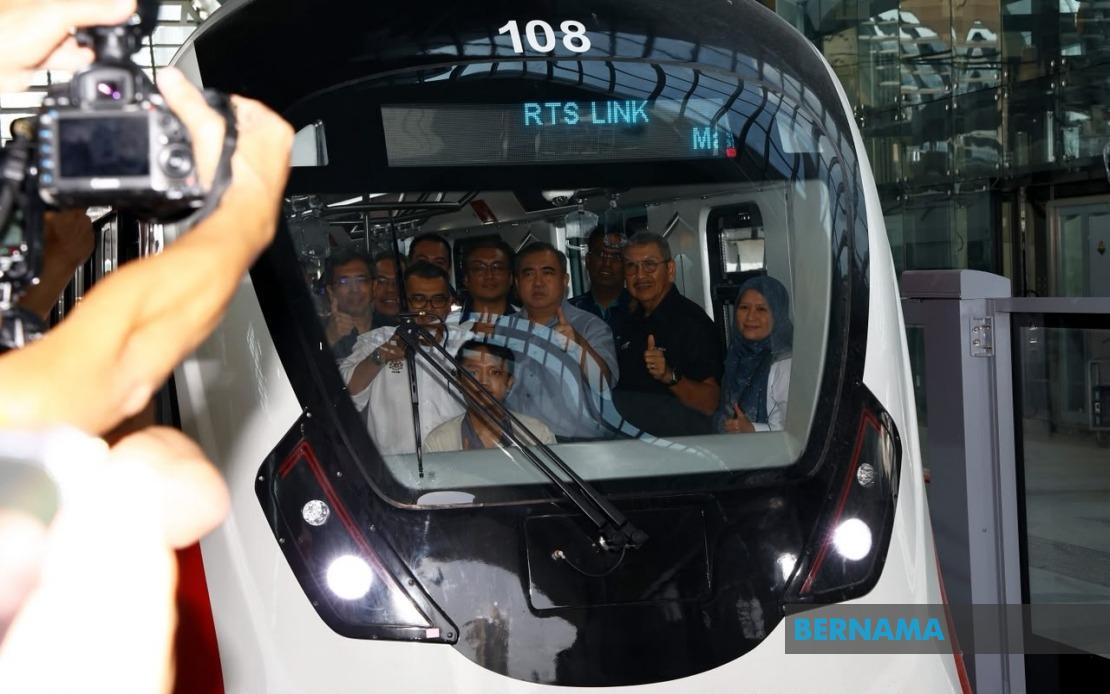
The Malaysian government has given the go-ahead for a RM60 million infrastructure project designed to strengthen the linkage between two major public transport systems in Johor Bahru. Transport Minister Anthony Loke announced the bridge initiative following an inspection of the Bukit Chagar RTS Link Station, emphasising the administration's commitment to creating a seamless transit experience for commuters moving between Singapore and Malaysia. The Ministry of Economy has endorsed the additional project, which will now be delivered by the Ministry of Transport within a projected 12-month construction window.
The planned connector bridge represents a significant step in dismantling fragmented public transport networks that have historically required passengers to undertake unnecessary detours. Currently, travellers using KTMB Komuter services who wish to access the RTS Link must navigate through JB Sentral, adding time and inconvenience to their journeys. The new bridge will allow direct pedestrian movement from Komuter platforms straight into the Bukit Chagar RTS Link Station, fundamentally reconfiguring how passengers flow through the transportation ecosystem in this strategic border city. Loke noted that this streamlining is essential for encouraging greater adoption of the RTS Link, particularly among those arriving via conventional rail services.
The timing of this connector project assumes heightened importance given that the RTS Link is scheduled to commence operations on January 1 next year. The rapid transit corridor will eventually serve up to 10,000 passengers hourly in each direction, linking Bukit Chagar with Woodlands North in Singapore. Such capacity figures underscore the enormous demand anticipated for this cross-border connection, making efficient internal connectivity within Malaysian terminals absolutely crucial to preventing bottlenecks and ensuring passenger satisfaction from day one. The bridge investment signals recognition that infrastructure created in isolation, without proper connecting tissues, fails to realise its full potential.
Beyond the bridge itself, the government is simultaneously executing the Stage Bus Service Transformation 2.0, a complementary programme targeting enhanced last-mile connectivity. This initiative will introduce at least 200 additional buses providing scheduled services from residential zones surrounding Johor Bahru through to Bukit Chagar. The operator agreement is currently undergoing finalisation, with the Ministry of Finance expected to grant final approval once terms are settled. By aligning this bus service expansion with the RTS Link's operational launch, authorities aim to create a distributed passenger dispersal system that prevents the concentration of travellers at any single point.
The multi-modal integration strategy extends further, with Bukit Chagar emerging as a comprehensive transport interchange rather than a singular station. The facility will unite the RTS Link, JB Sentral conventional rail services, e-hailing platforms, and the expanded bus network under a single operational umbrella. This hub approach reflects contemporary best practices in transit-oriented development, where diverse transport modes converge at strategically positioned nodes, enabling passengers to select journeys matching their specific origins, destinations, and time preferences. For Malaysian residents working in Singapore or vice versa, such integration removes friction that has traditionally inhibited cross-border commuting patterns.
Currently, the physical infrastructure development at Bukit Chagar has reached an advanced stage, with building construction, the Customs, Immigration and Quarantine complex, and the RTS Link station all substantially completed. The project has transitioned into intensive testing and commissioning phases, where engineers verify system integration, conduct extended fault-free operational runs, and conduct trial services to guarantee readiness before public access commences. This methodical approach, while extending timelines, minimises risks of operational failures during the critical opening months when first impressions shape long-term user confidence and adoption rates.
The RM60 million bridge investment must be contextualised within Malaysia's broader regional positioning. The Johor Bahru-Singapore corridor represents one of Southeast Asia's most economically dynamic cross-border zones, with daily commuter flows numbering in the hundreds of thousands. Infrastructure improvements facilitating smoother transit between these two economies generate cascading economic benefits through reduced travel times, lower commuting costs, and enhanced worker productivity. The RTS Link itself addresses chronic traffic congestion on the Causeway and Second Link, while the connector bridge ensures that the rail system's capacity is fully exploited rather than partially realised due to poor internal connections.
For Malaysian commuters, the practical implications are substantial. Workers residing in Johor Bahru but employed in Singapore's CBD or industrial zones face substantial daily transportation challenges. Current options require navigating crowded buses, queuing at land borders, or enduring traffic jams that frequently extend journey times beyond two hours. The RTS Link promises to compress travel duration to approximately 45 minutes, while the connector bridge and expanded bus services ensure that residents from peripheral residential developments can access Bukit Chagar without private vehicle dependency. This transition away from car-centric commuting aligns with Malaysia's sustainability objectives while simultaneously easing congestion on already-strained road corridors.
The project also signals administrative determination to move beyond siloed transportation planning, where different agencies historically operated systems with minimal coordination. The Ministry of Transport, KTMB, JB Sentral operators, and bus service providers must now function as integrated components within a unified network. Such institutional coordination, though administratively complex, delivers exponentially greater value than disconnected improvements. For Malaysian policymakers monitoring this development, the Bukit Chagar initiative offers instructive lessons regarding infrastructure interconnectivity that could inform future transit projects in Kuala Lumpur, Penang, or Sabah.
The financial commitment of RM60 million for a connector bridge may appear substantial in isolation but represents prudent investment relative to the downstream benefits. Passenger experience improvements translate into sustained ridership growth, enhanced farebox revenue, and reduced traffic externalities across Johor Bahru's congested road network. Moreover, the investment demonstrates Malaysian commitment to cross-border integration at precisely the moment when Singapore simultaneously invests in complementary infrastructure, creating a virtuous cycle of mutual economic reinforcement. As the RTS Link approaches its operational debut, these final infrastructure elements will prove decisive in determining whether the facility achieves its considerable potential or becomes an underutilised asset hampered by inadequate internal connectivity.

