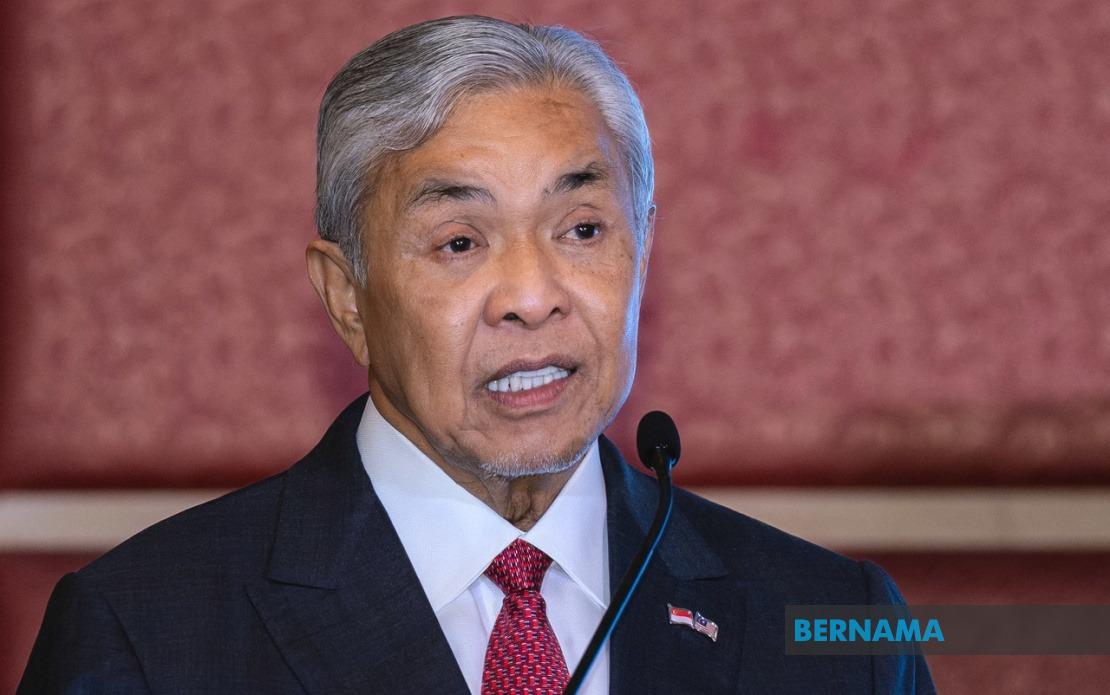
Malaysia is moving toward greater self-reliance in managing its refugee and asylum seeker populations by establishing a domestic framework that prioritises both humanitarian concerns and national security interests. Deputy Prime Minister Datuk Seri Dr Ahmad Zahid Hamidi announced that the country will develop its own mechanism for overseeing refugees and asylum seekers, underpinned by National Security Council (NSC) Directive No. 23, which was formally adopted on June 14, 2023, under the authority of Prime Minister Datuk Seri Anwar Ibrahim. This strategic shift reflects Malaysia's intention to reduce reliance on external entities and instead construct a tailored approach that reflects the nation's unique circumstances and priorities.
The proposed framework encompasses several interconnected objectives designed to create a balanced approach to refugee management. According to Ahmad Zahid, who also serves as Rural and Regional Development Minister, the mechanism will prioritise efficient administration and enforcement of existing laws while simultaneously coordinating policies that grant eligible refugees access to critical welfare and social services. This dual mandate recognises that effective refugee management requires both rigorous border control and humanitarian provisions that allow displaced persons to meet their basic needs. The government's vision encompasses extending healthcare, educational opportunities, and employment pathways to refugees who meet eligibility criteria, acknowledging that integration into society reduces vulnerability to exploitation and supports public stability.
The announcement comes against the backdrop of Malaysia hosting approximately 126,000 registered Rohingya refugees, a substantial displaced population whose presence has shaped national security and social policy conversations for over a decade. This figure represents one of the largest concentrations of Rohingya outside Bangladesh and underscores the scale of the challenge facing Malaysian authorities. The Refugee Registration Document (DPP) system, which forms part of this comprehensive approach, aims to create a verified database that enables more precise resource allocation and targeted service delivery. By establishing clearer documentation and registration protocols, the government seeks to distinguish between documented refugees entitled to services and irregular migrants who may pose different administrative and security considerations.
A central tension within Malaysia's refugee policy involves balancing enforcement mechanisms with genuine community needs and humanitarian obligations. Ahmad Zahid acknowledged this complexity by noting that effective refugee management demands equilibrium between strict application of national laws and recognition of the broader social responsibilities that accompany hosting displaced populations. However, he also pointed to a significant implementation challenge: the presence of enablers within local communities who actively undermine government enforcement strategies. These individuals, motivated by financial incentives such as rental income from overcrowded accommodation or access to underpaid labour sources, create conditions that exploit vulnerable refugees while complicating regulatory oversight. Addressing this dimension requires not merely strengthening police and immigration authorities but also reshaping community-level incentive structures that currently reward circumvention of official protocols.
The NSC Directive No. 23, strengthened through ongoing inter-agency collaboration, represents an effort to clarify institutional responsibilities across Malaysia's complex bureaucratic landscape. Multiple ministries and government agencies possess stakes in refugee policy, from defence and home affairs to health and education departments. The revised directive aims to delineate precisely which agencies bear responsibility for specific functions, reducing jurisdictional ambiguities that previously enabled refugees to fall through administrative gaps while simultaneously making enforcement inconsistent. By establishing clear departmental roles and coordination mechanisms, the government intends to create a coherent policy architecture that can respond adaptively to challenges while maintaining strategic oversight.
For Malaysian society more broadly, this domestic framework carries implications beyond refugee management itself. The establishment of clearer policies and service pathways may reduce informal market dynamics that currently characterise much refugee accommodation and employment. When refugees cannot access formal services, they become dependent on exploitative informal networks that generate profits for local facilitators while rendering the refugee population invisible to health and safety regulations. A more transparent, domestically managed system could theoretically enhance both refugee welfare and public hygiene and safety standards, though successful implementation depends on adequate government resourcing and political will to enforce standards consistently.
The timing of this policy development reflects broader regional and international contexts affecting refugee flows and management capacities. Southeast Asian nations face mounting pressure to address displacement crises while domestic political constituencies increasingly scrutinise government spending on non-citizens. Malaysia's decision to develop independent management capacity rather than defer to international frameworks signals confidence in domestic institutions while asserting national sovereignty over such sensitive matters. This positioning allows the government to craft responses aligned with Malaysian public opinion and economic capacity rather than accepting prescriptions from international bodies that may lack contextual understanding of local conditions.
The policy framework also attempts to address governance challenges that have historically undermined refugee management efforts. Corruption, inconsistent enforcement, and unclear criteria for service provision have previously allowed parallel systems to flourish alongside official channels. By codifying procedures and defining entitlements through a directive signed by the Prime Minister, the government creates documentary evidence against which implementation can be evaluated and officials held accountable. Transparency in policy design does not guarantee flawless execution, but it establishes baselines for performance assessment and creates mechanisms for civil society and parliamentary oversight.
Looking forward, the effectiveness of this independent mechanism will depend substantially on how well the government navigates the tension between security concerns and humanitarian needs. Malaysia cannot simply enforce its way toward stability if refugee populations lack access to legitimate pathways for meeting survival needs; desperation drives irregular employment and housing arrangements that create the very enforcement challenges officials seek to address. Conversely, overly generous provision of services without robust identity verification could create pull factors that increase irregular migration inflows, straining resources and generating public backlash. The government's challenge lies in calibrating policies that satisfy both imperatives simultaneously, a task requiring continuous adjustment as circumstances evolve.

