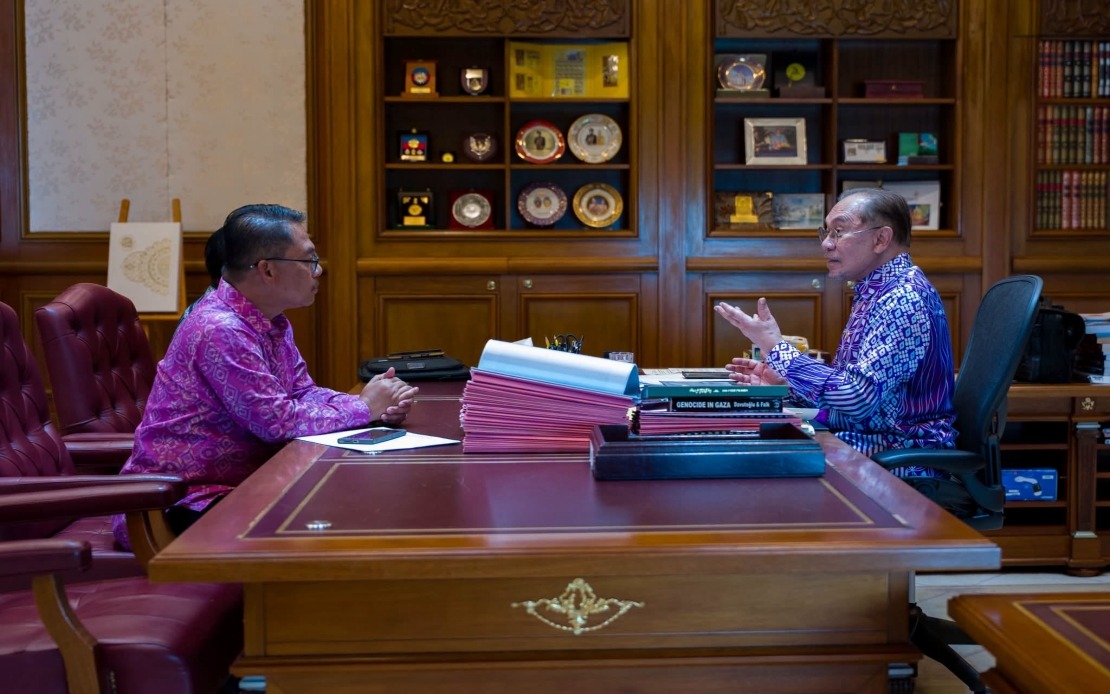
The Malaysian government is committed to improving how its targeted diesel subsidy scheme operates in Sabah and Sarawak, drawing on insights gathered directly from communities across both states. Datuk Mustapha Sakmud, Minister in the Prime Minister's Department overseeing the two Borneo territories, indicated that ongoing consultations with key stakeholders and both state and federal agencies would shape refinements to ensure the initiative functions effectively whilst preserving living standards, particularly for residents in distant and rural zones where fuel access has historically been problematic.
The iterative approach reflects recognition that subsidy programmes affecting large populations require continuous adjustment based on real-world experiences. Rather than implementing a static policy, the government is treating the scheme as a learning process wherein regular engagement with affected communities informs decision-making at the federal level. This consultative stance acknowledges that bureaucratic designers in Kuala Lumpur cannot anticipate every operational challenge that emerges when policies reach dispersed communities in Malaysia's far-flung regions.
Prime Minister Datuk Seri Anwar Ibrahim has personally engaged with public concerns regarding the BUDI Diesel initiative's implementation difficulties in Sabah, demonstrating executive-level attention to subsidy programme mechanics. His direct involvement signals that the government considers fuel subsidy management strategically important enough to warrant prime ministerial engagement with grassroots feedback. This level of attention underscores the political sensitivity surrounding fuel policy in the two eastern Malaysian states, where energy costs significantly influence both household economics and business competitiveness.
Sakmud framed the government's responsiveness through the MADANI administration's stated principle that public concerns deserve serious consideration regardless of whether they originate in urban centres or remote settlements. This inclusive framing attempts to demonstrate government accountability to all constituents, particularly those in peripheral areas who often feel disconnected from federal decision-making structures. For rural communities in Sabah and Sarawak, where transportation costs constitute substantial proportions of household and business expenditure, having their voices acknowledged in policy refinement processes carries tangible significance.
The BUDI Diesel programme, which commenced nationwide on July 1, establishes differentiated subsidy arrangements based on vehicle type and ownership eligibility. Qualified private diesel vehicle owners receive a monthly allocation of 200 litres at the concessional rate of RM2.10 per litre, representing meaningful savings compared to unsubsidised market prices. This baseline allocation reflects calculations regarding typical monthly consumption patterns for ordinary vehicle users, though individual circumstances vary considerably depending on driving requirements and geographical contexts.
Vehicle owners operating sports utility vehicles and pickup trucks possess pathways to secure supplementary quantities of up to 100 litres monthly, contingent upon satisfying specified eligibility criteria. This tiered structure attempts to balance fiscal sustainability with recognition that certain user categories—potentially including agricultural producers, logistics operators, and others whose livelihoods depend on vehicle usage—require greater fuel allocations than standard commuters. The criteria-based approach theoretically targets additional support toward those with genuine need, though implementation clarity remains essential for equitable access.
For Sabah and Sarawak specifically, fuel subsidies carry outsized importance given geographical and economic characteristics. Both states feature substantial rural populations dispersed across extensive territories, where vehicle ownership serves essential functions for economic participation, healthcare access, and education. Fuel costs therefore directly influence opportunity structures for peripheral communities. Subsidy programmes must account for these realities to avoid inadvertently widening disparities between urban and rural zones.
The emphasis on gathering grassroots feedback reflects growing recognition that subsidy policies generate complex consequences that deserve empirical examination rather than abstract modelling. Communities experiencing implementation challenges possess irreplaceable knowledge regarding how policies function in practice—which fuel retailers participate reliably, whether subsidy access mechanisms prove technically feasible for all eligible users, whether monthly allocations align with genuine consumption patterns, and whether any unintended consequences emerge. Systematically capturing such intelligence requires genuine openness to community input, not merely symbolic consultation.
Refinement processes typically involve examining whether subsidy mechanisms achieve intended distributional outcomes or whether leakages, manipulation, or unequal access undermine programme objectives. In Sabah and Sarawak, particular attention may focus on ensuring that rural fuel retailers can participate effectively in subsidy schemes, that remote communities do not face accessibility barriers, and that eligibility verification processes do not exclude legitimate beneficiaries through excessive administrative complexity. These operational details determine whether policies delivering intended benefits or creating unintended hardships for target populations.
The government's commitment to iterative refinement suggests that BUDI Diesel remains fundamentally works-in-progress rather than fixed policy architecture. This adaptability represents sound governance practice, particularly for programmes affecting dispersed populations with varying circumstances. However, such flexibility also requires robust monitoring systems, clear communication channels for feedback transmission, and institutional capacity for systematic programme adjustment. Without these supporting structures, commitments to community-responsive refinement risk remaining rhetorical rather than substantive.
For Malaysian observers and policymakers across Southeast Asia, Sabah and Sarawak's subsidy refinement experience offers relevant lessons regarding subsidy programme design in geographically dispersed populations. How Malaysia manages fuel subsidy equity across vast territories whilst maintaining fiscal sustainability provides instructive case studies for other regional governments grappling with similar challenges. Successful models that combine fiscal discipline with genuine responsiveness to peripheral community concerns could inform regional policy conversations about subsidy architecture.
Moving forward, monitoring how specifically the government incorporates gathered feedback into programme modifications will indicate whether consultation processes translate into substantive policy changes. Communities in Sabah and Sarawak will likely observe carefully whether their articulated concerns produce concrete improvements in subsidy access and implementation, or whether acknowledgment of feedback occurs without meaningful policy consequences. This distinction between symbolic and substantive responsiveness will shape public confidence in government commitment to community-centred policymaking.

