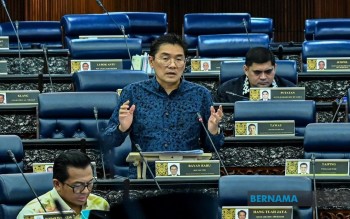
The Malaysian government has committed to a cautious approach towards approving data centre developments, making resource availability a fundamental precondition for advancing major digital infrastructure projects. Deputy Minister of Investment, Trade and Industry Sim Tze Tzin announced in Parliament that no data centre scheme will receive the green light until authorities have thoroughly verified that both energy and water supplies can adequately service existing populations and industrial operations throughout the country.
This strategic safeguard reflects growing concerns across Southeast Asia about the resource demands of digital facilities, particularly as the region competes to attract data centre investments that promise economic growth and technological advancement. The Malaysian government recognises that while such projects generate employment and strengthen digital capabilities, they cannot be pursued at the expense of essential utilities for citizens and manufacturing sectors that form the backbone of the economy. The assurance from Sim addresses anxieties expressed by parliamentarians about whether rapid data centre expansion might create bottlenecks in energy and water distribution, potentially constraining economic development elsewhere.
Central to this oversight mechanism is the newly established Data Centre Task Force, which conducts granular assessments of each application by scrutinising the specific power and water requirements against available infrastructure capacity. Rather than approving projects based on commercial merit alone, the task force examines whether existing surplus can accommodate new facilities without compromising supply reliability for households and factories. This multi-layered evaluation process distinguishes Malaysia's approach from less regulated frameworks adopted by some regional competitors, positioning the country as a responsible steward of critical resources.
Water security takes particular precedence in the government's calculus. Sim explicitly stated that the allocation hierarchy places residential and national water needs at the apex, with data centre operators permitted access only to capacity that remains after these primary demands are fully satisfied. This ranking underscores the government's understanding that water scarcity poses long-term economic and social risks that cannot be mitigated by digital sector revenues alone. Malaysia's monsoon-dependent water systems and seasonal variability mean that surplus capacity fluctuates, requiring adaptive governance frameworks that the task force is designed to implement.
Energy considerations operate under similarly stringent principles, with the government accepting responsibility for ensuring that power generation expansion required for data centres does not translate into increased electricity costs that burden ordinary households or manufacturing competitiveness. This commitment implies that data centre operators may face requirements to invest in renewable energy integration or power purchase agreements that insulate consumers from pricing pressures. The approach reflects regional energy dynamics where coal-dependent generation continues to dominate, creating environmental and affordability tensions that policymakers must carefully navigate.
Currently, Malaysia still maintains sufficient surplus capacity across both energy and water dimensions to accommodate applications under review by the Data Centre Task Force, according to Sim's parliamentary testimony. This comfortable position provides the government with strategic flexibility to pursue data centre development without immediately confronting resource constraints, though the deputy minister's emphasis on existing surpluses implicitly acknowledges that such breathing room remains finite. The timeline for when these surpluses might be exhausted remains unclear, but the very existence of the task force suggests governmental awareness that trajectory modelling is essential to prevent future crises.
The data centre announcement occurred within a broader context of Malaysia's semiconductor and artificial intelligence ambitions, which represent another frontier of resource-intensive economic activity. Deputy Minister Sim highlighted that the National Semiconductor Strategy has generated RM91.9 billion in approved investments between January 2024 and March 2026, with foreign direct investment contributing RM82.9 billion and domestic players investing RM8.9 billion. These figures demonstrate that Malaysia is successfully attracting major technological capital despite regional competition from Vietnam, Thailand, and Indonesia, which are simultaneously pursuing semiconductor ecosystem development.
The semiconductor push extends beyond infrastructure into human capital formation, with the government targeting 60,000 trained workers across design, manufacturing, and support functions. By December 2025, approximately 18,062 local talents had completed training programmes, positioning Malaysia to reduce dependence on imported expertise and build indigenous technological capacity. This workforce development complements data centre and semiconductor investments by creating a virtuous cycle where digital infrastructure attracts skilled talent, which in turn strengthens the ecosystem's competitiveness and innovation potential.
For Malaysian readers and policymakers, the data centre conditionality framework represents a deliberate policy choice to balance growth aspirations against resource sustainability. Unlike jurisdictions that have rapidly scaled data centre operations with minimal environmental oversight, Malaysia is attempting to learn from international experience and implement governance structures that prevent resource crises from undermining broader economic objectives. This measured pace may frustrate technology companies seeking immediate approvals, but it reflects sophisticated understanding that infrastructure decisions made today shape developmental possibilities for decades.
The intersection of data centre expansion with semiconductor strategy and artificial intelligence capabilities suggests that Malaysia is positioning itself as a comprehensive digital technology hub rather than a single-purpose facility location. Data centres would provide cloud services and computing infrastructure, semiconductor facilities would supply advanced chips, and trained workforces would support emerging AI applications across Southeast Asian markets. This integrated approach, contingent on resource sufficiency, represents a more resilient long-term development model than competing individually with neighbouring countries for isolated manufacturing or service investments.
Regional implications extend beyond Malaysia's borders, as the data centre task force model may influence policy discussions across ASEAN about responsible growth in digital infrastructure. Thailand, Vietnam, and Indonesia are similarly grappling with balancing data centre and semiconductor sector expansion against environmental and social carrying capacities. Malaysia's explicit articulation of resource conditionality could establish precedent for more cautious governance approaches that prevent the resource wars that characterised earlier waves of rapid industrialisation in the region.
Looking forward, the success of Malaysia's approach depends on whether the Data Centre Task Force can maintain political commitment to resource prioritisation as commercial pressure for approvals intensifies. Technology companies typically advocate for streamlined permitting processes, and political pressure to accelerate project approvals may test governmental resolve. The institution's independence and technical capacity to withstand such pressures will ultimately determine whether the framework achieves its stated objectives of managing data centre growth as a complement to, rather than competitor against, household and industrial resource security.

