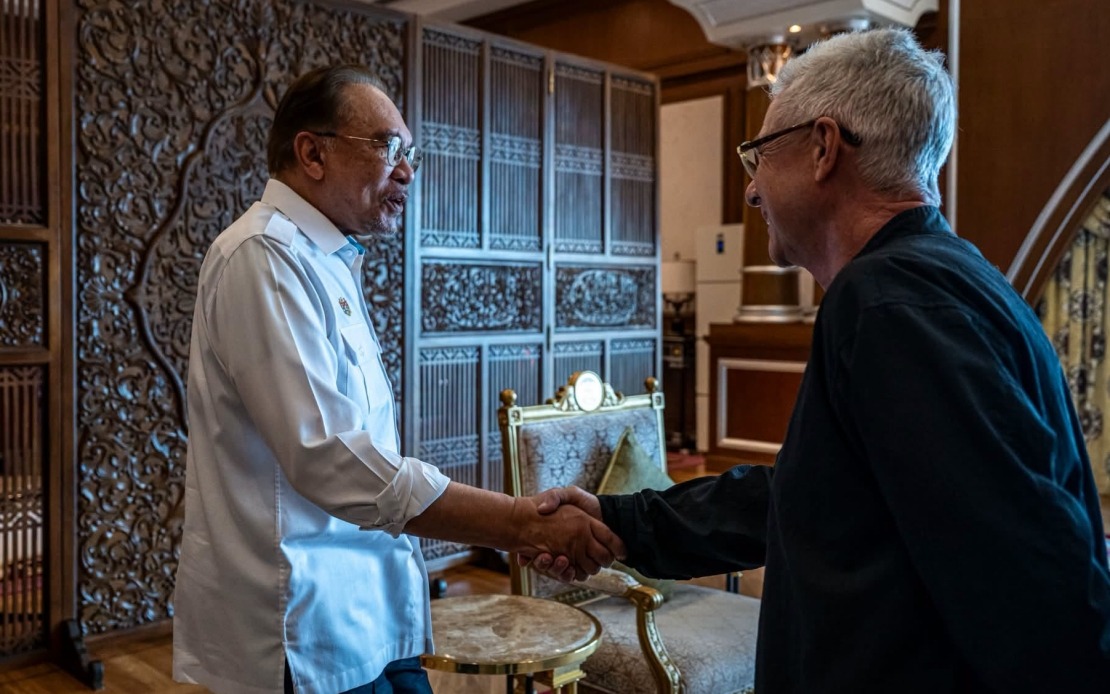
Prime Minister Datuk Seri Anwar Ibrahim has begun laying groundwork for Malaysia's return to the Formula 1 calendar by consulting with Singapore's Grand Prix leadership on best practices for major motorsports events. The meeting with Singapore Grand Prix Executive Director Michael Roche signals a deliberate strategy to tap the experience of Southeast Asia's most successful F1 host as Malaysia prepares to stage the 2026 Bahrain Grand Prix at Sepang International Circuit from October 2 to 4. This represents a significant milestone for the country's motorsports ambitions after a nine-year absence from hosting a Formula 1 race.
The convergence of the Bahrain Grand Prix with Malaysia's hosting appears to be the result of geopolitical circumstances in the Middle East. The event was originally scheduled for the Bahrain International Circuit in April but was postponed to October as tensions in West Asia prompted organisers to seek alternative solutions. Rather than delay the race indefinitely, Formula 1 and the FIA opted for an unprecedented collaboration whereby the championship event would be held at Sepang under a joint Malaysia-Bahrain arrangement. This creative solution addresses disruptions caused by regional instability while simultaneously restoring Malaysia's prominence in global motorsports.
Anwar's emphasis on studying Singapore's operational approach reflects the complexity of hosting a world-class Formula 1 event. Singapore's Grand Prix has become an exemplary model for event management in the region, maintaining high international standards while maximising economic returns for the host nation. By engaging directly with Singapore's executive leadership, Malaysia's government is signalling that it views this as more than merely holding a race—it is an opportunity to establish institutional knowledge that can influence how future major sporting events are managed domestically.
The Prime Minister outlined an expansive vision for the October race beyond the spectacle itself. His statement emphasised that the event would generate tangible economic benefits including increased tourism arrivals, employment opportunities across multiple sectors, heightened business activity, and strengthened investor confidence in Malaysia's capacity to host international-calibre occasions. These economic arguments are critical for securing stakeholder buy-in from federal and state authorities, private sponsors, and the business community. The visible spillover effects of a successful Grand Prix would extend far beyond motorsports, potentially catalysing broader economic activity in the Klang Valley and beyond.
Significantly, Anwar explicitly linked the 2026 Grand Prix to the government's Visit Malaysia 2026 tourism campaign, suggesting that the race will serve as a cornerstone attraction within a broader national tourism strategy. This integration reflects sophisticated event marketing thinking—positioning the Formula 1 race as a flagship draw that encourages visitors to Malaysia while showcasing the country's infrastructure, hospitality, and general appeal as a travel destination. The promotional value of international media coverage during race weekend extends to promoting Malaysia's tourism brand globally, with potential long-term benefits for the nation's tourism sector well beyond the October event itself.
The revival of Formula 1 at Sepang comes after the Malaysian Grand Prix was discontinued in 2017 due to escalating financial pressures. Rising hosting costs and international licensing fees had rendered the event economically unviable under the previous arrangement. The decision to discontinue the race marked a painful retreat from Malaysia's decades-long association with Formula 1, which began in 1999 when Sepang first opened as a world-class racing facility. That nineteen-year hosting run had established Malaysia as a fixture on the F1 calendar and created a generation of motorsports enthusiasts within the country.
The return to Formula 1 demonstrates that Malaysia's government has concluded that hosting such events serves strategic national interests beyond the immediate financial calculations. The visibility that comes from hosting a Formula 1 Grand Prix provides Malaysia with a global platform to project an image of stability, modernity, and economic dynamism. Countries across Southeast Asia compete for such opportunities, recognising that major sporting events serve as tangible demonstrations of national capability and progress. Malaysia's successful hosting could reposition the nation as a preferred venue for other prestigious international events.
Anwar's public commitment to ensuring the event meets international standards while strengthening Malaysia's position as a regional motorsports hub suggests that the government views this as the beginning of a longer-term strategy rather than a one-off occurrence. Building Malaysia's credentials as a motorsports destination could attract other racing events, automotive industry investment, and related economic activity. The infrastructure at Sepang and the expertise gained from hosting the 2026 Grand Prix would become assets for attracting subsequent major motorsports occasions, whether Formula 1 or alternative racing series.
The consultation with Singapore's Grand Prix leadership underscores a collaborative approach within Southeast Asia's motorsports community. Rather than viewing Singapore as a competitor, Malaysia's government appears to recognise that learning from its neighbour's expertise serves mutual interests in elevating the region's global sporting profile. This pragmatic stance suggests that Malaysia's event management bureaucracy is approaching the challenge with seriousness and humility, acknowledging that successful execution requires drawing on proven methodologies from the region's most experienced practitioners.
Looking forward, the 2026 Bahrain Grand Prix at Sepang will function as a crucial test of Malaysia's ability to deliver on its motorsports ambitions. Success would validate the government's decision to commit resources and institutional attention to the event while building momentum for hosting additional major sporting occasions. The race offers Malaysia an opportunity to reclaim its historical role as a Formula 1 nation while simultaneously showcasing the country's evolution since the last Malaysian Grand Prix in 2017. The stakes extend beyond motorsports to encompass Malaysia's broader aspiration to establish itself as a destination for premium international events.

