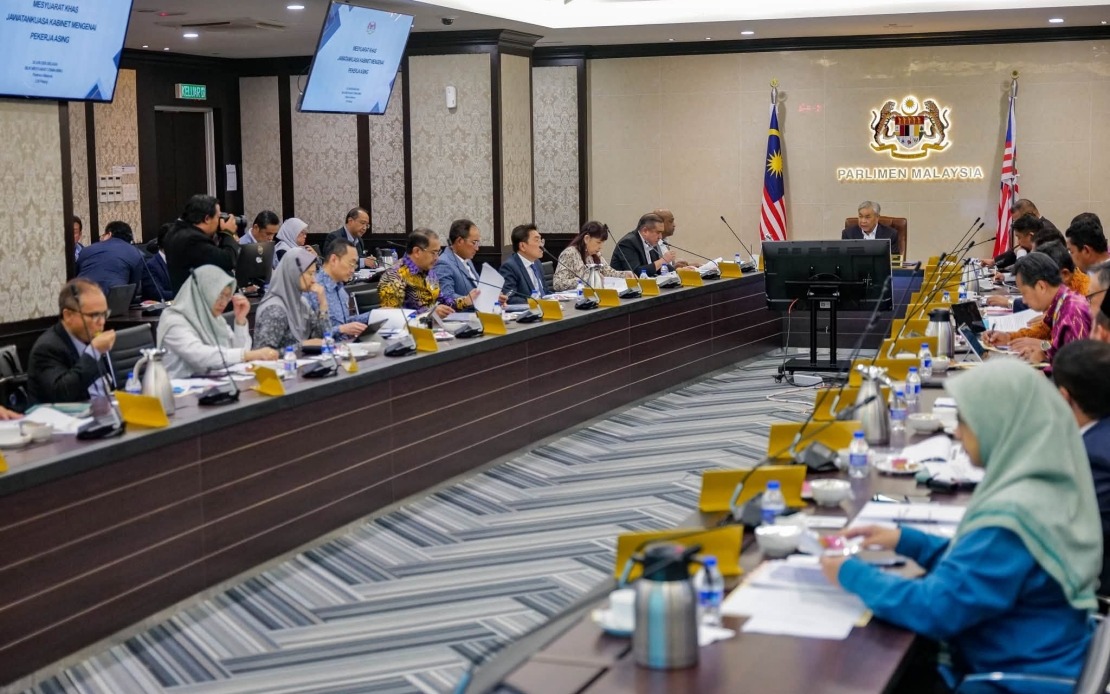
Deputy Prime Minister Datuk Seri Dr Ahmad Zahid Hamidi has signalled a significant shift in how Malaysia manages its foreign workforce, announcing plans to comprehensively restructure the entire system following a special meeting of the Cabinet Committee on Foreign Workers at Parliament. The restructuring aims to create a more cohesive, streamlined approach that better reflects the actual requirements of Malaysian industries whilst maintaining strict adherence to national security protocols and safeguarding opportunities for local workers.
The Cabinet Committee's discussions produced a suite of decisions designed to modernise foreign worker administration. Among the most significant moves is the consolidation of oversight, with the One Stop Centre for Foreign Worker Management now falling directly under the Ministry of Human Resources. This centralisation represents a deliberate effort to eliminate fragmentation in the system, where previously different agencies handled various aspects of foreign worker recruitment, placement, and monitoring. By concentrating authority within a single ministry, Ahmad Zahid's administration appears intent on reducing bureaucratic overlap that has historically slowed decision-making and created inconsistencies in policy implementation across sectors.
The restructuring initiative arrives at a critical juncture for Malaysia's labour market. The country hosts one of Southeast Asia's largest foreign worker populations, estimated at several million across manufacturing, construction, agriculture, and domestic services. Yet persistent concerns about labour trafficking, wage theft, workplace safety violations, and the exploitation of vulnerable migrants have dogged the system for years. International organisations and human rights groups have repeatedly flagged gaps in enforcement and protection mechanisms. By overhauling the framework, the government signals its intention to address these longstanding criticisms whilst simultaneously managing the genuine economic dependencies that Malaysian employers have developed on foreign labour.
Ahmad Zahid emphasised that the restructuring rests on a delicate balance: ensuring the foreign worker management system operates with greater efficiency and integrity whilst simultaneously accommodating legitimate industry demands, protecting national security interests, and preserving employment prospects for Malaysian citizens. This framing suggests the government recognises the political sensitivity of foreign worker policy, which frequently triggers public anxiety about job displacement and wage suppression among local workers, particularly in lower-skilled sectors. By explicitly committing to this tripartite consideration, Ahmad Zahid appears to be addressing concerns from both business groups seeking reliable labour supply and workers' advocates demanding stronger protections for local employment.
A key element of the restructuring involves implementing a more strategic approach to assessing foreign labour requirements across different industries. Rather than responding to ad-hoc employer requests, the government intends to conduct comprehensive sectoral reviews to determine where foreign workers genuinely fill gaps that cannot be addressed through local recruitment and training. This shift from reactive to proactive labour planning has significant implications for Malaysian workers. Industries that have grown dependent on cheap foreign labour may face pressure to improve wages and conditions to attract local workers, whilst those with genuine skills shortages will have a clearer pathway to justify foreign worker intake. The approach also signals the government's recognition that indiscriminate foreign worker recruitment can undermine efforts to develop a competitive, well-trained Malaysian workforce.
Integral to the broader restructuring agenda is the government's stated commitment to reducing Malaysia's reliance on foreign workers over the medium to long term. Ahmad Zahid outlined three complementary strategies: increasing participation of Malaysian citizens in the workforce, developing a more skilled labour force through targeted training and education programmes, and accelerating industrial automation. This multi-pronged approach acknowledges that simply capping foreign worker numbers without addressing underlying labour market challenges risks economic disruption. By simultaneously investing in local workforce development and industrial modernisation, the government aims to make Malaysia's economy less vulnerable to international labour market fluctuations whilst improving productivity and competitiveness.
The timing of this restructuring also reflects broader regional and global pressures. Throughout Southeast Asia, countries are reassessing their foreign worker policies amid rising nationalist sentiment, tightening labour markets in origin countries like Indonesia and Bangladesh, and increasing international scrutiny of migrant worker protections. Malaysia's announcement positions it as a serious player in this conversation, demonstrating that it intends to move beyond rhetoric towards concrete institutional reform. For Malaysian businesses, particularly those in labour-intensive sectors, the restructuring presents both opportunities and challenges: those willing to invest in workforce development and automation may find themselves better positioned long-term, whilst those expecting continued access to cheap foreign labour may face disruption.
The Cabinet Committee's decisions regarding the membership and terms of reference of the committee itself suggest a move towards strengthening coordination among government agencies responsible for different aspects of foreign worker management. Historically, siloed approaches by the Ministry of Human Resources, Ministry of Home Affairs, Ministry of International Trade and Industry, and various enforcement bodies have created implementation challenges. By clarifying roles and responsibilities within a reformed committee structure, the government aims to ensure consistent policy application and faster response to emerging issues ranging from labour trafficking to skills matching.
For Malaysia's standing in the international community, this restructuring carries symbolic weight. Countries like Australia and Canada have faced criticism over their temporary worker programmes, whilst Gulf states have endured sustained pressure regarding migrant worker conditions. By proactively reforming its system, Malaysia can demonstrate to international investors, trading partners, and civil society organisations that it takes foreign worker welfare seriously. This is particularly important as Malaysia seeks to position itself as a responsible regional economic leader and maintain its reputation with labour-sending countries in South and Southeast Asia.
The practical implementation of these decisions will prove crucial. Ahmad Zahid's assertion that every measure will be guided by national interests and people's wellbeing is aspirational; translating it into effective regulation requires adequate funding, trained personnel, transparent monitoring systems, and genuine inter-agency cooperation. The success of the One Stop Centre will depend on whether it actually streamlines processes or becomes another bureaucratic layer. Similarly, the more strategic assessment of foreign labour requirements must rest on robust data collection and honest sectoral analysis rather than political pressure from employers or protectionist impulses.
Looking forward, the restructuring raises important questions for Malaysia's labour market evolution. Will the government have the political will to enforce stricter standards that may increase business costs? Can workforce development programmes genuinely prepare Malaysians for positions previously reserved for cheaper foreign workers? Will automation accelerate or will cost considerations temper investment? These questions will determine whether the restructuring represents a genuine transformation or merely a repackaging of existing arrangements. Observers across Southeast Asia and beyond will watch closely to assess whether Malaysia's approach becomes a model for more effective, rights-respecting foreign worker management in the region.

