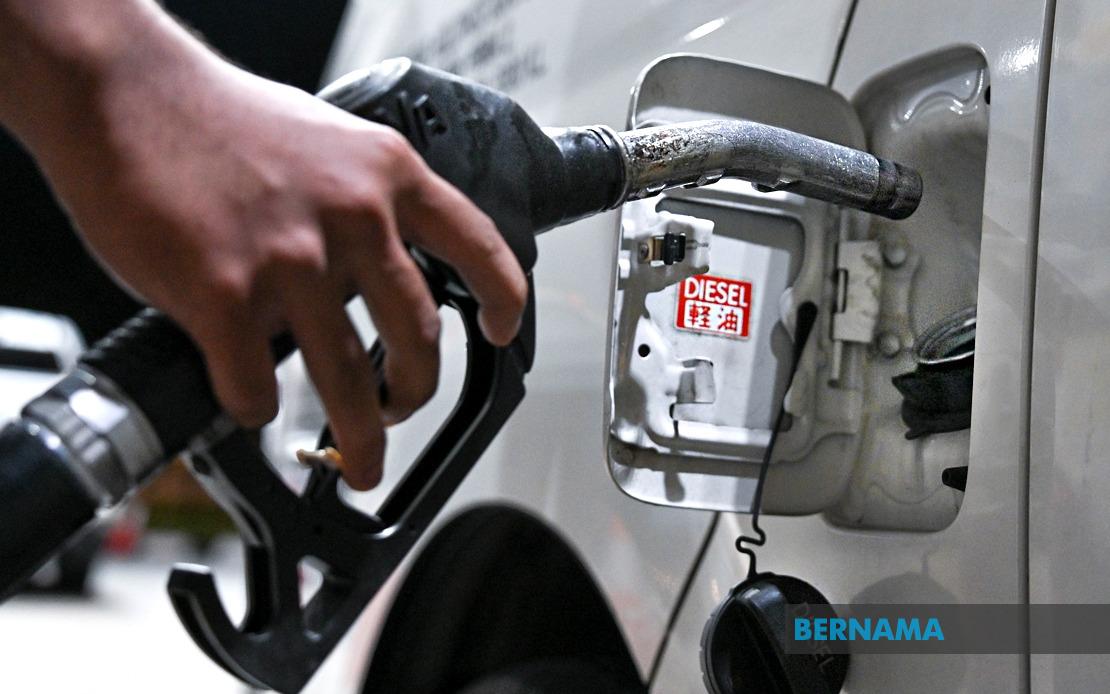
Malaysia's government will introduce a revamped diesel subsidy system designed to recoup approximately RM2 billion in annual savings by tightening controls on a fuel support mechanism that has haemorrhaged money through cross-border smuggling and system abuse. The BUDI MADANI Diesel programme, set to commence on July 1 at a subsidised price of RM2.10 per litre, represents a critical intervention in stemming what officials describe as alarming wastage within the nation's fuel distribution network. Second Finance Minister Datuk Seri Amir Hamzah Azizan outlined the initiative at a Putrajaya press conference, characterising the reform as essential to stabilising domestic diesel supplies while ensuring subsidies genuinely benefit eligible Malaysians.
The government faces an escalating fiscal burden that has become untenable without intervention. Monthly subsidy costs for petrol and diesel, which typically ranged around RM800 million, spiked dramatically to nearly RM4.7 billion in March and RM4.9 billion in April as global oil prices surged. These figures underscore the vulnerability of Malaysia's fuel support system to international commodity fluctuations and systemic leakages that amplify the fiscal impact. The BUDI MADANI approach attempts to decouple the subsidy mechanism from wholesale price movements by establishing a fixed retail price, thereby creating predictability in government expenditure while maintaining affordability for intended beneficiaries.
Evidence of substantial fuel diversion has become impossible to ignore. Diesel consumption patterns reveal consumption increasing abnormally from approximately 624 million litres monthly to nearly 1.2 billion litres monthly—nearly double—indicating that significant quantities are being extracted from the subsidised channel through unauthorised means. The government identifies cross-border smuggling as a primary culprit, with fuel flowing illicitly across maritime and land boundaries to neighbouring jurisdictions where prices are higher. Additionally, commercial and industrial users who should be purchasing unsubsidised diesel are instead accessing subsidised supplies through petrol stations, creating perverse incentives that drain government coffers whilst simultaneously threatening fuel security domestically.
The Borneo states of Sabah and Sarawak present particularly acute leakage concerns that have prompted specific investigation. Current diesel consumption in these states approaches two billion litres annually, yet actual estimated requirement stands at roughly one billion litres—indicating leakages of approximately one billion litres yearly. This disparity, equivalent to roughly half of all diesel consumed regionally, suggests systematic diversion rather than measurement error or seasonal variation. For a government committed to fiscal consolidation, these figures demand urgent structural reform rather than continued subsidy expansion.
To address these challenges, the government will deploy a MyKad verification mechanism mirroring the existing BUDI RON95 petrol subsidy system. This technology-enabled approach creates an audit trail at point-of-purchase, restricting subsidised diesel access to verified Malaysian private vehicle owners. The system aims to eliminate the anonymity that currently enables abuse, thereby creating accountability whilst maintaining accessibility for legitimate users. Approximately 700,000 private diesel vehicle owners nationwide will qualify for the RM2.10 per litre subsidised rate through MyKad verification at participating petrol stations.
For Malaysians already receiving BUDI Diesel Individual assistance in the form of monthly cash grants of RM400, the transition will be automatic. Rather than continuing cash transfers, eligible recipients will be migrated directly to subsidised diesel access through the MyKad mechanism without requiring additional applications. This approach reduces administrative overhead whilst maintaining support levels, though it fundamentally restructures the nature of assistance from cash-in-hand to point-of-purchase benefit. The seamless transition suggests the government has learnt from previous subsidy reform attempts that often generated public resistance through perceived withdrawal of support.
The implementation timeline demonstrates preparatory rigour aimed at minimising disruption. Early access to BUDI Diesel commences June 27 for eligible private diesel vehicle owners in Peninsular Malaysia, allowing the system to be tested and refined before nationwide full implementation on July 1. This phased approach provides a buffer period to identify technical issues, train petrol station operators, and manage public communication around the new mechanism. Given that previous fuel subsidy adjustments have occasionally triggered political controversy, the staggered rollout may be designed to build confidence in system reliability before full-scale deployment.
The savings projections merit scrutiny within Malaysia's broader fiscal context. An annual reduction of RM2 billion in fuel subsidies represents meaningful relief for a government managing competing budget pressures across healthcare, education, and infrastructure. For perspective, this amount approximates the annual expenditure across multiple significant government programmes, suggesting that successful implementation could free substantial resources for other priorities. However, realising these savings depends critically on whether the MyKad verification system proves effective in eliminating the leakages that currently plague the programme, a technical and enforcement challenge that previous subsidy reforms have struggled to overcome completely.
Regional considerations add complexity to Malaysia's subsidy reform calculus. Neighbouring countries including Indonesia, Thailand, and Brunei maintain their own fuel subsidy frameworks, creating arbitrage opportunities that incentivise cross-border diversion. The price differential between subsidised Malaysian diesel and unsubsidised supplies in adjacent markets generates profit opportunities for smugglers that become more attractive as government support expands. BUDI MADANI Diesel's success therefore depends not merely on domestic verification technology but potentially on regional coordination to address supply-side pressures that encourage illicit fuel flows.
The BUDI MADANI framework also reflects evolving thinking about subsidy targeting within emerging market policy circles. Rather than universal price controls that benefit all consumers irrespective of need, targeted subsidy approaches seek to concentrate government support on vulnerable or priority groups whilst exposing others to market prices. This represents a philosophical shift from the broad-based subsidies that dominated Malaysian policy for decades. The transition requires not only technological infrastructure but also public acceptance that subsidy access represents a privilege for qualified beneficiaries rather than an entitlement for all citizens.
Domestic Trade and Cost of Living Minister Datuk Armizan Mohd Ali's involvement in announcing the programme underscores the political sensitivity surrounding fuel pricing decisions. Managing the political dimensions of subsidy reform demands careful communication that emphasises government commitment to protecting vulnerable consumers whilst explaining why tighter targeting serves broader economic interests. Malaysia's experience with previous fuel price adjustments demonstrates that inadequate public communication can undermine even economically sound policy interventions.
The BUDI MADANI Diesel programme ultimately represents an attempt to square a difficult policy circle: maintaining fuel affordability for intended beneficiaries whilst substantially reducing government fiscal exposure and eliminating leakages that undermine programme integrity. Whether the initiative succeeds depends on the robustness of MyKad verification systems, the vigilance of enforcement authorities in detecting continued smuggling, and the government's commitment to managing political pressure should subsidised fuel remain cheaper than prevailing market rates. For Malaysian consumers and fiscal authorities alike, the coming months will determine whether targeted subsidies can achieve what universal price supports could not.

