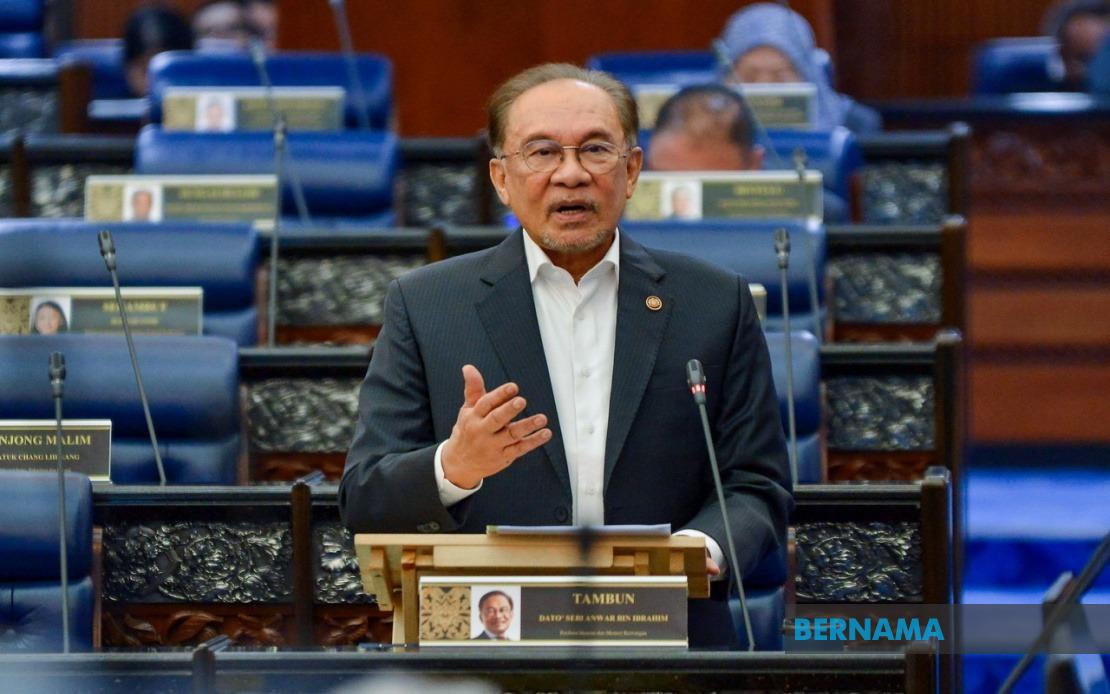
Prime Minister Datuk Seri Anwar Ibrahim has outlined a balanced approach to Malaysia's foreign worker dilemma, signalling that the government will continue scrutinising the necessity for overseas labour while channelling employment opportunities primarily towards local job seekers. Speaking in Parliament today, Anwar acknowledged that certain sectors genuinely require foreign workers, but insisted that any hiring decisions must follow established legal frameworks and be coordinated strategically to avoid circumventing domestic talent pools.
The statement addresses mounting pressure from small and medium enterprises facing labour shortages, particularly in roles where Malaysian workers remain difficult to recruit. However, Anwar's comments reflect growing government concerns about the exploitation of foreign worker schemes by syndicates that have historically enriched individuals rather than benefiting the broader economy. He characterised these criminal networks as a decades-old drain on national resources, suggesting that combating such operations must remain integral to reforming the foreign worker system.
Under the government's proposed framework, existing foreign workers already legally employed in Malaysia would receive priority access to job vacancies before new foreign recruitment is authorised. This approach attempts to manage the estimated millions of foreign workers already present in the country while preventing an uncontrolled expansion of the migrant labour force. Anwar emphasised that coordination between the Ministry of Human Resources and the Ministry of Home Affairs would be essential, ensuring that security considerations are properly evaluated alongside economic needs.
The Prime Minister's remarks came in response to a parliamentary question from Khoo Poay Tiong regarding labour shortages affecting small businesses and competing concerns about employment prospects for young Malaysians. This tension between SME operational requirements and youth unemployment remains central to Malaysia's labour policy debate. Younger Malaysians frequently cite wage expectations and working conditions as deterrents from certain sectors, creating genuine gaps that employers argue cannot be filled domestically without foreign workers.
Anwar also moved to address concerns about the misuse of foreign professional worker visas, a growing problem where companies have exploited expertise categories to bring in workers unsuitable for the approved roles. The government is tightening approval processes to prevent such abuses, particularly in emerging sectors like artificial intelligence and digital technology. Anwar cited instances where companies claimed to require specialists in AI or digital fields but deployed hired workers in unrelated capacities, effectively using skilled worker designations as a backdoor for general labour recruitment.
Enforcement against violating foreign workers remains another pillar of the government's strategy. Anwar committed to strengthening action against workers breaching Malaysian law, making clear that legal consequences apply equally regardless of nationality, ethnicity, or refugee status—implicitly referencing the Rohingya population in Malaysian camps and communities. This signals a hardline stance on undocumented or rule-breaking foreign workers while maintaining that those adhering to regulations deserve protection and fair treatment.
The government's approach also involves seizure of business premises found employing non-compliant foreign workers, creating financial incentives for employers to maintain lawful labour practices. Anwar suggested that enforcement agencies must adopt stricter positions to discourage casual violations and organised labour trafficking. This punitive framework complements the priority-hiring system for locals and existing foreign workers, creating a comprehensive policy that attempts to control foreign worker numbers while protecting livelihoods.
For Malaysia's regional context, these policies reflect broader Southeast Asian struggles with managing migrant labour amid domestic employment pressures and development aspirations. Thailand, Vietnam, and Indonesia face similar tensions between labour-intensive industries requiring foreign workers and rising education levels among youth populations seeking better-remunerated positions. Malaysia's approach—balancing sectoral needs against local priority—represents one model within the region's evolving labour governance landscape.
The implications for Malaysian businesses vary significantly by sector. Construction, plantation, domestic work, and manufacturing operations dependent on foreign labour will face stricter recruitment pathways and higher compliance burdens. However, companies operating transparently and hiring genuinely needed expertise should encounter fewer obstacles. The tightened approval process for professional workers may marginally increase hiring timelines and administrative costs, but potentially protects the integrity of skills-based immigration categories that benefit both employers and workers.
For local job seekers, particularly younger Malaysians, the policy theoretically improves access to vacancies by restricting new foreign recruitment and requiring employers to engage domestic talent pools first. However, practical implementation depends on wage-setting, working conditions, and whether employers genuinely attempt recruiting locally or merely pay compliance costs. The government's willingness to enforce regulations will prove crucial to determining whether stated preferences for local workers translate into meaningful employment gains.
The statement also hints at concerns about foreign worker syndicates' political influence and rent-seeking behaviours. Characterising these networks as entrenched problems suggests Anwar intends to dismantle patronage systems benefiting politically connected individuals at the expense of broader economic efficiency. Addressing organised labour trafficking could yield security benefits alongside labour market improvements, potentially weakening criminal operations currently profiting from Malaysia's porous foreign worker systems.

