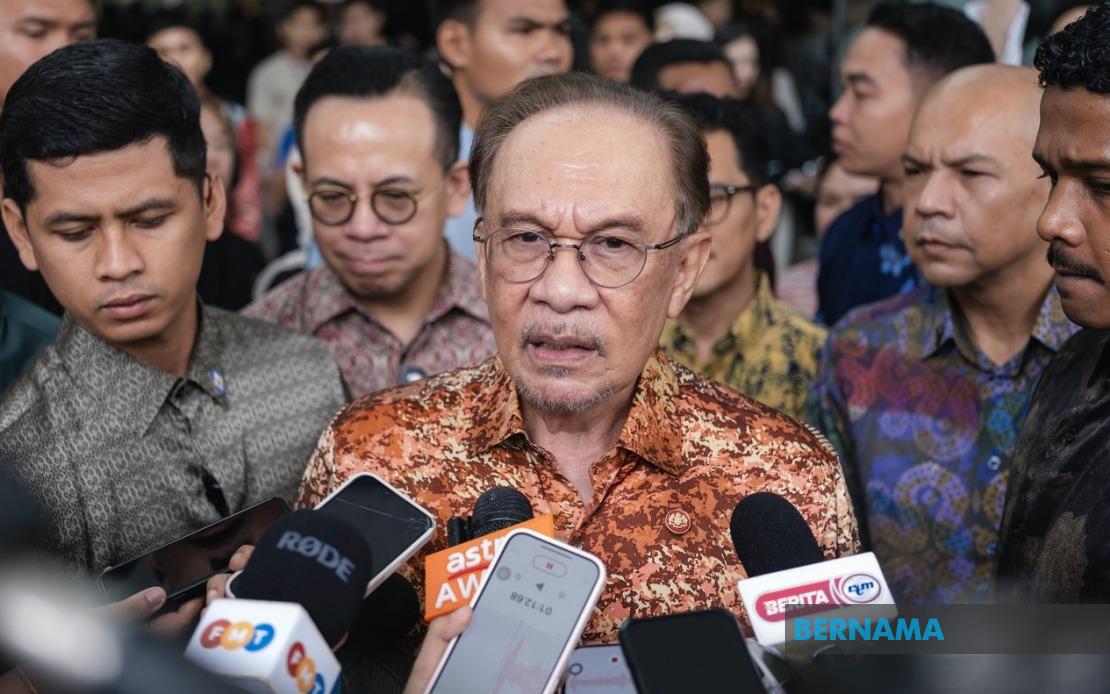
Prime Minister Datuk Seri Anwar Ibrahim has reaffirmed the government's commitment to dismantling the Universities and University Colleges Act 1971, commonly known as AUKU, signalling a significant overhaul of Malaysia's higher education governance framework. Speaking at the Himpunan Anak Muda Antarabangsa (HAMKA) 2026 opening ceremony in Klang on August 20, Anwar announced that a fresh legislative framework to replace the decades-old law would be introduced in Parliament within the calendar year, pending Cabinet approval already discussed at a recent ministerial meeting.
The existing AUKU legislation, which has governed university management and student conduct for over five decades, restricts student political participation and imposes stringent controls on campus activities. Anwar's declaration signals the government's intention to fundamentally recalibrate the relationship between Malaysian universities and their student populations by dismantling the restrictive apparatus that presently oversees institutional procedures, academic hierarchies, and student engagement. The Prime Minister emphasised during his speech that the legislative review would comprehensively examine provisions governing university autonomy, the administrative powers vested in deans and senates, and the oversight mechanisms exercised by boards of studies.
The broader thrust of this reform agenda reflects growing pressure from civil society, student advocates, and education reformers who have long contended that AUKU's stringent provisions inhibit intellectual discourse and civic participation on campus. By proposing to dismantle these controls, the government tacitly acknowledges that excessive legislative restraint may be counterproductive to fostering critical thinking and democratic engagement among tertiary students. Anwar's framing of the issue suggests a philosophical shift within the administration toward trusting students' capacity for responsible conduct, while simultaneously recognising that some regulatory framework—albeit substantially reformed—may remain necessary.
The timing of this announcement carries significance within Malaysia's broader political landscape. University students have historically represented a mobilising force in the nation's democratic movements, and restrictions on campus activism have been a contentious issue across successive administrations. By placing this reform prominently on the legislative agenda, the government signals responsiveness to longstanding demands from the youth sector and positions itself as committed to democratic liberalisation, a theme the Prime Minister has emphasised since assuming office. The HAMKA platform, which convenes young Malaysians from various backgrounds, provided a particularly apt venue for unveiling this commitment.
Anwar's qualified acknowledgement that students remain subject to some form of oversight—despite his stated aversion to excessive constraints—suggests the replacement legislation will not abolish all governance mechanisms entirely. Rather, the anticipated new framework is likely to rebalance the relationship, reducing prescriptive regulations while maintaining institutional guardrails necessary for campus order and safety. The Prime Minister's rhetorical confidence that students can exercise freedom responsibly, while acknowledging that governance structures need not disappear, indicates a nuanced approach rather than an absolutist dismantling of all controls.
The practical implications for Malaysian universities are substantial. Under the present AUKU framework, students face restrictions on organising political events, joining certain organisations, and participating in advocacy activities that administrators deem problematic. A reformed legislative environment could unlock significantly greater campus activism, potentially revitalising student unions and political clubs that have operated under considerable constraint. This transformation may also affect how universities approach disciplinary procedures, currently conducted under AUKU's broad powers that sometimes bypass conventional due process protections.
For Southeast Asia, Malaysia's recalibration of university governance law carries regional resonance. Several neighbouring countries impose similarly restrictive frameworks governing campus politics and student organising, and Malaysia's legislative modernisation could establish a precedent for how democratic nations balance institutional stability with student freedoms. The reform also reflects evolving international standards regarding academic freedom and student rights, aligning Malaysian practice more closely with conventions upheld in comparable democracies where university autonomy and student participation are less heavily legislated.
The government's commitment to completing this legislative initiative within 2024 represents a concrete timeline for reformers who have advocated change for years. However, the actual substance of the replacement law remains undetermined, leaving open questions about which specific restrictions will be genuinely eliminated versus merely repackaged. The legislative process will likely involve consultation with university stakeholders, including administrators concerned about institutional autonomy, and student representatives eager for substantive liberation from current constraints. These negotiations will test whether the government's rhetorical commitment translates into meaningful expansion of campus freedoms or modest cosmetic amendments.
International observers and comparative higher education specialists will monitor this legislative development closely, as Malaysia's approach to university governance reform may influence policy discussions across the region and contribute to global conversations about the appropriate scope of state control over tertiary institutions. For Malaysian students and academic communities, the replacement of AUKU represents both an opportunity for expanded participation in university life and a test of whether the government's stated commitment to student autonomy will survive the complexities of parliamentary deliberation and institutional resistance.

