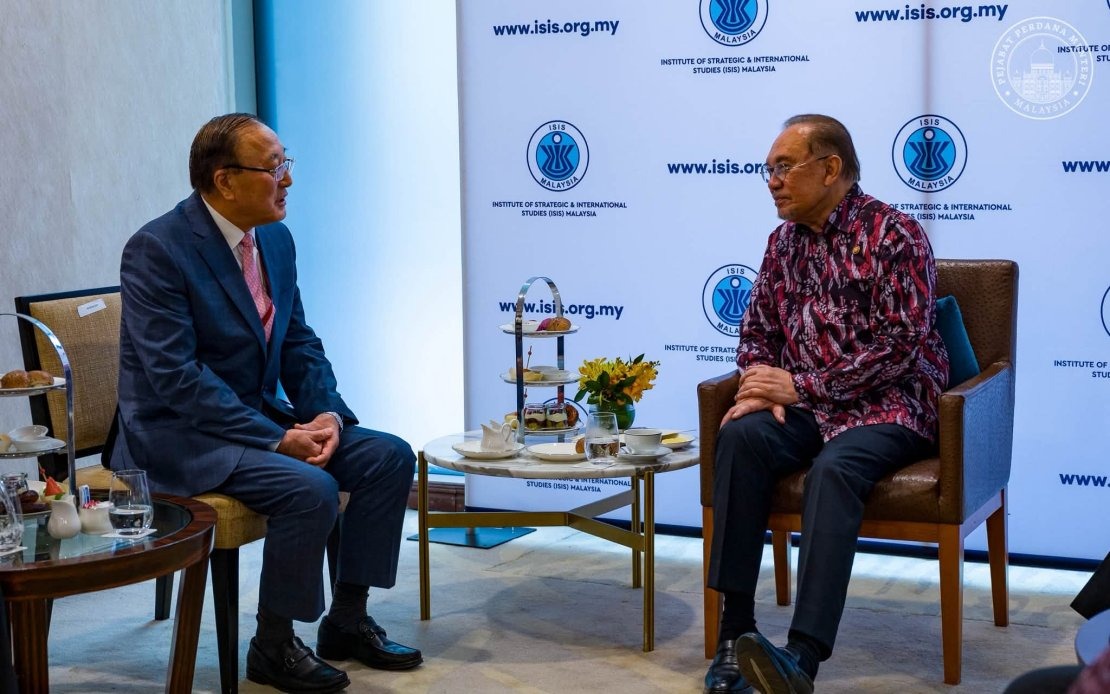
Prime Minister Datuk Seri Anwar Ibrahim has outlined Malaysia's intention to expand and deepen its cooperative relationship with the Boao Forum for Asia (BFA), signalling renewed strategic engagement across a broad spectrum of economic and technological domains. The announcement came during a diplomatic meeting with BFA Secretary-General Zhang Jun in Kuala Lumpur, where both parties discussed the evolving regional and international environment and explored pathways for enhanced bilateral coordination.
The Malaysian Premier identified seven key pillars for future collaboration between the nation and the forum. Trade and investment matters top this list, reflecting Malaysia's continued emphasis on strengthening commercial links and attracting capital flows through the BFA platform. Digital transformation and artificial intelligence represent the second priority area, underscoring the government's recognition that technological advancement and digital adoption will determine competitiveness in the coming decades. The inclusion of these innovation-focused sectors signals Malaysia's determination to position itself as a player in the broader Asian digital economy rather than remaining a passive observer of technological change.
Energy transition features prominently in the cooperation framework, a significant indicator of Malaysia's commitment to regional sustainability efforts. As Southeast Asian economies grapple with balancing development imperatives with environmental responsibilities, Malaysia's emphasis on this domain through the BFA suggests alignment with broader Asian consensus on green energy pathways. Food security, another designated cooperation area, reflects pressing regional concerns about supply chain vulnerabilities and agricultural resilience that have become more acute following global disruptions in recent years.
Education and talent development round out the cooperation agenda, touching on areas essential for long-term human capital building across Asia. This focus acknowledges that sustained regional growth depends not merely on infrastructure and capital investment, but fundamentally on developing skilled workforces capable of operating within rapidly transforming industries. For Malaysia specifically, enhanced educational partnerships through the BFA could open avenues for scholarship exchanges, institutional partnerships, and knowledge transfer initiatives that benefit Malaysian institutions and students.
Anwar's characterization of the current global environment as one marked by "geopolitical uncertainties, economic pressures and rapid technological change" provides crucial context for understanding Malaysia's strategic calculus. The Prime Minister's emphasis on these challenges reflects genuine concerns within Malaysian policymaking circles about intensifying great power competition, potential trade disruptions, and the acceleration of technological disruption affecting traditional economic sectors. Rather than retreating into nationalist positions, however, Anwar advocates for regional cooperation as the antidote to these pressures.
The Malaysian leader's insistence on "closer regional cooperation, inclusiveness and dialogue-based cooperation" as foundational to achieving stability and prosperity carries particular weight given Malaysia's position as a middle power within Southeast Asia. This rhetorical framing aligns with Malaysia's traditional foreign policy emphasis on multilateralism and consensus-building, while also positioning the nation as a bridge between different regional groupings and power blocs. For Malaysian businesses and investors, such positioning potentially opens doors to BFA networks that span both developed and developing Asian economies.
The reference to strengthening "the region's resilience" suggests a forward-looking approach to economic policy that extends beyond conventional growth metrics. Resilience implies the capacity to withstand shocks, adapt to disruption, and maintain social cohesion during periods of rapid change. For Malaysia, which has experienced various economic cycles and external pressures, this framing resonates with policymaking priorities focused on building more robust economic structures and diversified revenue streams.
The BFA, established in 2001, functions as an Asian-focused forum for dialogue and cooperation that brings together political leaders, business executives, and academics from across the continent and beyond. Its Boao constituency includes China, where it is headquartered, alongside participants from India, ASEAN nations, and other Asian powers. Malaysia's deepening engagement with the BFA thus represents not merely bilateral diplomacy but participation in a broader multilateral conversation shaping Asian regional architecture and economic integration trajectories.
For Malaysian stakeholders, the outlined cooperation areas hold tangible implications across multiple sectors. Technology-focused companies and research institutions may find enhanced opportunities for collaboration and knowledge-sharing. The agricultural and food production sectors could benefit from dialogue platforms addressing supply chain challenges and sustainability standards. Financial institutions and investment firms gain access to expanded networking channels and deal-flow opportunities within the Asian investor community. Educational institutions, meanwhile, face prospects for international partnerships and student mobility arrangements that strengthen Malaysia's position as a regional education hub.
The timing of this announcement, with Anwar holding the dual portfolios of Prime Minister and Finance Minister, suggests that economic considerations occupy the foreground of Malaysian strategic thinking. The integration of financial and diplomatic leadership in a single individual often signals prioritization of economic objectives within overall foreign policy frameworks. This centralization of economic and political decision-making authority potentially enables more rapid policy implementation and coherent messaging regarding Malaysia's regional economic ambitions.
Looking forward, the concrete manifestations of enhanced BFA cooperation will likely emerge through formal memoranda of understanding, expanded participation in BFA-sponsored forums and working groups, and increased presence of Malaysian officials and business representatives in BFA activities. The effectiveness of such cooperation ultimately depends on follow-through mechanisms, institutional capacity to implement commitments, and genuine private sector engagement rather than mere governmental proclamations.

