The Prime Minister's Department (Religious Affairs) has committed to amplifying its outreach to Malaysian youth in response to concerns raised by Sultan Nazrin Shah about the escalating risks of extremism and false information in the digital landscape. The pledge represents a formal acknowledgement of the monarchy's growing unease over how young Malaysians navigate an increasingly fractured information environment, where traditional institutional safeguards appear to be losing their grip on public confidence.
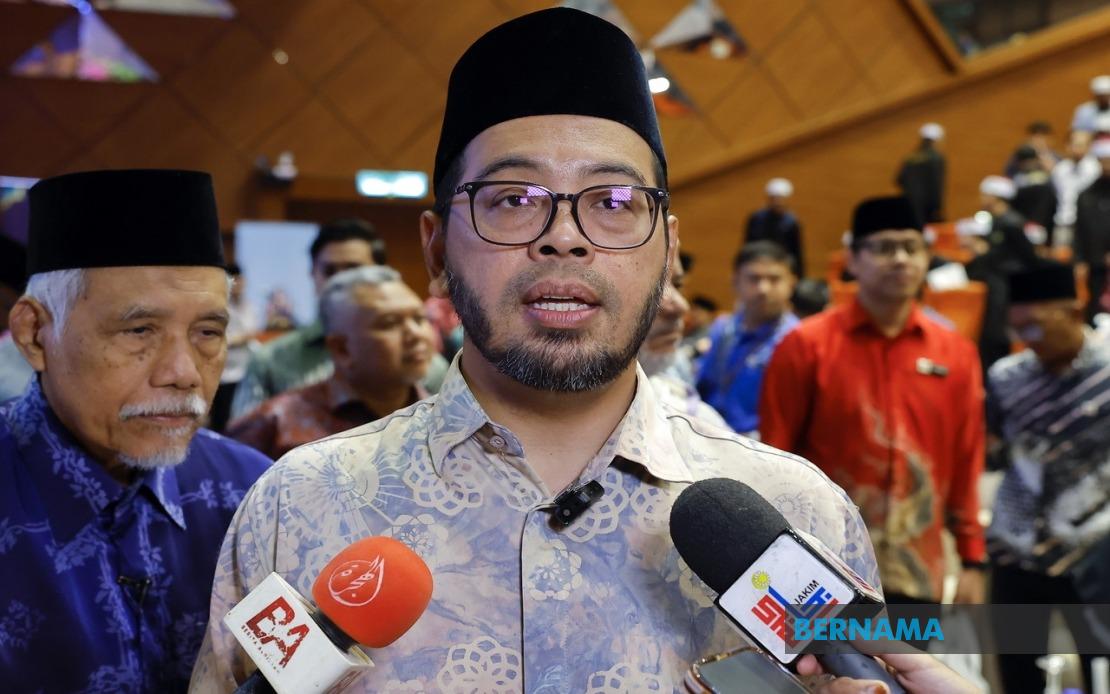
Dr Zulkifli Hasan, the Minister in the Prime Minister's Department (Religious Affairs), declared that his ministry would adopt the Sultan's recent address as a foundational blueprint for shaping forthcoming programmes and initiatives. Speaking after presiding over the National and International Tokoh Ma'al Hijrah Premier Lecture 1448/2026 in Putrajaya on June 18, he signalled the government's determination to translate royal concern into concrete action, framing the Sultan's intervention as a clarion call rather than merely ceremonial commentary.
The Sultan of Perak articulated his concerns just days earlier, highlighting that contemporary youths encounter a bewildering array of pressures extending well beyond traditional anxieties. These encompass anxiety about environmental degradation, ongoing regional conflicts, volatile economic prospects, the fracturing effects of social media polarisation, and a pervasive erosion of trust in the institutions—governmental, educational, and civic—that historically anchored community cohesion.
The decision to foreground youth engagement reflects a strategic recognition that religious actors occupy a unique position in Malaysian society. Unlike secular institutions struggling with credibility deficits, religious authorities retain meaningful moral authority within many communities. By mobilising this influence toward countering extremist narratives and debunking misinformation, the government hopes to create a counterweight to the algorithmic amplification of divisive content on digital platforms.
The misinformation challenge carries particular urgency in Malaysia's multi-ethnic and multi-religious context. False narratives targeting specific communities can rapidly inflame dormant tensions, and the speed at which unverified claims spread through social media means that institutional responses often lag dangerously behind rumour cycles. Young people, who constitute a disproportionate share of social media users, are simultaneously more exposed to such content and more influential in its dissemination through their networks.
Extremism, meanwhile, continues to represent a security concern despite decades of counter-terrorism efforts. The shift from traditional hierarchical terrorist organisations to decentralised, ideology-driven recruitment networks—often operating via encrypted messaging and online forums—has transformed the threat landscape. Young recruits frequently arrive at extremist ideology through rabbit-hole exploration of social media, often following seemingly innocent content recommendations that gradually guide them toward increasingly radical material.
The Sultan's intervention suggests growing awareness within Malaysia's leadership that technological disruption demands governmental and institutional adaptation. The structures that once mediated youth socialisation—extended families, community organisations, educational institutions—now compete with algorithmically-curated content feeds that prioritise engagement over accuracy or social utility. Religious institutions, which often maintain community presence through mosques and informal networks, could serve as counterweights to this algorithmic logic.
Implementing such programmes effectively, however, presents substantial challenges. Religious leaders themselves require training in digital literacy and fact-checking methodologies if they are to credibly guide youth through the information landscape. Programmes must also resist the temptation to simply censor or suppress content, an approach that typically backfires by lending credence to censorship narratives and driving discourse further underground into less monitored spaces.
The Southeast Asian context amplifies these challenges and opportunities. Regional governments increasingly grapple with similar phenomena—the rise of digital misinformation networks, the weaponisation of social media during elections, the radicalisation of marginalised youth through online communities. Malaysia's approach could offer instructive lessons, or cautionary tales, for neighbouring countries undertaking similar initiatives.
Financial and human resource commitments will ultimately determine whether this initiative transforms from rhetorical commitment into systematic impact. Dr Zulkifli's statement suggests that concrete programmes remain in development, with the Sultan's address serving as a recent catalyst for accelerated planning. The specific mechanisms—whether through enhanced funding for existing youth programmes, new digital literacy initiatives, or restructured religious education—have not yet been detailed.
Success will require collaborative effort extending beyond the Religious Affairs Ministry. Educational institutions, technology companies operating in Malaysia, civil society organisations, and the private sector all possess roles in this ecosystem. The challenge lies in coordinating these disparate actors toward coherent objectives while respecting the boundaries of legitimate free expression and avoiding the appearance of state-directed propaganda.
The timing of this commitment, arriving amid broader global anxieties about artificial intelligence, algorithmic recommendation systems, and synthetic media, positions Malaysia at an inflection point. How effectively the government executes on this pledge will influence not only national social cohesion but also regional discourse about how developing democracies manage the intersection of religious authority, youth engagement, and digital disruption.

